

Research updated October 19, 2026. This Ramp review compares its published US plans, corporate charge card, expense controls and payments with typical small-business finance workflows. Our assessment uses official product documentation and independent research. We did not open a Ramp customer account, apply for a corporate card, process an employee reimbursement or test real transactions. Any images are identified as vendor-published materials rather than screens from our own authenticated account.
A growing marketing agency has sixteen people buying software, booking travel and paying contractors. Its founder uses a conventional business credit card, the finance lead collects receipts in Slack, and the bookkeeper imports a statement into QuickBooks at the end of each month. A designer renews a subscription no one needs, another employee exceeds a travel budget, and a $1,250 invoice waits in email without a clear approval owner. The card company can report what happened; it rarely determines which purchase was authorized before money was spent.
Ramp expense management addresses that workflow with linked corporate cards, preset spending rules, receipt collection, reimbursements, bill payments and accounting integrations. The aim of Ramp expense management is not simply to replace the plastic card. It gives managers a method to control spend before it happens and gives bookkeepers a more structured record of what followed. That distinction matters when comparing Ramp with a traditional cash-back business credit card or an accounting platform.
It also creates questions: Will your business qualify? Which paid features are genuinely necessary? What is the full price when Ramp Plus includes a separate platform fee? Can international conversion charges offset the appeal of a card advertised without a conventional foreign transaction fee? This Ramp review 2026 answers those questions without treating marketing claims as demonstrated customer results.
📊 Ramp Review Summary 2026: At a Glance
What Ramp does well
Pre-spend card controls, expense automation, convenient receipt workflows and core accounting integrations on the Free tier.
Where to be careful
US-only eligibility and bank balance requirements, paid Plus platform fee, pay-in-full card terms and FX margins.
Best suited to: US-registered companies with eligible bank balances that want centrally managed staff spending, real-time controls, receipt workflows, bill approvals and integrations into accounting software.
Core products: Ramp corporate charge cards, expense management, reimbursements, accounts payable, travel tools, vendor management and optional banking or receivables capabilities. Certain advanced functions require Plus, Enterprise or separate add-ons.
Published software pricing: Ramp Free is $0 per month per user. Ramp Plus is $15 per month per user plus a platform fee based on team size. The Plus annual plan advertises a 20% discount on per-seat rates, subject to current contract conditions. Enterprise pricing is custom and billed annually.
Eligibility warning: Ramp’s US help center requires a qualifying registered business, generally a corporation, LLC or LP; at least $25,000 in a connected US business bank account; a qualifying US physical address; and most operations and spending in the US. Sole proprietors and unregistered individuals cannot apply under the documented requirements.
Editorial conclusion: Ramp can be useful when an eligible company wants expense policies, cards and approvals in one operating system. The free tier is a meaningful starting point. Paid automation may make sense at greater process complexity, but the platform fee, card eligibility and payment charges must be included in any cost analysis.
⚡ Quick Verdict: Is Ramp Worth It in 2026?
For a business that qualifies, Ramp expense management is worth evaluating for the control it brings to routine purchases. A manager can authorize a card only for a particular vendor, spending category or project. Employees can submit receipts from the channels they already use. Finance staff can review exceptions before posting entries into the books. Those are operational benefits, not a promise that accounting suddenly runs without human checks.
Ramp expense management on the Free plan already includes corporate cards, expense tracking, basic accounting rules, QuickBooks Online and Xero integration and core invoice or bill-payment functions. That makes Ramp Free vs Plus a real decision rather than a choice between a useless demo and a functioning platform. If a ten-person company needs only individual spending limits and a clear reimbursement process, Free may be sufficient.
Plus becomes more compelling when approvals are complex, finance staff need advanced automation, or an organization requires additional ERP integrations and multi-entity controls. But “$15 per user” is incomplete as a budgeting figure because the published pricing adds a team-size-based platform fee. Our Ramp review recommends obtaining a complete quote before forecasting savings.
Do not select Ramp purely for its rewards rate. Ramp may offer up to 1.5% cash back, but rewards are set by customer and are not guaranteed at the maximum. More importantly, Ramp’s Visa corporate card is a pay-in-full charge card, not a revolving credit line that allows interest-bearing balances to be carried indefinitely. Your company must be able to fund payments on schedule.
🧠 What Is the Ramp Corporate Card and How Does It Work?
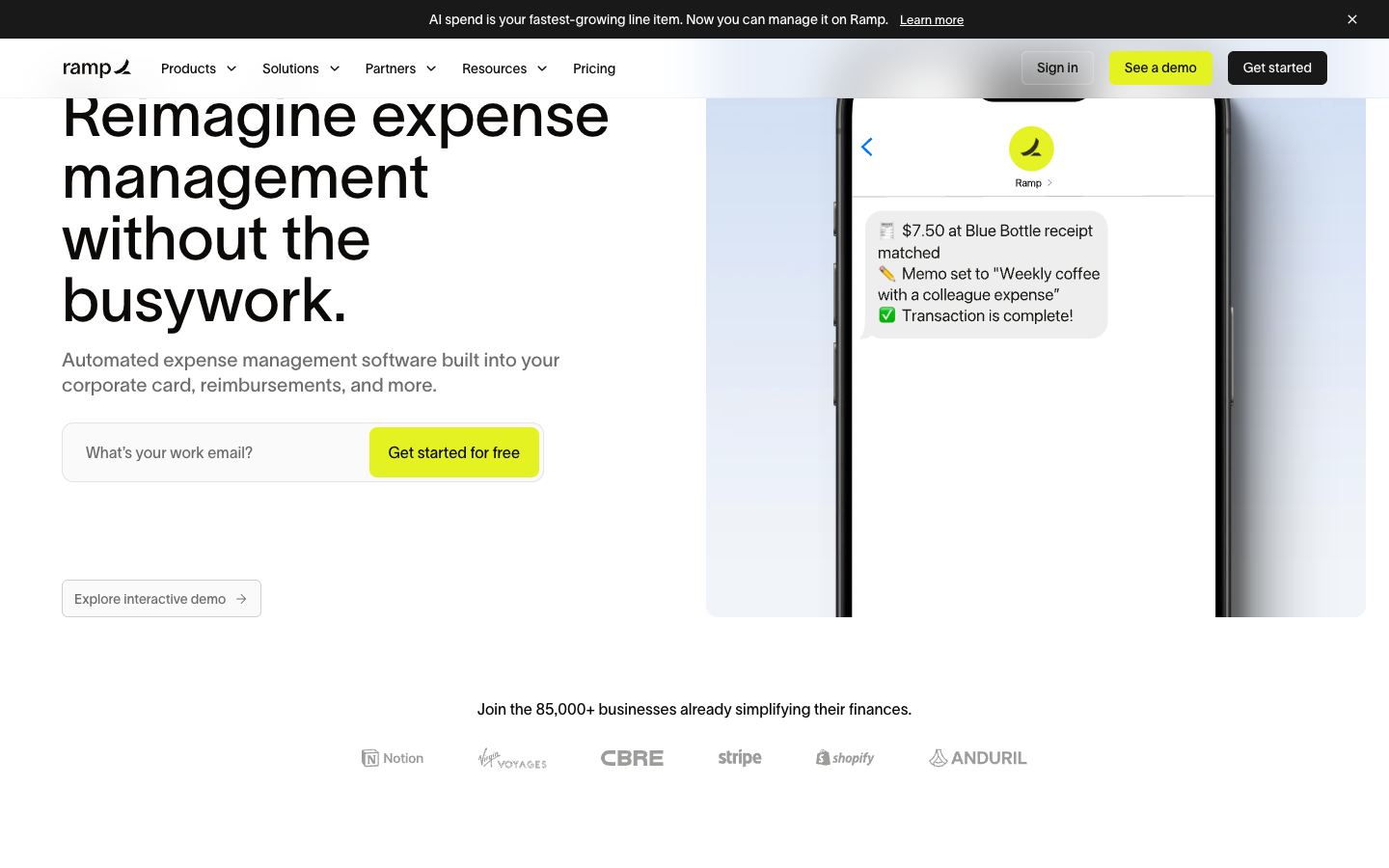
Ramp is a financial operations platform combining a corporate card program with software for policies, expenses, vendor payments, travel and accounting workflows. A business can issue physical or virtual cards to employees and configure who may spend, how much, where and for which purpose. Card purchases feed into Ramp’s expense workflow, where receipts and accounting categories can be assigned and reviewed.
That makes Ramp different from an accounting ledger. QuickBooks or Xero records financial activity and produces accounting reports. Ramp provides transaction controls, purchasing approvals and supporting information that may later sync into a ledger. The integration can reduce manual entry, but it does not remove the bookkeeper’s responsibility for classifying exceptions, reconciling statements or applying appropriate accounting policies.
Ramp also is not automatically a business bank account. Its product catalog includes eligible checking and investment products with their own providers, eligibility and disclosures. When comparing these with a traditional bank, examine deposit protection, withdrawal timing, yield conditions and which entity holds funds. Those services should not be casually described as features of the corporate card itself.
A charge card rather than a revolving credit card
The distinction matters. A conventional business credit card may let approved customers carry a balance and pay interest. The Ramp corporate card instead requires the statement balance to be paid in full under the company’s billing terms. Its help center notes that the payment cadence depends on those terms.
For a company with irregular cash flow, this can be a meaningful limitation. An airline booking and a SaaS annual renewal may be paid today while a client invoice does not clear until next month. Ramp card spending controls do not finance that timing gap. Finance leaders should understand the billing schedule, funding requirements and consequences of insufficient cash before moving recurring expenses.
The Ramp corporate card does not require a founder’s personal guarantee under its published program. Ramp evaluates business finances such as cash balances and cash flows when determining limits. That removes one concern common to personally guaranteed business cards, but it does not imply approval for every applicant or a fixed credit line.
Who can apply for Ramp in the United States?
Official Ramp US eligibility guidance states that applicants generally must be registered US entities such as corporations, LLCs and limited partnerships, with eligible nonprofits also supported. It currently excludes sole proprietorships and unregistered businesses. Applicants need at least $25,000 in a linked US business bank account, most operations and corporate spending in the US, and a real US physical business address.
The Ramp card eligibility requirements can exclude companies that would otherwise be happy using the software. A founder incorporated outside the US, an independent freelancer, or a business with insufficient cash may need a different provider. Do not assume US incorporation alone is enough.
Ramp may request the personal details of a company officer, the EIN, formation documentation and connected banking information to verify the business. Its application is not the same thing as instant card issuance, and any promotional offer should be checked against the final approval terms.
Employee cards, vendor limits and example workflow
Imagine an agency planning a conference with a $3,000 hotel budget. Finance could issue a dedicated virtual card with an appropriate limit and merchant restrictions. The employee sees where the card may be used, while the approver gets visibility into the request and subsequent charge.
This reduces the risk of a routine purchase exceeding an approved limit, but not every problem can be prevented at authorization. A hotel might place a deposit and then settle a different amount; a merchant may use an unexpected category code. The business still needs a route for legitimate exceptions and a way to reconcile final settlement against receipts.
For the broader team, administrators can issue cards for approved vendors, departments, projects or recurring subscriptions. A business that already uses corporate cards should map its current controls before replacing them and should test refunds, disputes and changes in employee roles.
🛠️ Ramp Expense Management Features
Ramp expense management: receipt capture through SMS and integrations
Ramp describes workflows for employees to attach receipts through its mobile app, SMS or integrated workplace tools such as Slack. Vendor integrations may automatically retrieve eligible receipts, reducing time spent chasing expense documentation.
The real test is how the system handles missing evidence. A receipt may be attached to the wrong transaction, a vendor may provide only an email confirmation, or a purchase may involve both business and personal items. Automated matching should be treated as a proposal that finance can inspect, not as conclusive proof of a tax-deductible expense.
Test Ramp automatic receipt matching with a recurring subscription, a restaurant receipt that includes a tip, a partially refunded order and a travel deposit. Check whether the original document, final charge and any subsequent adjustments remain connected. The workflow’s value is measured by fewer unresolved exceptions and a clean audit trail, not only by how quickly a message arrives.
Ramp corporate card spending limits and category restrictions
Ramp corporate card limits let a finance administrator set a purchase budget before the transaction. Merchant, category or program controls help enforce a policy without asking employees to memorize dozens of rules. Ramp’s published Free tier includes the basic controls, while Plus adds more sophisticated enforcement and approvals.
A policy might allow conference registration but prohibit purchases in specified categories. However, merchant coding and card-network authorization are imperfect. A legitimate payment can be declined or a policy exception may need manual approval. An effective finance team keeps a documented emergency escalation route so controls do not prevent required work.
Ramp virtual corporate cards are particularly useful for recurring software subscriptions. Assigning a virtual card to a specific supplier may make it easier to identify renewals, adjust limits and retire old vendors when a contract ends. That does not automatically cancel the underlying SaaS agreement; vendor notice requirements still apply.
Ramp expense management approvals, compliance and audit history
Managers need to know which purchases require pre-approval and which may be reimbursed afterward. A rigid approval chain can delay work, while an approval-free environment increases the chance of unauthorized spending. Ramp expense management provides configurable workflows for routing requests, bills and exceptions to designated reviewers.
Plus lists more advanced policy automation, including AI-driven reviews and the ability to lock cards when required compliance steps remain incomplete. These rules may reduce follow-up work but require careful configuration. If an expense is flagged incorrectly, finance needs a straightforward way to explain and resolve the issue.
To evaluate Ramp spending controls for employees, distinguish transaction alerts from complete compliance. A rule can indicate that a receipt is late; it cannot verify that a customer meeting took place or that a manager’s original purchase approval was valid. Policies should reflect the company’s real operational decisions.
Employee reimbursements and travel expenses
Not every employee expense is paid using a Ramp card. A worker might use a personal card for transit or a reimbursable client meal. Ramp supports domestic reimbursements and workflows for selected international payouts, with availability and exchange conditions varying by country.
The company should define evidence requirements, timing, approvals and how reimbursement accounting is posted. A reimbursement is a payment process; it may be taxable compensation in some circumstances depending on the expense and reporting rules. Seek appropriate payroll or tax advice rather than assuming the software determines classification.
A practical test of Ramp employee reimbursement processing includes a mixed-currency travel claim, an out-of-policy purchase that is later approved, and an accidental duplicate. Check employee visibility into status and finance visibility into payment history and cancellation.
Accounting integration with QuickBooks and Xero
The Free plan’s published table includes QuickBooks Online and Xero integrations. These can help carry card expenses and associated documentation into the accounting workflow, limiting duplicated entry. Higher paid tiers include links to systems such as NetSuite and Sage Intacct.
The Ramp QuickBooks Online integration should be tested with the actual ledger structure. A Ramp card purchase assigned to the wrong department or an expense that belongs on a prepaid asset account can still create inaccurate financial statements if synced without review. Map vendor names, account codes, tax categories and project identifiers before enabling automatic posting.
An accounting integration also has maintenance work. Ramp says that some subscription and Bill Pay statement charges do not automatically sync into connected ERPs. A bookkeeping process must record those fees separately to keep the ledger complete. This is exactly the kind of small recurring gap that can undermine exaggerated “fully automated close” claims.
Bill Pay, vendor invoices and approval controls
Ramp offers accounts-payable tools for collecting invoices, extracting fields with OCR, routing bills and initiating approved payments. The published Free plan already includes invoice extraction and core approvals. Plus adds more advanced approval recommendations, batch processing, line-item coding and release controls.
To calculate Ramp bill pay fees, look beyond the subscription price. Ramp’s Bill Pay fee schedule lists $0.59 for a standard ACH payment, $10 for same-day ACH, $15 for a domestic wire, $20 for a USD international SWIFT wire and $1.99 for a mailed standard check when paid from external accounts. Standard ACH and check charges began June 1, 2026, with a three-month grace period for eligible existing customers. Paying from Ramp Checking can waive those transaction charges, although overnight delivery and check attachments still cost extra. Overnight checks and attachments may still cost extra.
An accounts-payable team should verify whether the vendor’s invoice has already been paid, whether the bank beneficiary is correct and whether the approving person has appropriate authority. A system that extracts an invoice number accurately can still pay a fraudulent invoice if vendor identity is not verified independently.
Procurement, vendor contracts and subscription oversight
Procurement workflows connect a request to a purchase order and to what is eventually invoiced. Ramp advertises more elaborate purchase-order management as an add-on to Plus or Enterprise. This matters when a company approves annual software deals, new equipment or marketing agencies with large retainers.
A purchase order is not itself proof of delivery. The team needs a process for checking what was received and whether a vendor billed the agreed amount. Ramp’s advanced features include forms of three-way matching, but the specific functionality depends on the selected tier and configuration.
Vendor management features may surface unused subscriptions or suggest savings. A company should still verify contracts, renewal notice periods, service usage and cancellation obligations. Reducing a spending limit does not release the company from a contractual obligation.
💰 Ramp Pricing 2026: Free, Plus and Enterprise
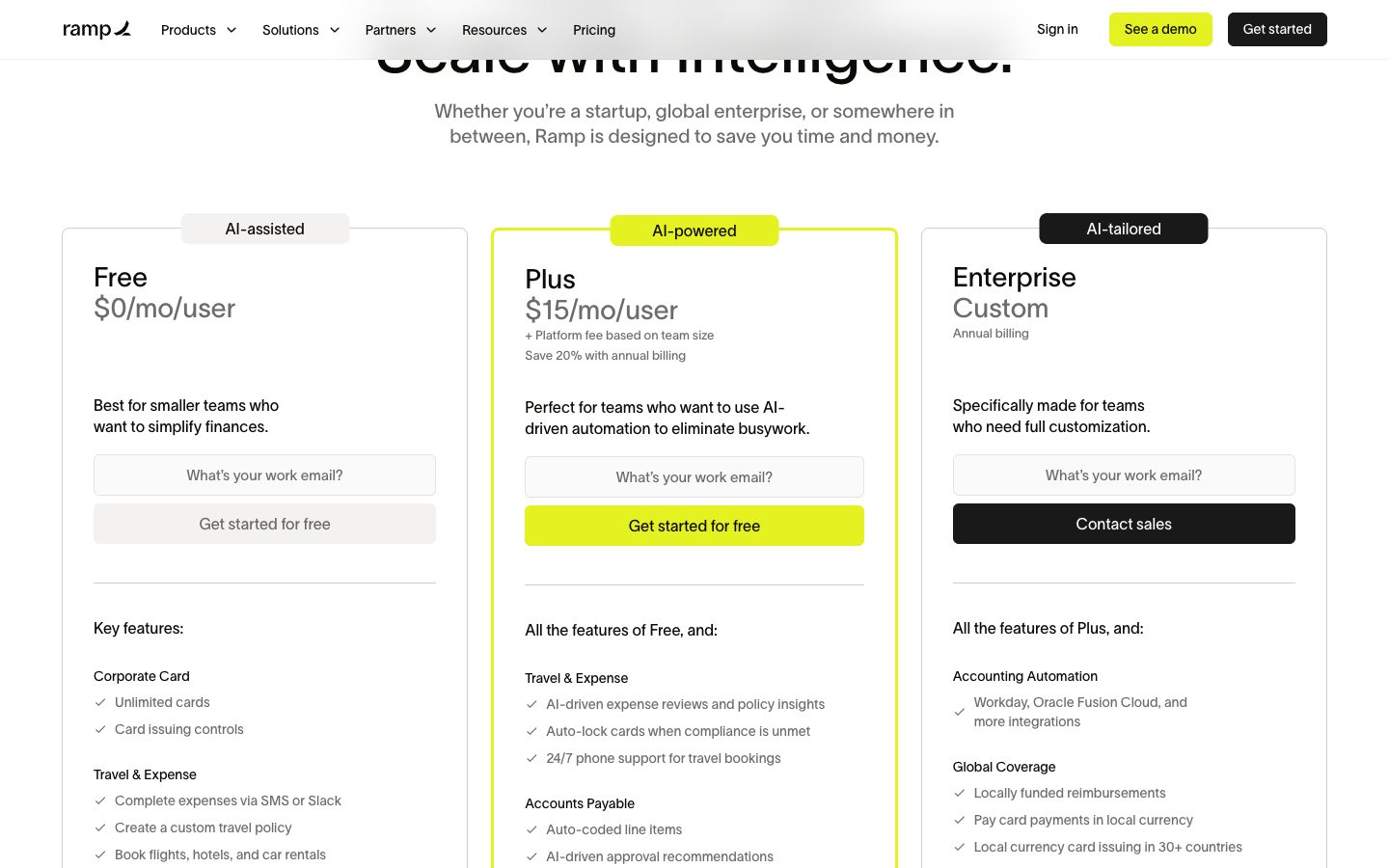
The official Ramp pricing page is the baseline for the subscription comparison. The main Ramp pricing caveat is visible on that page: Plus costs $15 per user per month plus a separate platform fee tied to team size. Enterprise does not publish a universal sticker price. Ramp describes annual Plus billing with a 20% discount, but the actual quote and contract control the total.
| Plan | Published software price | Ideal starting use case | Most important limitation |
|---|---|---|---|
| Free | $0 per month per user | US-eligible teams managing cards, receipts, bills and basic accounting sync | Some approval rules, ERP connectors and AI controls are paid |
| Plus | $15 per user/month plus platform fee | Growing teams needing advanced approvals, automation or multi-entity operations | Exact platform fee and qualifying billable users require a quote |
| Enterprise | Custom annual contract | Large or international organizations with deeper global issuing and governance | Implementation and contract economics depend on sales terms |
When comparing Ramp pricing, distinguish the software subscription from the corporate card’s credit terms, transaction-based Bill Pay charges, procurement add-ons and currency conversion costs. The different products may generate different line items on the final bill.
Ramp Plus pricing per user: 10, 25 and 50 seats
The published per-seat rate is useful for initial budgeting, but not as a complete quote. At $15 per month, 10 seats imply $150 in seat charges, 25 seats $375 and 50 seats $750, before the team-size platform fee, taxes and add-ons. If all seats qualified for an advertised annual 20% discount, the discounted seat portion would be $12 per month per seat on an equivalent basis; contract terms still determine actual charges.
| Paid Plus seats | Advertised monthly seat component | Annualized seat component before discount | Still excluded |
|---|---|---|---|
| 10 | $150 | $1,800 | Platform fee, tax, add-ons and payment fees |
| 25 | $375 | $4,500 | Platform fee, tax, add-ons and payment fees |
| 50 | $750 | $9,000 | Platform fee, tax, add-ons and payment fees |
Ramp’s documented Plus billing policy treats certain active roles, including Auditors, as billable and excludes other roles such as Guests, pending users and deactivated users. Adding seats can create prorated charges. Teams should agree on which employees actually need paid access before approving a subscription.
A reliable Ramp Plus platform fee calculation is not possible from the seat price alone because the official page does not disclose a universal platform fee. Ask sales to itemize the number of users, the platform charge, billing frequency, integration needs, add-ons and any minimum commitments. Any review that calculates “all-in Plus cost” as exactly $15 multiplied by headcount without accounting for this line is incomplete.
Bill payments, reimbursements and cross-border charges
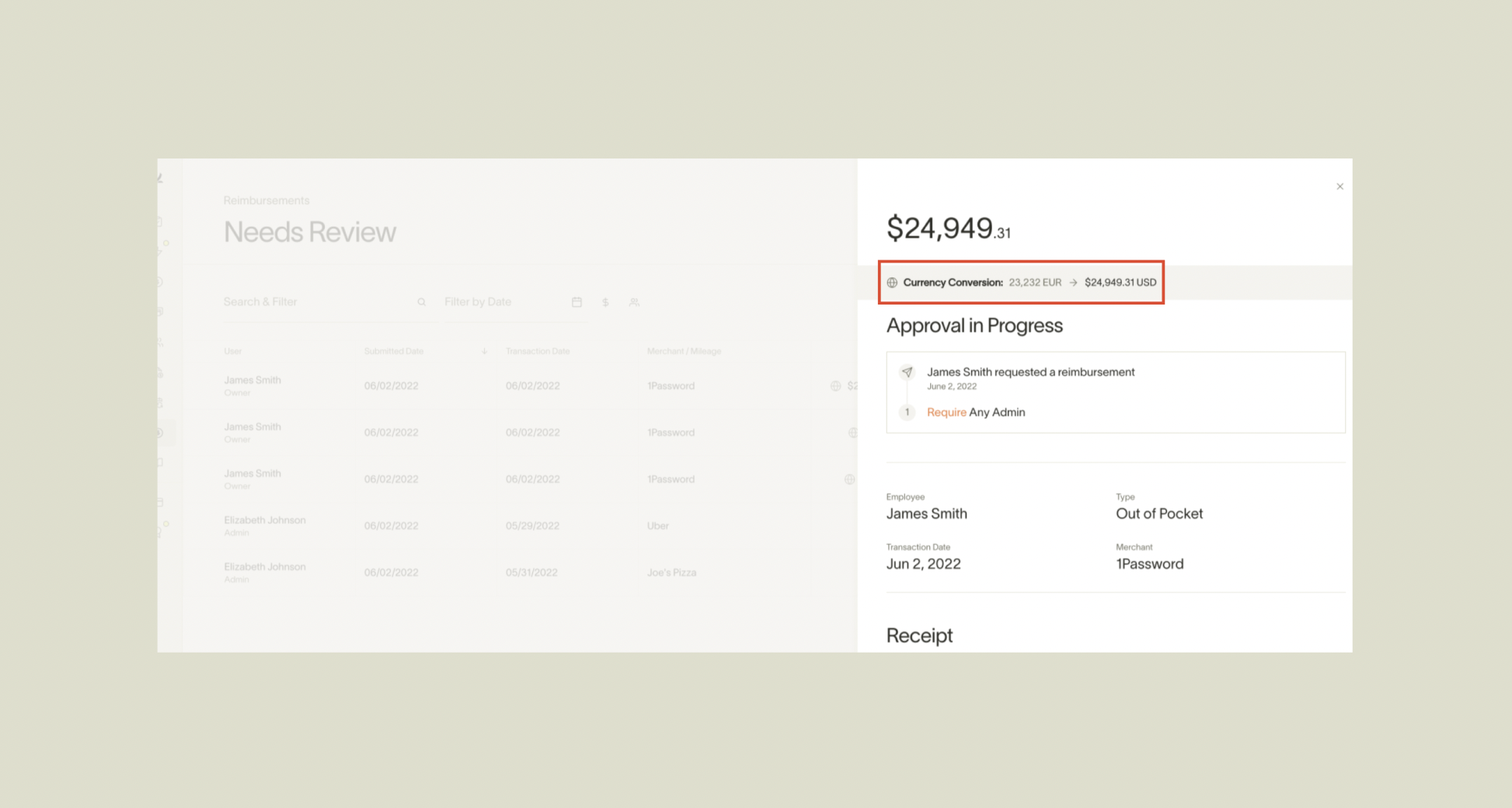
Ramp’s Free software price does not guarantee every action in the platform is free. Specific Bill Pay methods can incur fees. Domestic reimbursements are generally free under the published help-center rules, while international reimbursements can involve foreign exchange margins.
International card purchases deserve separate attention. Ramp advertises no conventional foreign transaction fee, but its foreign transaction fee guidance says that when the original charge currency differs from the statement currency, its conversion rate may include a margin not exceeding 3%. That can be material to a company purchasing services outside the United States.
For example, if a $10,000 equivalent foreign-currency card charge incurred the maximum 3% markup, the conversion component would be $300. The actual percentage may be less, so this is an illustration rather than a predicted fee. Review the statement currency and the rate on actual card transactions; do not assume a published “0% FX fee” statement means that all conversions occur at the mid-market rate.
There is a further distinction between paying by Ramp card, sending a SWIFT wire through Bill Pay and reimbursing an employee. Each has different settlement rails and potential costs. One headline foreign-transaction figure cannot represent all three.
Does Ramp offer a $500 welcome bonus?
The existing DigiOffly Finance category card promotes a $500 Welcome Bonus, but its ordinary pricing-page link is not proof of a universal customer entitlement. We could not verify a general $500 award for every new Ramp customer from the official pricing page. Separate partner, referral or campaign-specific promotions may exist and can have eligibility or approval conditions.
Therefore this article does not promise the bonus. Before pursuing one, obtain a specific current offer page showing eligible applicants, the qualifying action, payout mechanism, deadline and exclusions. Do not enter business banking details based on an unverified banner. This distinction also applies to reported $1,000 promotions from some third-party articles; promotional terms can vary by channel and date.
⚖️ Ramp vs Brex, Mercury, Airwallex and QuickBooks
The products in this comparison are not substitutes in every respect. Ramp and Brex combine corporate cards with spend platforms. Mercury primarily addresses eligible US business banking, cards and payment workflows. Airwallex offers global account and currency operations, with its own eligibility and feature limitations. QuickBooks is accounting software, not a corporate card program.
| Product | Main business role | Reason to shortlist | What to verify |
|---|---|---|---|
| Ramp | US corporate charge cards and spend controls | Centralized expenses, approvals and receipt workflows | US eligibility, Plus platform fees, rewards and FX |
| Brex | Corporate cards, travel and expense software | Companies seeking rewards and spend tools | Underwriting, rewards conditions and global availability |
| Mercury | Business banking and payment operations | Eligible US companies needing deposit accounts and transfers | Account eligibility, banking partners and service fees |
| Airwallex | Global business financial accounts and cards | Cross-border payouts and multi-currency operations | Regional access, FX spreads and account capabilities |
| QuickBooks Online | Accounting ledger and reporting | Businesses needing bookkeeping and accountants | Plan features, subscriptions and manual close process |
Ramp vs Brex: controls or rewards?
When comparing Ramp vs Brex for expense management, start with the approval rules and integrations your business needs, not just headline rewards. Ramp’s published emphasis is pre-spend controls, receipt capture and financial operations. Brex also provides expense and travel tools and may appeal to businesses with different reward preferences. Capital One completed its acquisition of Brex on April 7, 2026, so its current ownership and contractual terms also matter in a 2026 comparison.
Eligibility can decide the question before feature scores do. A company with a modest bank balance and uncertain annual revenue may not qualify for one provider even if its product is attractive. Ask both companies about actual underwriting and issuance conditions for your legal entity, especially with multiple operating subsidiaries.
For cards issued to an entire team, rewards are only one side of total value. A 0.5-percentage-point difference on $100,000 of eligible annual spending equals $500 in rewards. One poorly controlled annual software renewal can exceed that amount. But this calculation is illustrative; neither company promises a particular user the headline reward.
Ramp and Mercury can work together
Mercury’s business checking may be useful for operating cash, incoming payments and bank transfers. Ramp may be used to manage team card spending and approvals. The combination can make sense, but it does not justify treating two platforms’ balances as a single bank account.
Bank-account linking, funding schedules and bookkeeping synchronization need reconciliation. If a company pays a Ramp statement from Mercury and also imports detailed Ramp card transactions into QuickBooks, its bookkeeper should record the card liability and settlement without double-counting expenses.
Ramp vs Airwallex for international operations
The choice becomes more complicated when employees work and spend in several countries. Ramp supports international payments and reimbursements and offers some global card features at higher tiers. Its Enterprise page advertises local-currency card issuing in thirty-plus countries and more localized funding capabilities.
Airwallex may be worth comparing when holding foreign currencies, receiving local payments and using local card or payout infrastructure are central requirements. A business headquartered outside the US may face more basic Ramp eligibility restrictions, regardless of product depth. Ask each provider for the complete supported-country and account-entity matrix.
Why Ramp does not replace QuickBooks Online
Expense management and financial reporting overlap but are not identical. A transaction in Ramp has details such as merchant, approval, cardholder and receipt. In QuickBooks, that same transaction also needs the correct general-ledger category, accounting period, tax treatment and relationship to payables or assets.
The finance team still needs to close bank and card statements, adjust accruals and review outstanding liabilities. Automation can help move evidence between systems; it does not guarantee the final financial statements are correct.
✅ Ramp Pros and Cons
Pros
Card controls before spend, reimbursement workflows, useful free software tools and QuickBooks/Xero integration.
Cons
US and $25,000 cash eligibility limits, variable cash back, currency conversion margins and separate paid platform fees.
Strengths: The Free tier includes genuine operating tools rather than being only a limited trial. Virtual and physical card controls can help prevent unauthorized spending. Receipt collection, reimbursements and vendor-payment workflows reduce fragmentation across email and spreadsheets. QuickBooks and Xero integration makes the software useful to bookkeepers maintaining a separate general ledger.
Limitations: Eligibility is narrow compared with ordinary business banking. Ramp’s charge card must be paid in full and may not suit companies needing revolving credit. Plus pricing includes an extra platform fee. International currency conversion and certain bill-payment rails may introduce costs. Cash-back rewards vary by customer, and some advanced automation or global functionality is reserved for higher tiers.
The company’s success with Ramp depends on clear accounting ownership and practical purchasing policies. Before deployment, finance should decide who manages employee cards, approves new vendors, handles missing receipts and audits automated decisions. Software cannot resolve a policy no one has defined.
🎯 Who Should Use Ramp Expense Management?
Consider Ramp Free if your business meets the US and bank-balance qualifications, issues staff cards and needs a structured expense workflow with basic QuickBooks or Xero integration. The company can pilot card controls and receipt capture without first committing to a paid software plan.
Consider Plus if your finance team already has multiple approval stages, needs more reliable policy automation or requires deeper integrations and entity visibility. A quoted platform fee is part of the buying decision, not an afterthought.
Consider Enterprise if local-currency card issuing, global entity operations, advanced permissions or customized ERP workflows are essential. Validate the exact list of supported jurisdictions rather than assuming international payments imply worldwide account availability.
Consider alternatives if your company operates primarily outside the US, lacks the required bank balance, is a sole proprietorship or needs to carry card balances across billing periods. An ordinary business credit card or a different spend-management provider might fit better.
🧪 Ramp Review Methodology and Source Notes
We read the official Ramp plan comparison, card eligibility guidance, corporate charge card terms, Plus billing policy, Bill Pay fee schedule, and foreign transaction explanations. Public third-party research informed the competitor comparisons.
This Ramp review is based on public research. We did not activate a real Ramp account, issue corporate cards, upload payroll records, test a cross-border transfer or independently verify Ramp’s claimed customer time savings. We do not convert marketing statements about “saving hours” into invented performance figures.
The images in this article are vendor-provided screen examples or public website captures. They are shown to help explain advertised interfaces and plan features, not as evidence that DigiOffly accessed a Ramp customer’s financial data. Prices, card limits, rewards and product availability should always be verified in the final agreement.
🏆 Final Verdict: Is Ramp Worth the Cost in 2026?
Ramp is an attractive candidate for an eligible US company that wants to control employee spending before it occurs, gather receipts more consistently and shorten the gap between a purchase and the accounting record. Its Free tier makes an initial evaluation possible without assuming a separate software subscription.
The Ramp pricing decision for Plus should be driven by real process needs: specialized approvals, finance-team scale, sophisticated accounting connections and entity controls. At $15 per user monthly plus an additional platform fee, the headline price is only part of the total. Enterprise requires an individualized proposal.
The Ramp corporate card remains a charge card with pay-in-full terms, not a replacement for a revolving working-capital facility. Rewards should be assessed at the actual approved rate, not the maximum advertised rate, and international conversion charges should not be ignored.
Our recommendation is to test one expense policy and a representative accounting period before broad deployment. Obtain a written all-in quote, confirm your company’s card eligibility, and ensure that the bookkeeper can reconcile statements and fees. Those checks reveal more about Ramp’s fit than a glossy automated-finance promise.
Ramp Review 2026: Frequently Asked Questions
Is Ramp free in 2026?
Ramp Free is $0 per month per user for eligible businesses. The card and free software do not eliminate separate charges on some Bill Pay methods, FX conversion or optional paid services.
How much is Ramp Plus?
The official Ramp pricing page lists $15 monthly per user plus a separate platform fee based on team size. Annual billing can discount seats, but request a complete quote.
Who qualifies for a Ramp corporate card?
US-registered corporations, LLCs or LPs with eligible physical addresses, most activity in the US and at least $25,000 in a US business bank account may apply, subject to underwriting.
Does Ramp need a personal guarantee?
Ramp advertises no founder personal guarantee or personal credit check for its corporate charge card, although eligibility and business underwriting still apply.
Can I carry a balance on a Ramp card?
No. Ramp is a corporate charge card with a statement balance that must be paid in full by the due date according to the businesss card terms.
Does Ramp charge foreign transaction fees?
Ramp describes no conventional foreign transaction fee, but currency conversion can include a markup of up to 3% when a transaction settles in a different currency.
Does Ramp integrate with QuickBooks Online?
Yes. Ramp Free includes QuickBooks Online and Xero integrations. Advanced ERP and multi-entity features can require Plus or Enterprise.
Is a $500 Ramp welcome bonus guaranteed?
No. We could not establish a universal $500 welcome bonus through the ordinary official pricing link. Separate referrals or offers may have specific eligibility and time restrictions.
What is the difference between Ramp Free and Plus?
Free covers core cards, receipts and accounting workflows. Plus adds more complex policy automation, approvals and selected ERP/multi-entity capabilities, plus per-user and platform fees.
Is Ramp a business credit card or accounting software?
Ramp combines a corporate pay-in-full charge card with expense and finance operations software. It is not a revolving business credit card or a replacement for the companys accounting ledger.
EXPLORE NEXT ON DIGIOFFLY
What to explore after Ramp
Compare spend management, banking and accounting software on real total cost and eligibility.
Finance comparisons
- Explore our Finance software hub — Review banking, accounting, payroll and expense platforms.
- Browse the full software directory — See the wider catalog and existing reviews.
- Brex review — Compare cards and spend management.
- Mercury review — Explore business accounts and payment flows.
Compare total ownership costs
- Estimate recurring software costs — Separate monthly fees from annual commitments and transaction charges.
- Compare software side by side — Check capabilities and the unknowns before subscribing.
Keep researching
- Find software for your workflow — Shortlist tools by concrete business needs.
- Read our research methodology — See how public vendor documentation is interpreted.