

Research updated October 19, 2026. This Bench Accounting review evaluates public pricing, the service model, its 2024 shutdown and 2025 relaunch, and the 2026 contract terms. We have not connected a bank account, hired a Bench bookkeeper, commissioned a tax return or accessed a private customer dashboard. Product images come from Bench’s public help and marketing material and should not be treated as our own hands-on account screenshots.
A small design studio has reached the end of another month. The owner needs to reconcile a Stripe deposit against customer invoices, identify expenses on two cards, decide what to do about a refund and answer an accountant’s questions before the quarterly estimated-tax payment. None of those tasks is particularly mysterious, but they are scattered across payment dashboards, bank statements, receipts and a long email thread. The owner would rather do client work than spend a Saturday assembling a profit-and-loss report.
Bench Accounting sells a way to hand much of that routine bookkeeping to a dedicated human team, supported by Bench’s own software. That is not the same purchase as a QuickBooks Online or Xero subscription. Software supplies a ledger and the tools to keep it; Bench supplies people who perform the bookkeeping as a service. Understanding the difference is the foundation of a useful review.
There is a second question behind the standard feature checklist. Bench stopped operating briefly in December 2024, before the business was acquired and relaunched by Employer.com in early January 2025. It now says it is operating and accepting customers. That history does not prove its current service is unreliable, but it does make data export, continuity and contract details important purchase criteria rather than obscure footnotes.
📊 Bench Accounting Review Summary
What Bench does well
Done-for-you monthly bookkeeping, a dedicated team, reconciled reports, and optional tax filing or QuickBooks-based support.
Where to be careful
Potential service-time overages, auto-renewal notice windows, accounting-basis limits and business continuity questions.
Product type: Done-for-you online bookkeeping and optional tax filing for US-based small businesses. Bench also sells hourly certified bookkeeping help for businesses that keep QuickBooks Online.
Regular advertised prices: On the current primary US pricing page, Bookkeeping Light is $199 per month subject to its micro-business eligibility, Bookkeeping is $399 per month, and Bookkeeping + Tax is $649 per month. Annual packages are listed at $1,910, $3,830 and $6,230 respectively. An older Bench landing page still lists a $599 combined plan; we use the current canonical pricing page rather than assume the lower rate is available at checkout.
What stands out: An actual team prepares and reconciles monthly books, communicates with the owner and delivers financial statements and year-end reports. Compared with pure DIY accounting software, customers can delegate the repetitive work instead of learning each step.
Risks worth checking: A subscription is not unlimited expert time for every possible request. The March 2026 terms describe service-time allocations, hourly overage rates and automatic renewals with written cancellation deadlines. Bench’s 2024 interruption means buyers should also confirm data access and their exit process.
Editorial verdict: Consider Bench if monthly bookkeeping work is consuming too much owner time and a reputable human service matters more than extensive control over a proprietary accounting ledger. Ask for written specifics about included hours, catch-up work, transaction complexity, accounting basis, tax deliverables and data export before committing.
⚡ Quick Verdict: Is Bench Accounting Worth It in 2026?
Bench Accounting is a legitimate alternative to managing every accounting entry yourself, but it is not a $199-per-month version of Xero. Its core value proposition is a service relationship: you connect eligible accounts, provide missing source documents, answer questions from a bookkeeper and receive reviewed financial statements. The business remains responsible for providing complete data and reviewing the outcome.
The headline pricing is easy enough to understand. A lean micro-business may qualify for a $199 monthly plan, a company needing broader routine bookkeeping can start at $399, and a business that wants tax filing support may look at $649. The harder part is calculating what happens if the business needs corrections, an unusual reconciliation, additional historical work, or more human hours than the plan includes. Those details can change the total invoice materially.
For a simple service business that frequently misses its month-end close, paying a professional team might be sensible. For a company with inventory valuation, complicated accrual accounting, multiple legal entities or venture reporting requirements, Bench’s standard monthly package should not be assumed to replace specialized accounting support. Ask for a written scope and sample deliverables for that use case.
We regard a Bench Accounting review as incomplete unless it discusses the late-2024 shutdown. Employer.com’s takeover restored the service, according to Bench’s published timeline, but no public statement can guarantee uninterrupted service forever. An exportable copy of the books, clear ownership of accounting data and a defined migration path remain sensible safeguards for any outsourced bookkeeping provider.
🧠 What Is Bench Accounting and How Does It Work?
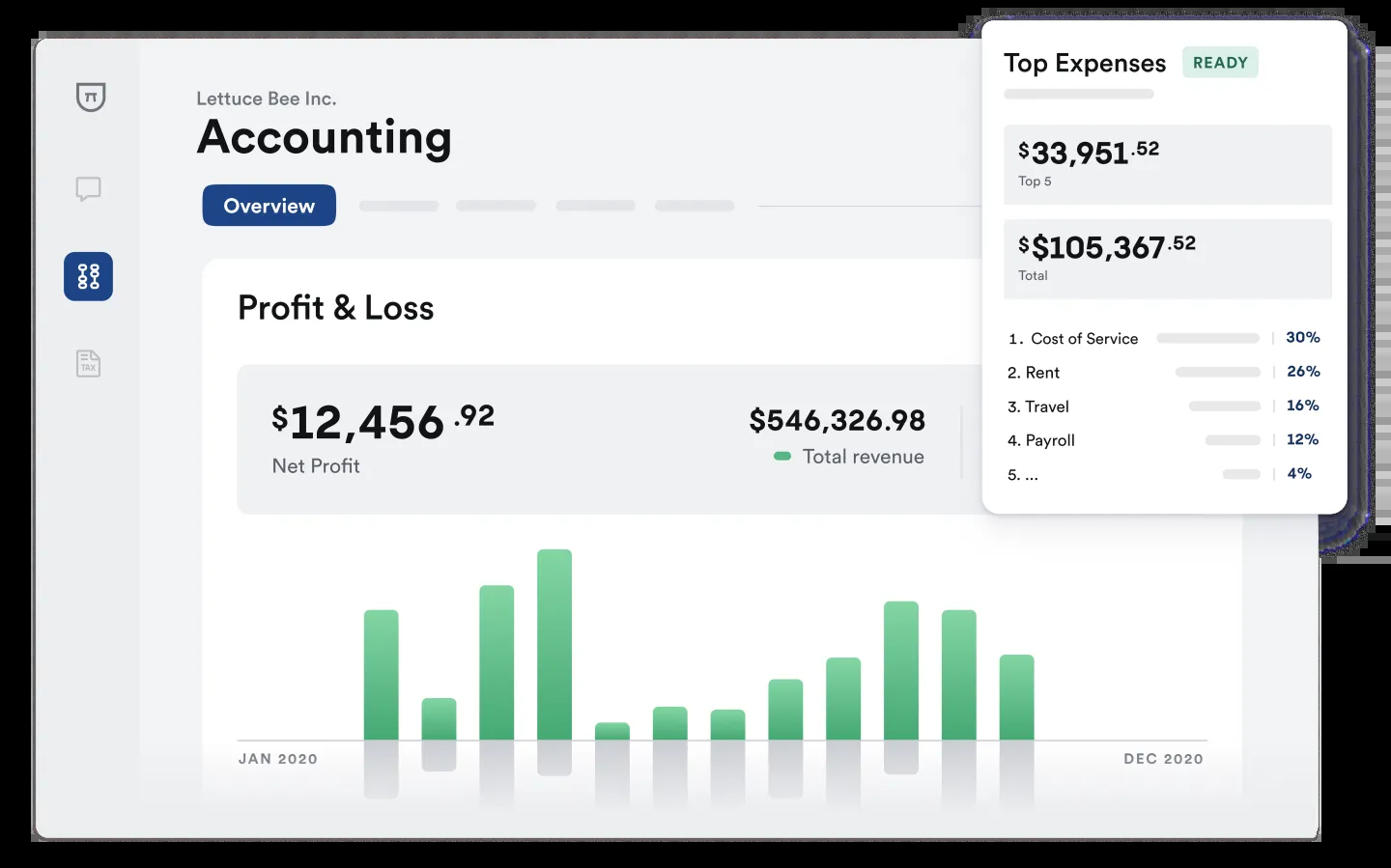
Bench Accounting connects small businesses with bookkeepers who work inside its online platform. Instead of the owner categorizing each imported transaction, the bookkeeping team organizes the monthly activity, reconciles accounts and prepares financial statements. Customers can review progress, share documents, answer requests and message their team through the service.
A dashboard is not the same as a completed month. Bank and card feeds may show recent activity immediately, while the bookkeeping team is still checking descriptions, matching payments and reviewing balances. The dashboard’s current snapshot and a reconciled month-end report serve different purposes. For tax planning or a loan application, that distinction can be crucial.
The Bench bookkeeping service is aimed at US-based businesses, ranging from side businesses to established operations. The vendor’s published information describes monthly profit-and-loss statements, balance sheets, 1099-related reporting and an IRS-oriented year-end financial package, subject to plan and business needs. A bookkeeper’s work does not necessarily include audited statements, GAAP assurance or a formal CPA attestation.
A realistic month with a Bench bookkeeper
Consider a two-person marketing agency with a checking account, a business card and client payments through Stripe. The owner connects the financial accounts with read-only authorization and supplies invoices or contracts when a transaction requires context. The bookkeeper categorizes ordinary transactions and may ask why a $2,400 bank deposit does not match a customer invoice.
Maybe the payment processor deducted fees, maybe the customer paid two invoices together, or maybe the owner transferred personal funds into the business. These are materially different accounting events. The bookkeeping team can investigate and request clarification, but it cannot infer a reliable answer from a bank description alone.
At the end of the month, Bench aims to provide a financial package that reflects categorized and reconciled activity. A diligent owner should still check outstanding customer balances, payroll liabilities, loan transactions and anything the team flagged as unusual. Outsourcing work reduces the daily administrative load; it does not remove the owner’s duty to understand the financial position.
Bench’s proprietary platform versus a QuickBooks workflow
The standard Bench Accounting service uses its own technology. This may be attractive to a company that wants the accounting provider to handle most of the system setup, but it can be a limitation for a business that expects direct access to a widely used ledger and an ecosystem of industry-specific accounting applications.
Bench Accounting also currently advertises a separate QBO Certified Bookkeeper or fractional-bookkeeper service, with specialists working within the customer’s existing QuickBooks Online account. That is a different engagement from moving the entire bookkeeping process onto Bench’s proprietary system. The published starting hourly price is $55, with a $1,200 onboarding charge. The accounting software subscription itself is not automatically free.
If the business already has reconciled QuickBooks books, ask whether staying in QuickBooks with a bookkeeper would be cheaper and easier than migrating into Bench. Switching systems solely because the new vendor offers an attractive onboarding call can create later costs for data mapping, opening balances and historical corrections.
🛠️ Bench Accounting Features and Real-World Workflows
Dedicated bookkeepers and communication
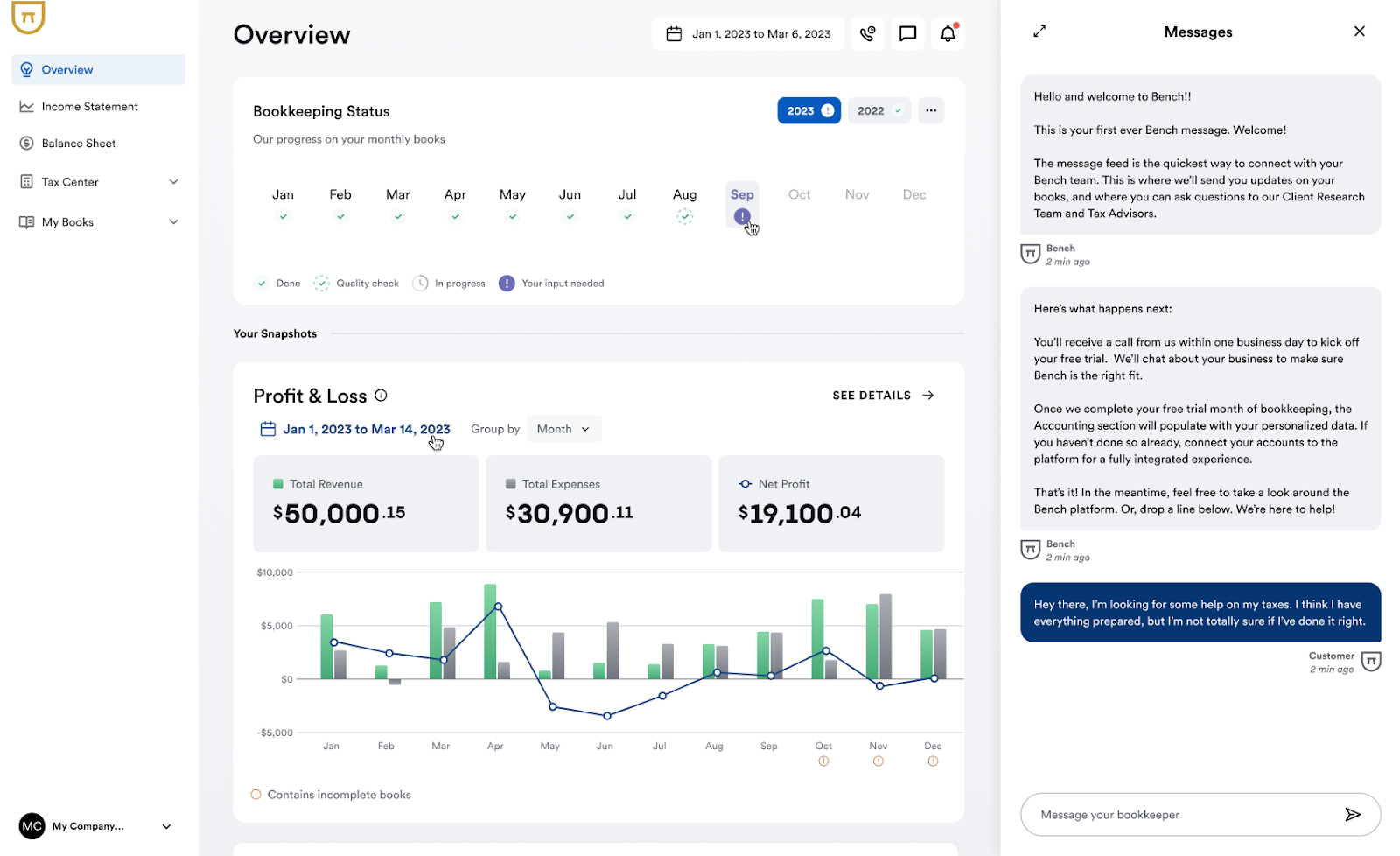
Human bookkeeping is the center of Bench’s pitch. Customers are assigned a team and can send questions about transactions, expense categories and the status of their monthly books. Its primary bookkeeping plan advertises unlimited access to the bookkeeper through messaging, phone and video. Unlimited communication should not be confused with unlimited service hours for corrections or non-routine requests; the 2026 terms have a separate time-allocation mechanism.
For owners considering Bench dedicated bookkeeper support, useful questions include: Who will approve unusual entries? Will the same person remain responsible for the client? What happens if that person leaves? How quickly are routine questions answered? Are post-close adjustments documented? A clear response matters more than a generic promise of personalized care.
A freelancer may need only a few clarifications each quarter, while a restaurant owner with frequent cash deposits and tip adjustments needs much more detailed communication. Put the monthly reporting schedule and responsibility for missing documents into the written scope before deciding the service is suitable.
Connected accounts and bank reconciliation
Bench Accounting offers account connections that help bring financial data into the platform. Its public security page says the service uses read-only access to financial accounts for transaction import. That should reduce the need to type every bank transaction, but the account owner should still review exactly what data is accessible and the procedures for revoking consent.
A reliable Bench bank reconciliation process should stand up to a concrete test. Imagine a $1,000 customer invoice, a $980 processor payout after $20 in fees, a reversal in the following month and an owner contribution made on the same day. The bank balance alone will not show how those pieces belong in the ledger. Correct bookkeeping separates income, expenses, refunds and transfers.
Ask the bookkeeper how missing bank-feed periods, imported duplicates and old outstanding checks are handled. Where should the owner supply a receipt? What happens when a connected account is closed? A vendor demonstrating a colorful dashboard without explaining those steps is not answering the month-end accounting question.
Financial statements, cash flow and reporting
Bench Accounting says it prepares monthly income statements, balance sheets and other reports relevant to tax preparation. The dashboard also displays more current financial information while a month remains open. A bank-import snapshot can be a useful early warning, but customers should use reconciled periods for more consequential decisions.
For Bench financial statements for small businesses, inspect an example in the owner’s industry. A service firm wants to distinguish client revenue from reimbursed expenses. A retail business must understand inventory purchases and cost of goods sold. A property manager may need to keep client money separate from the business’s own income. Not every chart of accounts is equally useful for every company.
Financial statements describe recorded activity; they do not forecast the future on their own. If the agency expects a customer to pay a large invoice next month, a cash-flow projection must account for payment timing and outstanding obligations. Ask whether the Bench plan includes that analysis or just standard historical reports.
Transaction categorization and owner input
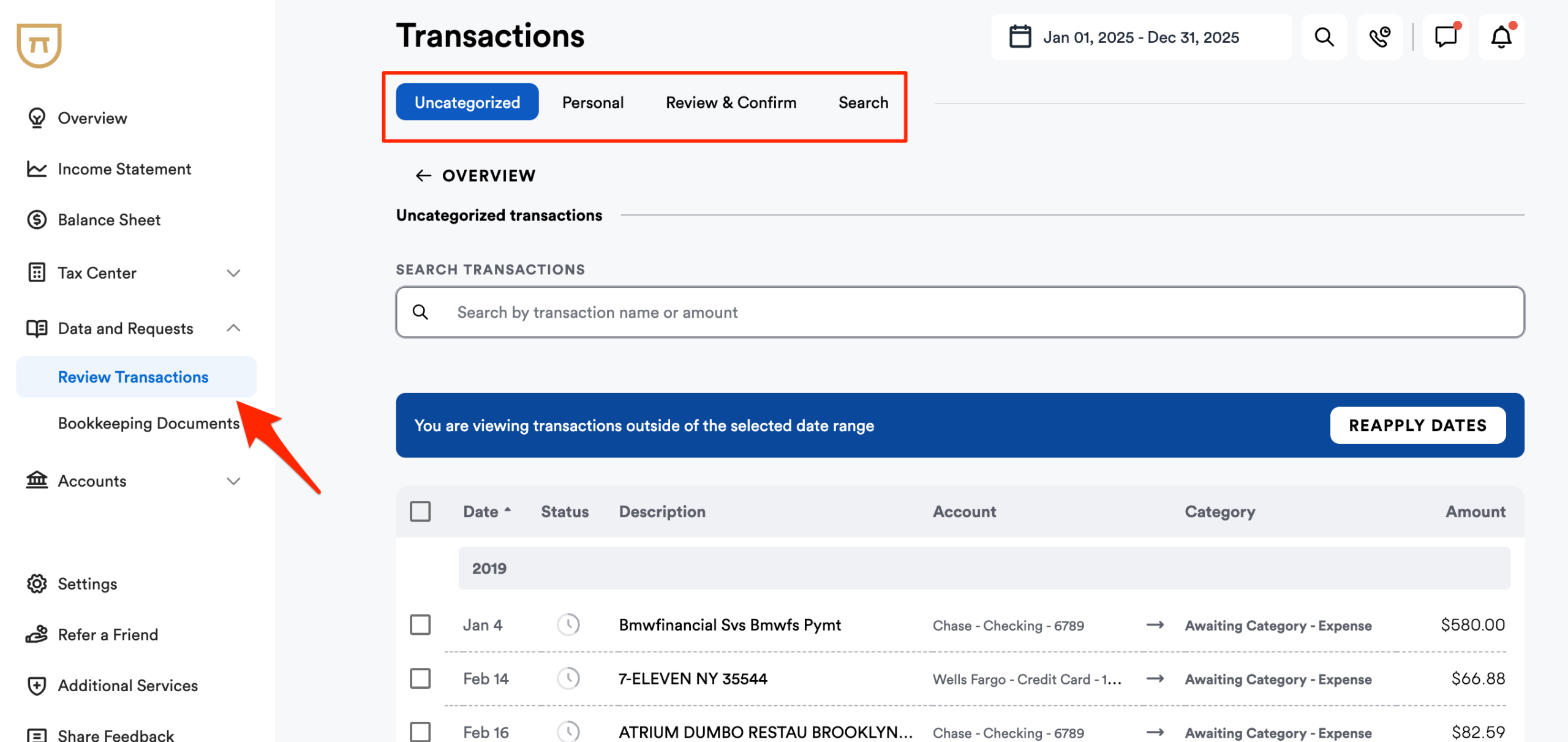
The help center describes sections for uncategorized transactions, personal transactions and items waiting for review. That workflow acknowledges a basic truth: not every bank description provides sufficient context for good accounting. The bookkeeper may know the general category, but only the owner knows whether a specific hardware purchase was for business use or personal use.
Owners evaluating Bench transaction categorization accuracy should check how exceptions are surfaced and corrected. A correctly named expense category is only one part of a reliable entry. The transaction may still be in the wrong month, assigned to the wrong business entity or missing an associated tax document.
A studio with dozens of recurring subscriptions is probably easier to categorize than a business with cash tips, refunds, merchant advances and multiple owners. Unusual transactions increase the need for context and may also increase human service time, which is relevant to contract charges.
Year-end tax-ready bookkeeping versus actual tax filing
The standard bookkeeping plans promise books and year-end information intended to support filing, but that is not the same thing as preparing and submitting tax returns. Bench separately sells tax filing and advisory services, including a higher-priced bundle. Exactly which business returns, personal returns and state filings are covered must be confirmed for the customer.
When comparing Bench tax filing and bookkeeping bundles, define the legal entity first. A sole proprietor’s return differs from a multi-member LLC taxed as a partnership or a corporation with payroll. Ask whether a return is included for every owner, which states are covered and whether catch-up work must be completed before the filing deadline.
Bench Accounting’s 2026 terms state that tax services require specified authorizations and may involve third-party preparers. The existence of licensed tax professionals in a plan description should not be taken as a promise of legal or tax advice for every scenario. Request the scope and credentials relevant to the work your company needs.
💰 Bench Accounting Pricing 2026: Subscription and Hidden Costs
The Bench Accounting pricing 2026 question is not answered by one number. Bench advertises monthly bookkeeping, a combined bookkeeping-and-tax package, a lower-priced micro-business tier, stand-alone tax help and a service for companies keeping QuickBooks Online. Annual billing can be less expensive, but it creates a longer commitment.
As checked October 19, 2026, the canonical Bench pricing page shows Bookkeeping Light at $199 per month, Bookkeeping at $399 per month and Bookkeeping + Tax at $649 per month. Light is described as appropriate for businesses with annual revenue no greater than $250,000. Bench also advertises a fractional bookkeeper working in QuickBooks for $55 per hour plus $1,200 onboarding.
One older Bench product page still uses another naming convention—Grow, Core and Core + Tax—and lists $599 for the highest bundle. It would be misleading to report $599 as the guaranteed current price while the main pricing page says $649. A buyer should request a written quote for the exact plan, payment frequency, work scope and eligibility. Differences between archived offers and live pricing can create expensive misunderstandings.
| Current offer | Listed monthly price | Listed annual billing | Useful for | Important qualification |
|---|---|---|---|---|
| Bookkeeping Light | $199 | $1,910 | Eligible micro-businesses | Vendor states a $250,000 annual revenue threshold |
| Bookkeeping | $399 | $3,830 | Recurring books with a dedicated team | Does not automatically include filed income-tax returns |
| Bookkeeping + Tax | $649 | $6,230 | Books with tax preparation and advisory | Tax timing and a 12-month commitment may apply |
| Fractional QuickBooks bookkeeper | $55 per hour | Hourly arrangement | Businesses retaining QuickBooks Online | $1,200 onboarding; ask about hours and QBO license |
Annual billing calculations and effective rates
The advertised annual amounts are useful, but they do not turn a long commitment into a cancel-anytime plan. Divide the listed yearly fee by twelve and the effective equivalent is about $159.17 for Light, $319.17 for Bookkeeping and $519.17 for Bookkeeping + Tax. Those are calculations based on the vendor’s annual quotes, not the month-to-month subscription charges.
For Bench annual versus monthly billing, the material decision is whether the service scope is stable for the next twelve months. A studio expecting to change its accounting method, grow into inventory or bring bookkeeping back in-house may value shorter commitments even if they cost more.
The terms say a monthly contract automatically renews without at least 15 days’ written notice, and an annual contract without 60 days’ notice. Simply closing an account or ceasing to use the service is not necessarily the required cancellation notice. Fees are generally described as non-refundable, subject to the agreement’s provisions. Review the actual subscription order for any terms that differ.
Service-hour allocation and additional fees
The service-hour allowance can affect the final bill as much as the advertised monthly subscription. Bench’s Terms of Service, updated March 3, 2026, refer to a Service Time Allocation for each subscription. The time can cover transaction reconciliation, customer questions, unusual adjustments and other work performed by staff. The included hours for the particular plan should be confirmed before the business authorizes payment.
The same terms give default Bench bookkeeping overage fees of $215 an hour for the first ten hours over the allocation, $220 for hours eleven through twenty-five, and $245 for hours twenty-six and beyond. They also describe an overage cap of 1,000% of the monthly plan fee for a billing period. This is a ceiling on extra overage fees, not a promise that actual costs will stay close to the advertised subscription.
| Service-time overage level | Default charge per extra hour | Illustrative incremental cost |
|---|---|---|
| Hours 1–10 above allocation | $215 | Three extra hours: $645 |
| Hours 11–25 above allocation | $220 | Ten extra hours plus two in this band: $2,590 |
| Hours 26 and later | $245 | Subject to the agreement’s overall overage cap |
| Other non-routine work | Confirm in writing | Catch-up, amended filing and custom requests may vary |
These examples illustrate how the published terms work; they do not predict the hours any customer will need. The agreement provides for an 85% usage notice and monthly information on service time. It also permits higher-tier requirements after three consecutive periods above the allocation, following specified notice. The owner should ask Bench to show exactly where the plan’s included hours appear in the quote or account.
For a company with simple, consistent bank activity, these provisions may never affect the bill. For a company with months of missing receipts, repeated revisions and several payment systems, they make the economics quite different from a flat-rate software license.
What does a free trial really include?
Bench advertises a free trial and a free month of bookkeeping on certain public offers. That is not equivalent to a permanently free subscription. The trial can illustrate how the service handles a sample set of transactions, but the real purchasing decision depends on the recurring plan, the source records you must provide and any eligibility or continuation conditions.
A promotion for current-year catch-up work is similarly conditional: the main pricing page advertises free catch-up for qualifying annual subscribers, while older or more complicated backlog may require a separate quote. Never budget a full year of reconstruction at zero cost without a detailed written proposal.
⚠️ Bench Shutdown, Acquisition and Reliability in 2026
Bench’s interruption deserves factual context rather than alarmist language. In late December 2024, the company stopped operating, leaving some customers and employees facing sudden disruption. Within days, Employer.com announced the acquisition of Bench assets and the service resumed under the new ownership in January 2025. Bench’s current company page states that it is operational and accepting new and returning customers.
Those facts do not prove that every past customer had a frictionless transition. Bench’s transition FAQs also distinguish legal responsibilities of the previous entity from those of the new owner. A prospective customer should evaluate the current contract and support organization, not assume the new company automatically accepted every previous obligation.
The vendor says historical data is accessible and completed work can be exported. Before signing, ask what files are available without a paid subscription: general ledger, journal detail, reconciliations, income statements, balance sheets and source-document attachments. A PDF-only set of reports may not be enough to migrate cleanly into another accounting package.
What to confirm before you rely on Bench
A practical continuity plan has three parts. First, know who legally contracts to deliver bookkeeping and tax work. Second, obtain regular copies of completed accounting records. Third, decide how you would resume monthly reconciliation if service stopped or your assigned team changed.
Questions about the prior shutdown are reasonable; claims that the provider is currently closed are not. The service is operating in 2026 according to its public statements, but any outsourced provider introduces an availability dependency that a company should manage.
Cash-basis, accrual-basis and tax readiness
Bench Accounting’s standard service has historically been associated with simpler bookkeeping. Its current materials discuss support for growing businesses and additional accrual requirements, but the available pricing summary does not define every accounting-basis entitlement. If the company must use accrual accounting for investors, inventory or tax reporting, confirm the written scope instead of inferring coverage from a marketing headline.
A cash-basis record of a customer deposit can look different from an accrual record tied to delivery of services. A business with deferred revenue, prepaid expenses or inventory needs clear policies for closing each month. If a bookkeeper provides a statement using the wrong basis, the document may look polished while still failing its intended use.
⚖️ Bench vs QuickBooks Online, Xero, Pilot and Bookkeeper Services
Comparisons often mix software prices with service prices. QuickBooks and Xero provide accounting tools; a human bookkeeper is still needed if the owner does not maintain the system. Bench bundles software with labor for its core offerings. Pilot and other managed bookkeeping firms sell combinations of a service team and accounting infrastructure for different client sizes and reporting needs.
The most useful Bench vs QuickBooks Online comparison asks whether the business wants to delegate the actual month-end work or keep direct control of the ledger. A QuickBooks subscription can be cheaper as a software license, but not necessarily when the owner values their time and adds a paid bookkeeper.
| Option | What the business buys | Why it may fit | What to scrutinize |
|---|---|---|---|
| Bench | Dedicated bookkeeping team plus Bench software | Owner wants monthly books handled for them | Service-hour allowances, fees, data portability and continuity |
| QuickBooks Online | Cloud ledger and reporting tools | Bookkeeper or owner wants direct accounting control | Plan user limits, payroll extras and external bookkeeping labor |
| Xero | Cloud accounting with bank feeds and integrations | Team and accountant already use Xero | Plan limits and labor required to close monthly books |
| Pilot | Outsourced finance/bookkeeping service | Startups needing finance workflows and investor-oriented support | Exact level of service, accounting basis and custom quote |
| Independent certified bookkeeper | Human expertise in a chosen ledger | Business values control over its own accounting system | Individual availability, supervision and contractual responsibility |
Bench vs Xero: cost and ownership
Xero’s US price ladder is a software charge rather than a promise that its team will finish the customer’s books. A company might pay less for software and more for an experienced bookkeeper. Conversely, an owner who is comfortable reconciling their own statements may find a managed service unnecessary.
When comparing Bench vs Xero for a small business, ask which application holds the complete ledger, whether the owner can audit entries independently, and what historical transaction detail can be transferred. A low monthly fee is less compelling if recovering the books would require reconstructing several closed years.
Bench versus a local accountant or bookkeeping firm
An independent firm can offer flexible industry experience and may use your existing software. But its costs, staffing continuity, secure document processes and service-level commitments also need scrutiny. Bench provides a standardized platform and published entry-level plans; an independent firm can sometimes customize its scope more closely to a difficult business.
Owners should establish who detects duplicate invoice payments, corrects the ledger and documents what happened. A strong bookkeeping provider should make that responsibility explicit, regardless of whether it uses Bench, Xero or QuickBooks.
✅ Bench Accounting Pros and Cons
Pros
Delegated reconciliation, monthly financial statements, a dedicated human bookkeeper and an optional tax-service bundle.
Cons
Extra service-hour charges, advance renewal notices, potentially limited direct ledger control and a 2024 service interruption.
What we like: Bench Accounting provides a genuine done-for-you workflow rather than telling busy owners to complete every month-end step themselves. A dedicated bookkeeping team, financial reports, digital document collection and tax-service upgrades can reduce administrative fragmentation. Clear starting prices and a separately advertised QuickBooks-based service offer different ways to engage.
What concerns us: The commitment includes far more than a simple monthly SaaS license. Newer terms permit meaningful hourly overage charges, the pricing page does not make included service hours obvious from its headline plan table, and cancellations require advance notice. The 2024 shutdown also makes data export and service continuity worth verifying. A customer with inventory, several entities or specialized accrual reporting should secure scope before purchase.
A company’s satisfaction will depend on the people doing its books, the clarity of its financial records and how promptly it answers requests. No service can automatically reconcile an undocumented transaction when the underlying data is missing.
🎯 Who Should Choose Bench Accounting?
Good candidate: A US-based independent professional or small service firm with repetitive invoices and expenses, little appetite for hands-on bookkeeping, and a willingness to supply documents on time. A standardized monthly close and a familiar contact may save meaningful effort.
Potential candidate with conditions: An expanding agency or small retailer with multiple payment channels. Bench could still help, but the business should request a trial sample and a scoped quote for processor reconciliation, sales tax, inventory and any unusual financing transactions. A fixed-looking entry price is not proof that these extra needs are covered.
Not the default: A venture-backed company requiring complex accrual reporting, custom investor schedules and advanced financial planning, or an owner who needs unrestricted access to modify the accounting ledger. Compare a specialist accounting service and verify any data-export dependencies.
The practical Bench bookkeeping for freelancers decision comes down to opportunity cost. If monthly reconciliation takes four or five hours and the owner has consistent work earning more than the net service cost, delegated bookkeeping might make sense. But time savings are not guaranteed; onboarding, documentation and follow-up questions still take effort.
🧪 Our Bench Accounting Review Methodology
We reviewed official 2026 pricing, the vendor’s Terms of Service, company history, transition guidance and public help-center documentation for transaction categorization, reports and team communication. We compared them with accounting workflows a small US business might actually face.
The three visuals in this article are screenshots or illustrations published by Bench in its public materials. They are examples of the vendor’s interface and may depict older demo records. We did not log into a Bench account, open a financial statement for a real customer, commission reconciliation or send confidential records to a bookkeeper.
Bench Accounting’s official statements that records are accurate or security is strong are vendor claims, not results of a DigiOffly independent financial or security audit. This review focuses on verifiable contractual details, plan comparisons and transparent boundaries around what we did not test.
🏆 Final Verdict: Is Bench Accounting Worth the Money in 2026?
Bench Accounting merits consideration for owners who want people—not merely an accounting application—to handle their monthly books. The idea is straightforward and useful: connect financial records, supply context where requested and receive reviewed financial statements without doing all the transaction coding yourself.
Bench makes the most sense when the work completed by its team justifies the recurring cost. Before signing, confirm the included bookkeeper hours, extra-work rates, tax filing scope, data export options and cancellation deadlines. In October 2026 the canonical entry prices are $199, $399 and $649 per month, with annual billing choices and separately priced QuickBooks-based support.
We would not reject Bench solely because of the 2024 interruption; the service has resumed under new ownership. Nor would we ignore the experience. Ask for demonstrable access to exported books, keep copies of completed periods, and verify what happens if you leave the platform.
For a simple service business with disciplined records and a clearly scoped package, the subscription may be reasonable. For complicated accrual work or a company that wants full control over the ledger, compare alternatives before signing. A good choice means understanding both what the bookkeepers will do and what your business must still do itself.
Bench Accounting Review: Frequently Asked Questions
Is Bench Accounting still operating in 2026?
Yes. Bench says the service resumed in January 2025 after a December 2024 interruption and acquisition by Employer.com. Buyers should still confirm export and continuity arrangements.
How much is Bench Accounting in 2026?
The canonical Bench US pricing page lists Bookkeeping Light at $199 monthly, Bookkeeping at $399 and Bookkeeping + Tax at $649. Prices and eligibility may change.
What happened when Bench shut down in 2024?
Bench paused operations in December 2024. Employer.com acquired its business assets and service restarted early in January 2025. Previous obligations may have different terms.
Does Bench include tax filing?
Year-end tax-ready bookkeeping is not the same as filing a return. Bench sells separate tax services and a higher-priced bookkeeping and tax bundle subject to scope and deadlines.
Are there extra fees beyond Bench monthly prices?
Yes. Terms updated March 3, 2026 describe service-time allocations and default overage charges of $215, $220 or $245 an hour across different excess-hour bands.
Can I cancel Bench Accounting at any time?
Its terms require written nonrenewal notice at least 15 days ahead for monthly terms or 60 days for annual terms. Stopping use alone is not necessarily cancellation.
Does Bench work with QuickBooks Online?
Bench advertises a separate fractional bookkeeper service that works inside a customers existing QuickBooks Online account, starting at $55 per hour plus $1,200 onboarding.
Is Bench bookkeeping the same as accounting software?
No. The main subscription includes human bookkeeping services supported by vendor software, whereas QuickBooks and Xero are tools whose users or hired bookkeepers maintain the books.
Does Bench provide accrual accounting?
Do not assume every plan includes your required accrual transactions or industry accounting. Ask Bench to confirm the basis, inventory and month-end reporting scope in writing.
Can I export my data from Bench?
Bench states completed work can be exported. Verify that ledger details, reconciliations, source attachments and historical reports can be supplied in a migration-friendly format.
EXPLORE NEXT ON DIGIOFFLY
What to explore after Bench Accounting
Compare managed bookkeeping, accounting platforms and real ownership costs before committing.
Finance comparisons
- Explore our Finance software hub — Review banking, accounting, payroll and expense platforms.
- Browse the full software directory — See the wider catalog and existing reviews.
- QuickBooks Online review — Evaluate a self-managed accounting alternative.
- Xero review — Review another ledger and bank reconciliation workflow.
Compare total ownership costs
- Estimate recurring software costs — Separate monthly fees from annual commitments and transaction charges.
- Compare software side by side — Check capabilities and the unknowns before subscribing.
Keep researching
- Find software for your workflow — Shortlist tools by concrete business needs.
- Read our research methodology — See how public vendor documentation is interpreted.