

Apollo.io research update, October 30, 2026: Vendor pricing and product references were consulted for this article about Apollo.io. The illustrated public pages are not evidence of private-account testing. Check the current vendor documentation for Apollo.io before making a purchase.
Apollo.io sells the attractive idea of one place to find accounts, enrich contacts and launch outreach. In a real outbound operation, however, the outcome depends on a defensible ideal-customer profile, valid contact data and deliverability safeguards. Buying more credits will not repair poor targeting. The platform should be evaluated on useful conversations per researched account—not on the number of exported email addresses.
Apollo.io combines company research, contact discovery and sales sequences, but that convenience creates a temptation to equate exported leads with progress. This Apollo.io review examines the quality controls behind an outbound workflow: defining accounts, checking decision-makers, managing credit usage and keeping CRM records accurate. The pricing discussion distinguishes seats from usage. No claim about live reply rates or meetings is made without actual campaign evidence. If outbound email is the main priority rather than prospect-data enrichment, compare the options in our cold email software guide.
DigiOffly may earn a commission from qualifying links about Apollo.io, at no additional cost to the reader. Confirm all current vendor terms before buying.
📊 Apollo.io Review Summary
Apollo.io combines account discovery, contact enrichment and outbound sequencing. The right starting point is a tightly defined ideal-customer profile and a small set of independently checked contacts. A low per-seat price is not informative without counting the credits used for reveals and enrichment.
- Best fit: B2B teams with clear target accounts, a controlled outreach process and measurable prospect-data consumption.
- Budget: Verify the applicable usage and seat tier in the detailed pricing section
- Strength: Account and contact discovery in one platform
- Trade-off: Credits and phone data can constrain usage
- Evidence: Pricing and product claims checked against official sources, not a private account benchmark.
⚡ Quick Verdict: Is Apollo.io Worth It?
The main risk is paying for more prospect records without improving the quality of the target list. Validate a sample of companies and decision-makers, check permission and opt-out handling, and measure qualified replies rather than exported addresses. Model Basic, Professional and Organization using their actual credit entitlements and Organization’s three-seat minimum before making an annual commitment.
🧭 Contents and Navigation
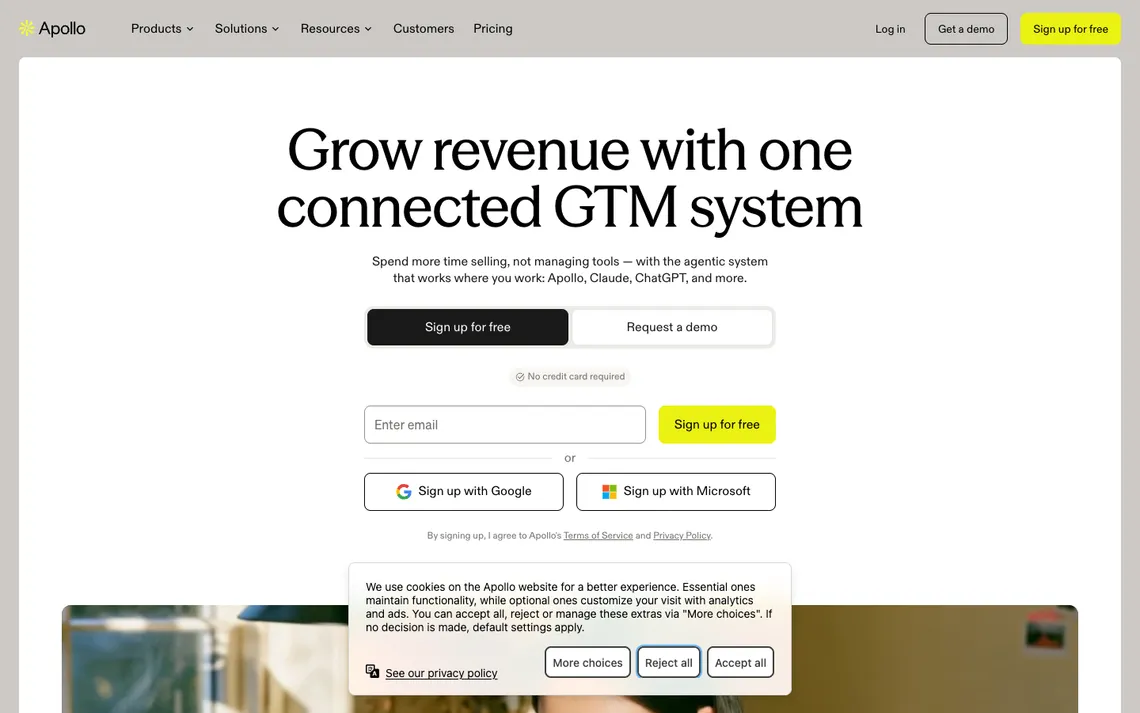
🧠 What Is Apollo.io?
🛠️ Features, Workflows and Practical Limits
Define an ideal-customer profile
Imagine selling specialist payroll software to companies with 50 to 200 employees. Searching broadly for ‘HR managers’ could yield consultants, junior staff and people outside the intended market. Apollo.io’s company and role filters help narrow the list, but the first useful task is to inspect a small sample of accounts. Check their current industry, size and likely buying authority before paying to reveal more contact details.
An Apollo.io search is only as useful as the ideal-customer profile behind it. ‘Technology companies in the United States’ is not a prospecting strategy: it mixes tiny agencies, multinational providers and businesses that might not buy the same product. Specify employee band, industry exclusions, buying role and a relevant trigger such as recent hiring. Review ten returned companies manually before expanding the list. A filter that produces 8,000 results is not necessarily better than one that identifies forty accounts a salesperson can genuinely research. The volume of Apollo.io leads returned is a poor substitute for an inspected shortlist of relevant accounts.
Before exporting a large prospect list, validate a representative sample of accounts and check how many records match the intended buying roles. This manual audit catches bad matches early, ensuring that automated list-building efforts target real prospects instead of inflating contact pools with irrelevant entries. Checking a small batch first safeguards campaign quality and prevents wasted credits on unqualified leads.
Contact data provenance
Identifying a relevant decision-maker is an important step when choosing which contact to approach within a target organization. Contacting someone outside the buying process can reduce the chance of a meaningful response, so role verification deserves attention before outreach. Sales reps need assurance that the individual named on the record actually holds the authority to evaluate and approve vendor expenditure.
Contact confidence is not a single green tick. An Apollo.io profile may contain a current-looking title while the buyer has moved teams, and an email address may be technically deliverable but reach the wrong individual. For strategically important accounts, compare the claimed role with a current company page or credible professional profile. Separate ‘person works here’ from ‘person is likely to influence this purchase’. The second judgment is a sales-research task that cannot be delegated to a database field. An Apollo.io email finder result is a lead to verify, not proof that the contact is current or welcomes unsolicited messages.
To protect outreach health, check recency and corroborate priority contacts externally using professional networks or corporate websites before initiating any communication. Verifying tenure directly against public profiles confirms that the intended recipient still occupies the seat, preventing awkward misdirected pitches. Taking this extra verification step keeps messaging relevant and maintains high deliverability standards across every campaign.
Credits and action accounting
Budgeting a quarter of prospecting work requires a clear understanding of how subscription tiers translate into actual usage limits across daily operations within Apollo.io. Teams often calculate expenses purely on headcounts, forgetting that platform consumption varies wildly depending on how aggressively researchers pull new contact details. Without careful forecasting, campaigns can grind to a halt midway through a quarter when allowances run dry unexpectedly.
A credit allowance changes the economics of Apollo.io prospecting only when it is connected to a repeatable workflow. Divide a sample week into first-time reveals, enrichment of incomplete CRM records and contact details that turn out to be unusable. Count all three, not just the final export. Then estimate how often that week would repeat through the billing year. Credits granted monthly and credits granted upfront have different planning implications; unused capacity and renewal rules should be checked against the vendor’s current account terms. This gives an estimate of Apollo.io cost per useful account rather than merely cost per advertised credit.
To maintain financial control, make a worksheet for records exported, phone reveals, and enrichment attempts to track exact platform consumption patterns over time. Monitoring these figures reveals whether the current tier matches actual prospecting volume or if adjustments are required before scaling up activity. Clear internal accounting ensures that every spent credit contributes directly to pipeline growth rather than leaking away on duplicate lookups.
Free to Basic upgrade
The jump from a free Apollo.io account to Basic should depend on how often the team needs verified contacts, not how impressive the credit allocation looks. Prepare a week’s actual prospecting work: company searches, email reveals, enrichments and any phone details required. Estimate the credits consumed by that sample, including records that turn out to be duplicates. Then compare the result with the chosen billing period and sales team’s capacity to follow up.
The Free plan offers a small credit allowance, whereas Basic provides a larger annual allocation designed to support steady, ongoing prospecting routines. Yet unused credits and renewal dates matter to total value, because letting monthly or annual allotments expire without utilization wastes hard-earned budget. Buyers must align their actual outbound volume with the purchased tier to ensure they extract maximum utility from every dollar spent. An Apollo.io extension should be assessed for the permissions it requests and the accuracy of the records it captures.
The useful outcome of an Apollo.io upgrade is not ‘more contacts’. Suppose a rep researches 120 accounts per week but can write credible outreach for only twenty. Buying enough credits for a thousand extra contacts could increase spending without changing pipeline throughput. Estimate verified buying roles per researched account, qualified conversations per contacted account and hours spent on research. These are measurement definitions for a future pilot, not performance numbers supplied by our review.
Professional versus Organization
Growing a coordinated outbound team demands infrastructure that supports shared data, role permissions, and unified pipeline visibility within Apollo.io. As sales departments expand past solo operators, maintaining consistent messaging and preventing territory clashes becomes an essential management challenge. Upgrading to advanced tiers introduces governance tools and collaborative workspaces designed to keep multiple reps aligned on target accounts.
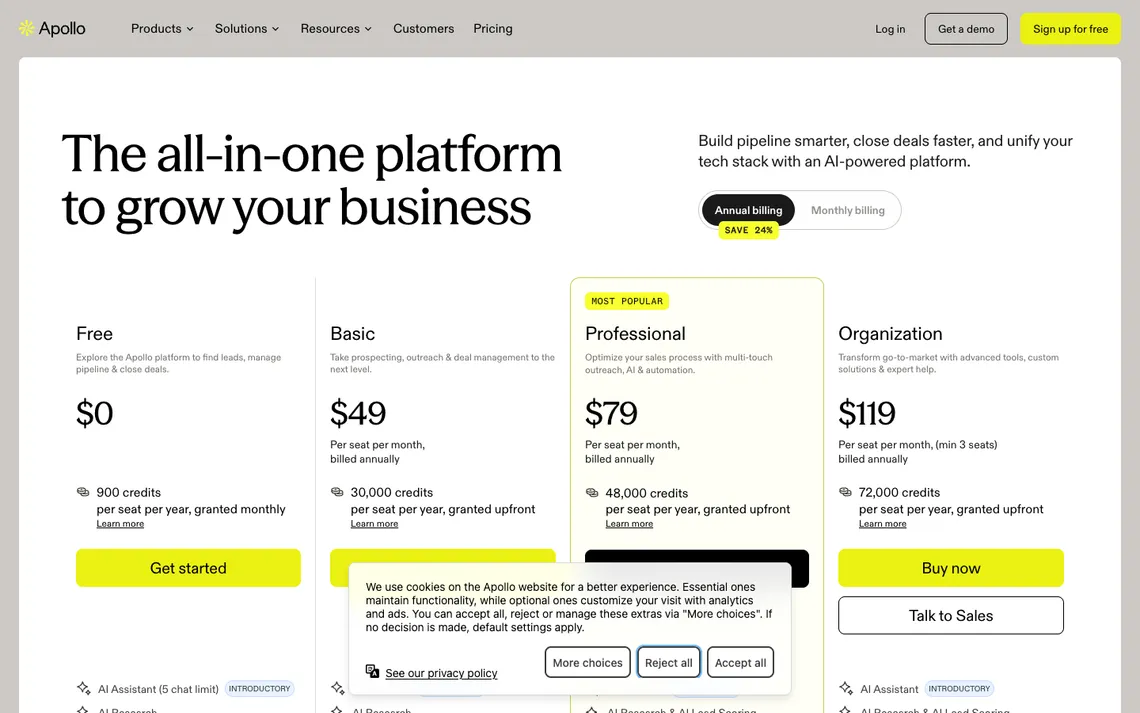
Higher plans add broader entitlements, while Organization has a seat floor that mandates a specific minimum user count for subscription activation. However, three required Organization seats change the real annual commitment significantly for smaller teams that only need one or two active licenses. Accounting for these mandatory minimums prevents unpleasant budget surprises during contract renewals or license allocation reviews. Apollo.io LinkedIn-related lookups still require checks that employment and job responsibilities are current.
The Organization tier deserves a cost check that includes its seat minimum and the people who would actually use it. If only one researcher needs advanced filtering but the plan requires several paid seats, a headline per-user price understates the commitment. Sketch the weekly responsibilities of the researcher, account executive and sales manager; avoid buying access for roles that never open the platform. Apollo.io should also be compared with the features already paid for in the existing CRM and email tool.
Email sequences
Running a short respectful follow-up without spamming prospects is essential for protecting sender reputation and maintaining professional credibility through Apollo.io. Outbound messaging should feel like a human conversation rather than an aggressive marketing blast sent to thousands of uninterested recipients. Crafting a balanced cadence respects the recipient’s time while gently keeping the value proposition visible across multiple touchpoints.
Sequences coordinate steps, timing, and branching logic to automate the delivery of emails and tasks according to predefined schedules and recipient behaviors. Nevertheless, copy-pasted personalization tokens can create embarrassing mistakes if database fields contain missing names, weird capitalization, or incorrect company references. A broken merge tag instantly shatters the illusion of a tailored message and turns a promising lead away. Apollo email automation needs explicit stop rules when a prospect replies, opts out or changes status in the CRM.
A sequence preview can hide embarrassing Apollo.io personalisation mistakes. Build three internal sample contacts: one with a complete first name and company, one with a missing role and one with a company title longer than the email subject line. Read the resulting messages without assuming the merge fields work. The email should still make sense when a field is absent; a sentence claiming ‘I saw your recent funding’ needs independent evidence or should be deleted. Automatic enrichment is not permission to invent familiarity.
Email deliverability
Protecting the domain you use for outreach requires constant vigilance over technical sender reputation. Apollo provides email channels, but inbox placement ultimately relies on careful configuration and adherence to strict sending practices. Mailboxes, reply handling, warm-up routines, and daily volume limits directly influence whether your messages land in the primary inbox or the spam folder.
A massive lead database does not guarantee inbox placement, as internet service providers closely scrutinize domain authentication and engagement metrics. Relying solely on platform defaults without setting up proper SPF, DKIM, and DMARC records will quickly damage sender credibility. Maintaining a healthy reputation demands deliberate pacing and regular auditing of recipient engagement across every active campaign. An Apollo.io CRM connection should use a defined system of record to prevent updates from overwriting human qualification.
Email infrastructure is a separate investment from Apollo.io access to contact data. Verify the sending domain’s SPF, DKIM and DMARC settings, keep suppression records synchronized and establish a process for bounced addresses. Start with a tiny legitimate test audience rather than treating a large sequence as an experiment in deliverability. The signs to monitor are recipient relevance, complaint handling and whether messages stop when a prospect objects. The software can help orchestrate outreach; it cannot remove the sender’s responsibility for the message.
CRM synchronization
CRM synchronization is where a promising contact can quickly become a nuisance. If Apollo.io and the sales team’s CRM both update ownership or qualification status, a poorly chosen mapping may overwrite a human note. Decide which system controls each field, and make the test deliberately awkward: edit a record in both systems and check which value survives. Suppressed customers and active deals should not be reintroduced into a cold outreach sequence.
Field conflicts can overwrite a salesperson’s qualification notes if synchronization rules are configured incorrectly or left on automatic defaults. When Apollo updates an existing CRM record with newly scraped contact details, important custom properties risk being replaced by blank or outdated values. Careful administrative oversight is necessary to ensure human-verified notes take precedence over automated data imports. For an Apollo.io Salesforce integration, test owner assignment and duplicate handling before enabling two-way updates.
A CRM integration needs an agreed hierarchy of authority. If a salesperson closes an opportunity in Salesforce but Apollo.io later enriches the related contact, enrichment should not reopen the deal or overwrite the sales note. Assign ownership for fields such as job title, lifecycle stage and opt-out status, then test one deliberately conflicting update. Log what changed and where. This is more actionable than counting the number of integration logos on a pricing page.
| Operational checkpoint | Evidence to request | What could go wrong |
|---|---|---|
| Input | CRM integration can sync account status and lead ownership | Unreliable or incomplete inputs |
| Control | define the system of record and test updates in both directions | No tested exception process |
| Owner | Named account or project administrator | No one can repair an unexpected change |
| Outcome | Repeatable result and documented limits | field conflicts can overwrite a salesperson’s qualification note |
Enrichment and deduplication
Improving an incomplete record without inventing facts is essential for maintaining a reliable pipeline of prospective buyers. Apollo offers API, CSV, and CRM enrichment as multiple paths to append missing phone numbers, job titles, and company attributes to existing profiles. Utilizing these enrichment pathways helps fill data gaps without requiring manual internet research for every individual contact.
One contact may appear with multiple professional emails across different data sources, creating confusion during sequence assignment. If these duplicate entries are not caught early, reps might inadvertently target the same person through different channels, ruining the professional impression of the outreach. Automated merging algorithms occasionally fail when faced with slight spelling variations in company names or domain changes. An Apollo email verifier or validation step may reduce obvious mistakes, but it cannot guarantee inbox placement.
Duplicate prospect records can create more than untidy reporting. One person might appear in Apollo.io with an old employer, a new work address and a CRM record already marked ‘do not contact’. A bulk merge that favors the newest enrichment value could unintentionally erase that suppression. Match on stable contact and company identifiers where available, preserve provenance and review ambiguous merges. Before any automated sequence begins, the do-not-contact decision should survive every sync direction.
Compliance and outreach rules
B2B contact data is not a blanket permission to send marketing messages. Apollo.io may help a team find a relevant person, but the lawful basis for outreach, required notices and opt-out handling depend on the market and use case. Record where a contact came from, keep suppression information and set a clear retention policy. Before sending at scale, have the organization review its obligations in each jurisdiction rather than assuming that a public work email is freely usable.
Publicly available professional data is not blanket marketing permission under strict regional regulations like GDPR or CCPA. Assuming that any scraped email address can be freely messaged without prior consent exposes organizations to severe legal penalties and reputational damage. Teams must carefully evaluate whether legitimate interest applies to their specific outreach campaigns before engaging prospects. Apollo.io email workflows should distinguish personal mailbox limits from broader sales-sequence reporting.
Apollo.io provides commercial contact data; it does not determine whether each particular campaign has a lawful basis. A defensible outbound process should document the source of each record, why this person was selected, what notice is required and where an opt-out is stored. Legal requirements differ by country and channel, so a public business address is not a universal invitation to market. Consult qualified compliance advice for the target regions rather than treating the existence of an export button as a permission statement.
Reporting outcomes
Measuring quality rather than vanity sending volume is the only reliable way to assess the true return on investment of an outbound campaign. Reply quality, meeting attendance rates, and meaningful account activity help diagnose whether a sequence resonates with the intended audience. Focusing on shallow activity metrics often masks underlying targeting flaws and wastes valuable team resources.
High open rates do not prove real purchase intent, as tracking pixels can easily inflate engagement figures due to automated security scanners and email client previews. Relying on open statistics alone will frequently lead sales managers to misinterpret mediocre campaign performance as a resounding success. True effectiveness must be judged by the depth of engagement and the relevance of incoming prospect responses.
Review qualified replies and booked meetings by cohort to understand which specific messaging angles and target accounts drive actual business results. Instead of looking at cumulative totals, analyze performance broken down by industry vertical or company size to identify profitable segments. Regular cohort reviews ensure your sales strategy adapts to changing market responses rather than repeating ineffective patterns.
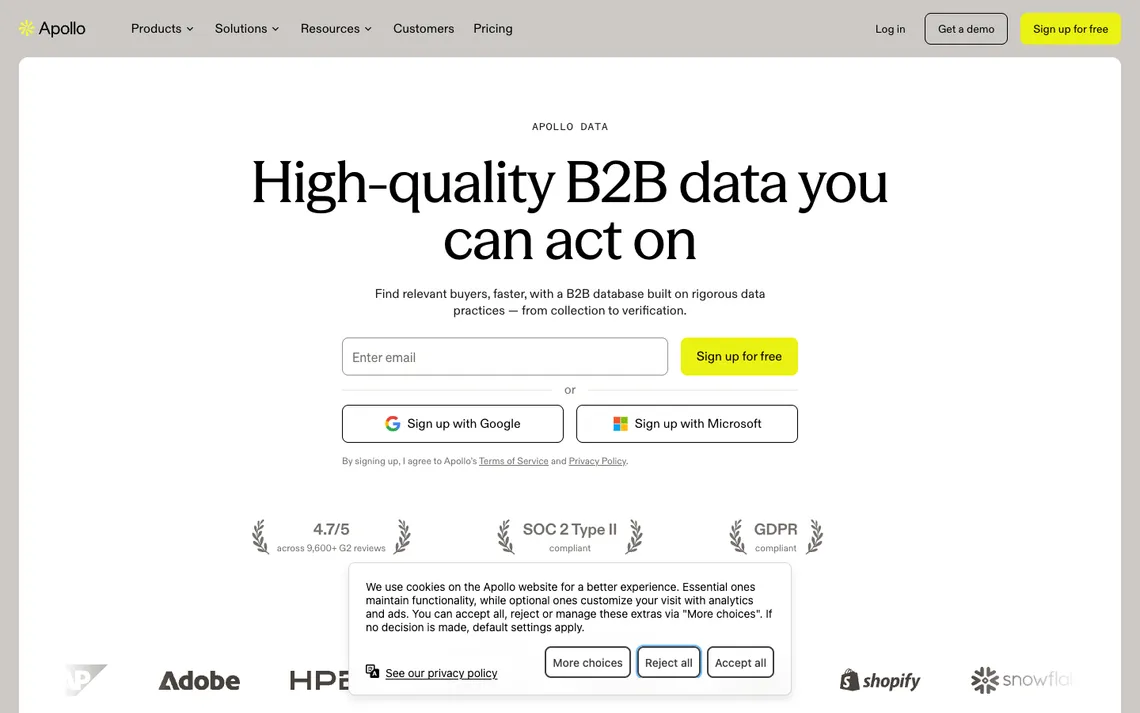
Apollo alongside other sales tools
Choosing between an all-in-one suite and separate specialist services requires a careful assessment of your team’s current workflow maturity and tech stack. Apollo covers data enrichment and multi-channel outreach natively, whereas traditional CRMs manage deep deal progression and pipeline forecasting. Deciding whether to consolidate functions into a single platform depends on how well native features match specialized standalone tools.
Tool overlap introduces hidden licenses and duplicate records that inflate software expenditures and create administrative friction for sales representatives. When a platform attempts to handle prospecting, enrichment, and pipeline management simultaneously, individual modules may lack the depth found in dedicated point solutions. Evaluating whether the convenience of a single interface outweighs potential feature compromises is critical for stack design.
Write down a minimal stack and eliminate redundant roles across your existing software subscriptions before committing to a long-term platform contract. Map out every step of your current outbound motion to identify where tools duplicate functionality or create unnecessary data silos. Streamlining your technology stack ensures that every application serves a distinct, indispensable purpose in your revenue operation.
💰 Apollo.io Pricing, Plans and Real Cost
Apollo’s public pricing currently lists Free at $0 (900 credits per seat per year, granted monthly), Basic $49 per seat per month billed annually, Professional $79 per seat per month billed annually, and Organization $119 per seat per month billed annually with a three-seat minimum. Product and credit entitlements can change; confirm the exact actions that consume credits.
For Apollo.io, account for the credits used in prospecting, contact reveals and enrichment instead of looking only at the annual seat fee. The Apollo.io plan comparison should begin with a carefully filtered set of genuinely relevant companies and validated decision-makers. Estimate how many lookups will be wasted on out-of-date roles, duplicates or people outside the ideal customer profile; those are not equivalent to productive opportunities. A larger team should include all required seats and the minimum subscription commitment, especially where the Organization tier imposes a floor. Effective cost per qualified conversation matters more than the nominal size of an exported list.
| Decision item | Current evidence | Procurement check |
|---|---|---|
| Official pricing basis | Current official plan documentation linked in this review | Verify selected tier, country, billing and seat count |
| Free plan or trial | Refer to the vendor source; eligibility and quotas differ | Confirm sender, recipient, profile, crawl or credit limits |
| Operational add-ons | Some functions, usage or seats may be charged separately | List every required function before checkout |
| Migration and support | Data export, support and permissions vary | Test a sample import and rollback |
⚖️ Apollo.io vs Alternatives
| Product | Primary comparison angle | Important question |
|---|---|---|
| Apollo.io | B2B teams with clear target accounts, a controlled outreach process and measurable prospect-data consumption. | validate 30 sampled accounts before exporting thousands |
| ZoomInfo | Alternative scope and integration fit | Does ZoomInfo’s dataset match the same target industries and territories? |
| Hunter | Alternative scope and integration fit | Could Hunter supply enough verified email contacts without the larger outreach suite? |
| Instantly | Alternative scope and integration fit | Would Instantly handle sending while a separate provider supplies contact data? |
✅ Pros, Cons and Who Should Choose It
- Advantage: Account and contact discovery in one platform
- Advantage: Sequences and enrichment workflows
- Advantage: CRM integration and contact filters
- Limitation: Credits and phone data can constrain usage
- Limitation: Data quality varies by territory and role
- Limitation: Automated outreach requires careful legal and reputation checks
A manageable Apollo.io pilot begins with a narrowly defined group of companies, a short list of relevant buying roles and an estimate of the credits needed to reveal contacts. Check a sample of job titles against trustworthy public sources, remove duplicate records and measure how many contacts are appropriate for the offer. If outreach follows, confirm the mailbox’s stop-on-reply and opt-out behaviour before sending real messages. Sales managers should budget the required seats and credit consumption together; an exported lead count does not establish sales quality, and a larger subscription will not repair weak account targeting.
🧪 Evaluation Method and Evidence Boundaries
Apollo.io’s public seat prices, credit allowances and prospecting features support this evaluation, but they do not prove the accuracy of a particular prospect list. No live scraping, private CRM sync, outbound sequence or successful meeting outcome has been claimed. The crucial measures—valid contacts, relevant replies and opt-outs—require a consent-conscious test involving the buyer’s own target market and sending infrastructure.
For an Apollo.io pilot, define a narrow ideal-customer profile and inspect a sample of candidate accounts before spending credits on contact reveals. Compare job titles with reliable public records, then verify mailbox and CRM deduplication on dummy data. Any email sequence needs a working unsubscribe and immediate stop on reply. Count qualified conversations rather than exported addresses when assessing whether the subscription is worthwhile.
🏆 Final Verdict
Apollo.io can reduce the switching between prospect databases, enrichment tools and sales-sequence systems, but the apparent convenience depends on contact quality and credit economics. Organization’s seat floor and the cost of extra reveals should be modeled before an annual commitment. If the team cannot define a target account profile or protect sending reputation, purchasing more Apollo data is unlikely to solve the underlying sales problem.

Frequently Asked Questions
What is Apollo.io best suited for?
B2B teams with clear target accounts, a controlled outreach process and measurable prospect-data consumption.
Does Apollo.io offer a free plan?
Apollo.io Free has a limited annual credit allowance, currently described as 900 credits per seat per year, made available monthly. Check which prospecting actions consume them.
How does Apollo.io pricing work in 2026?
Budget the specific activity described under enrichment and deduplication, including relevant seats, usage and add-ons. See the pricing section for the plan structure checked for this review; verify current checkout currency, allowances and renewal terms with the provider.
Can small teams use Apollo.io?
Yes, for a focused first project. Start by checking whether your team can find companies that might genuinely buy a niche B2B service, then confirm that the chosen plan covers the actions, permissions and expected volume.
Which Apollo.io features should I check first?
Prioritize contact data provenance, free to basic upgrade and email sequences. Test whether the features operate as expected together rather than reading a feature grid as a promise of results.
What is the biggest limitation of Apollo.io?
The practical risk is that unused credits and renewal dates matter to total value. A second concern is that publicly available professional data is not blanket marketing permission. Those are reasons for explicit safeguards, not proof the product always fails.
How should I migrate data into Apollo.io?
Begin with a small, reversible sample. Preserve identifiers, consent or access records, and a rollback path. As a practical check, write down a minimal stack and eliminate redundant roles. Keep the original workflow available until the new system handles both normal and exceptional cases.
What should I compare against Apollo.io?
Compare ZoomInfo, Hunter, Instantly for the same specific job. Price, product scope, deployment effort and data ownership matter more than a broad generic feature count.
Is Apollo.io suitable for agencies?
It depends on whether separate client accounts, permission boundaries, exports and billing match the agency model. An agency should prototype a representative client instead of assuming that a single-workspace trial covers multi-client work.
How can I evaluate Apollo.io without a misleading test?
Choose one workflow, document its starting state and verify the expected output. For example, deduplicate by stable identifiers and retain original sources. Record what you can independently confirm and what is a vendor-documented claim.
Where can I verify the latest Apollo.io limits?
Use the official pricing page and vendor documentation. Screenshots in this review are dated and may not match a later checkout.
Primary sources: Official pricing · Product / plan documentation. Screenshots in this review are dated October 30, 2026.
EXPLORE NEXT ON DIGIOFFLY
🔍 Explore More on DigiOffly
Continue exploring published Growth software reviews and choose complementary tools for your workflow.
Explore categories
- Growth & Marketing — Browse email, SEO, outreach and retention tools
- Software Directory — Find related published software reviews
- Software Stacks — Choose a minimal set of complementary tools
- ActiveCampaign — Lifecycle email workflows and CRM-connected automation
Compare your shortlist
- Compare Software — Compare documented features and plan differences
- AI Software Finder — Build a task-specific shortlist
- Cost Calculator — Separate per-seat and usage-based costs
Related Growth reviews
- Instantly.ai — Read an existing published Growth review
- Lemlist — Read an existing published Growth review
- Close CRM — Read an existing published Growth review
- Typeform — Conversational surveys, quizzes and lead qualification