

Updated October 30, 2026. This Expensify review uses official Expensify product and pricing disclosures. The screenshots show public vendor pages. DigiOffly did not issue employee cards, reimburse a worker, or reconcile a live accounting ledger for this review. The figures below reflect the vendor’s documented USD rates and are not a negotiated enterprise quote.
A project manager buys a train ticket for a client meeting, submits the receipt a week later and forgets the project code. Expensify connects the claim to review, reimbursement and accounting export. The failure point is often an absent project code or an incorrectly classified card charge—not the receipt total.
Quick verdict: Expensify suits distributed teams that want receipt capture, expenses, reimbursement and accounting export in one workflow. Its purchase economics depend heavily on whether you need the individual Submit experience, Collect at $5 per unique member per month, or Control—with pricing affected by term and Expensify Card conditions. Budget using active billed members, not simply full-time headcount.
📊 Expensify Review Summary
| Question | Answer from vendor documentation |
|---|---|
| Category | Expenses, reimbursements, card and travel spending |
| Entry-level use | Submit for individual expense organization, subject to available terms |
| Collect | $5 per unique member/month in USD for eligible newer workspaces |
| Control with discounted card condition | $9 per member/month on applicable annual terms |
| Control without card | $18 per member/month on applicable annual terms |
| Control pay-per-use | $36 per member/month in USD |
| Discount condition | Expensify Card handles at least 50% of monthly settled spend |
| Accounting links | QuickBooks, Xero, NetSuite, Sage Intacct and other named products |
| Evidence | Vendor public sources; no authenticated test tenant |
🧭 Contents and Navigation
Jump to pricing, features, comparisons, methodology and official sources.
🧠 What Is Expensify and Who Needs It?
Expensify expense management is primarily about the chain between a purchase, its evidence, an approver and a ledger entry. A mobile receipt image is just the starting document; someone still has to decide if the purchase is reimbursable and which cost centre owns it.
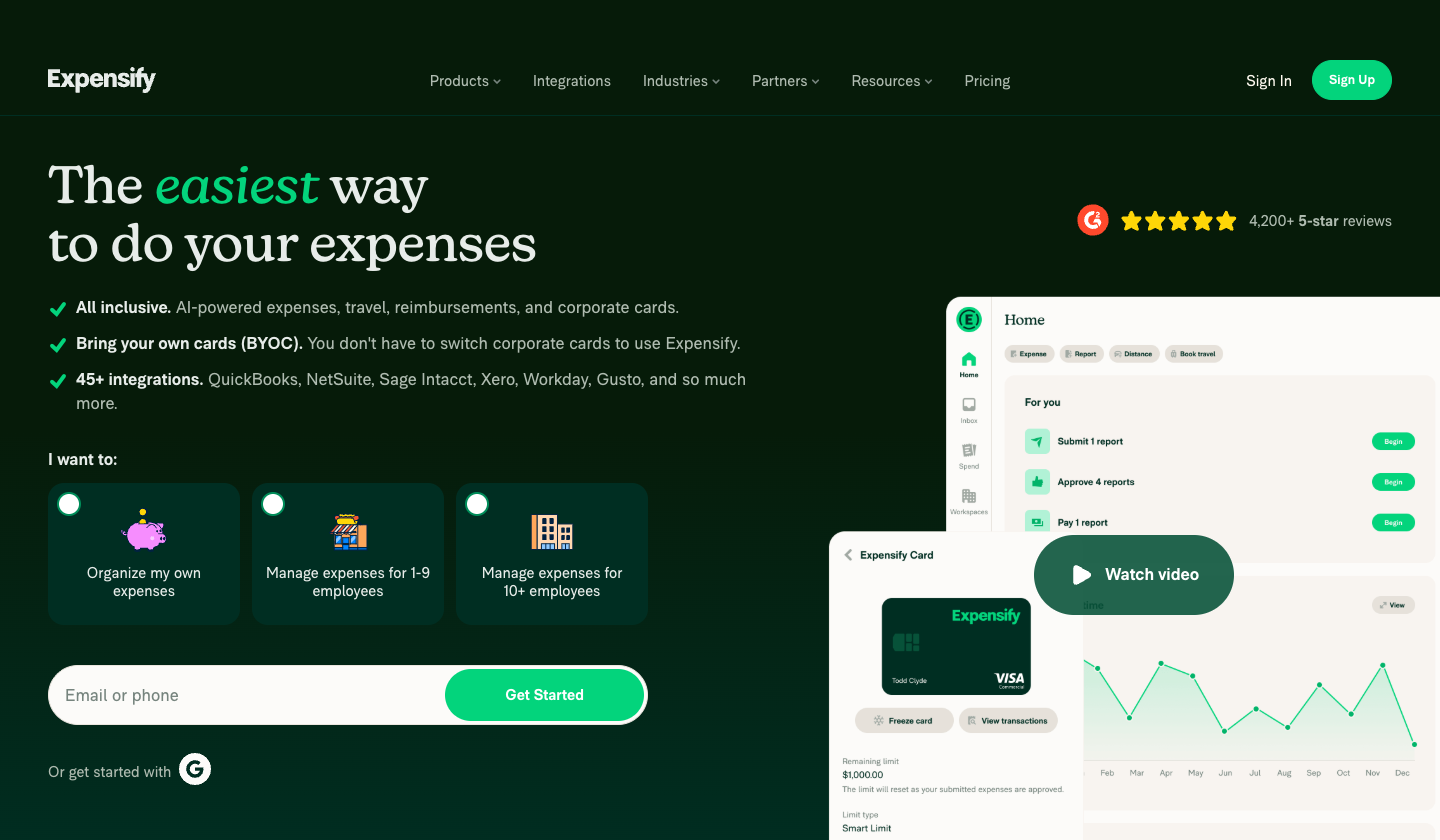
A freelancer photographing a handful of receipts each quarter has different needs from a finance department processing expenses for 200 employees across four offices. For the freelancer, a scanning app and searchable expense history can be enough. The larger business needs policy approvals, access rights, employee and project classification, accounting integration and a way to stop payment after a duplicate or questionable claim.
In Expensify, the person submitting the expense and the person approving or exporting it have different jobs. Its capabilities cover receipt scanning, distance tracking, expenses, reimbursements, card management and travel workflows. A buyer should examine which parts are in the selected plan rather than assuming every vendor product appears for free in a personal workspace.
💰 Expensify Pricing 2026: Collect, Control and Billing Conditions
For the Expensify Collect vs Control comparison, count approvers as well as employees who submit reports. Expensify pricing per unique member depends on billable activity, which may change from one month to another. Expensify Control pay-per-use pricing is a separate scenario from an annual agreement.
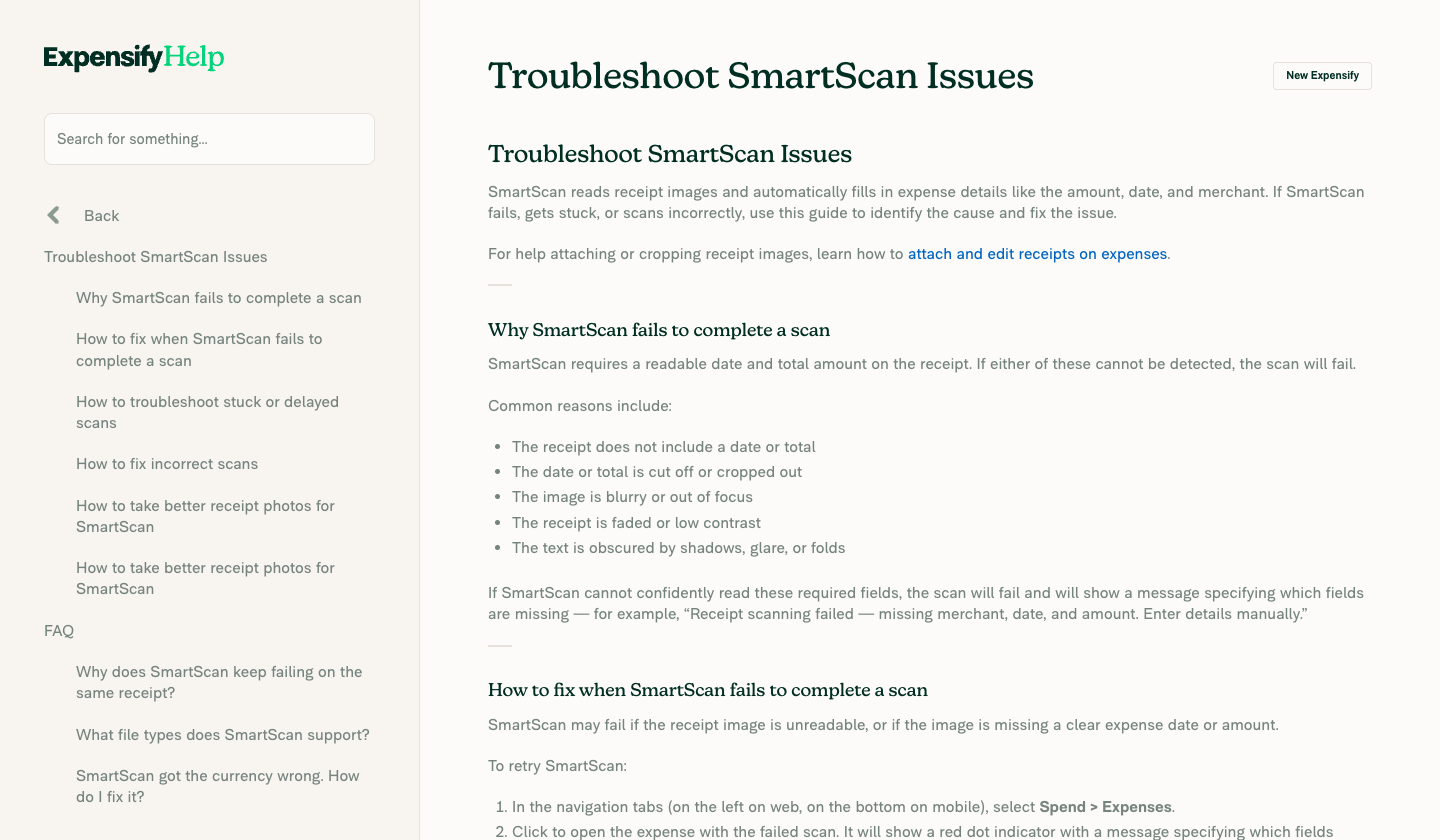
Expensify’s public AI Disclosure page lists Collect at $5 per unique member/month for applicable new workspaces. Control rates are $9 with an eligible card-spend discount on annual terms, $18 without that discount on annual terms, and $36 pay per use in USD. The vendor states that the $9 discounted Control rate requires at least 50% of total settled monthly spend on the Expensify Card. That condition can be missed when a comparison table shows only “$9”.
| Plan or billing scenario | Vendor-listed rate (USD) | 12 billed members per month | Important condition |
|---|---|---|---|
| Collect | $5/member | $60 | Newer-workspace pricing eligibility |
| Control annual, qualifying card use | $9/member | $108 | At least 50% settled spend on Expensify Card |
| Control annual, without card discount | $18/member | $216 | Annual-commitment billing terms |
| Control pay per use | $36/member | $432 | Not the same as discounted annual commitment |
The team illustrations exclude taxes, payment and FX fees, card eligibility requirements and grandfathered pricing. A displayed monthly rate on an annual contract does not mean the company can cancel without the agreed commitment.
What does a unique billed member mean?
With thirty invited users and twelve monthly participants, the billed population may differ from the directory total; the contract’s definition of a unique member determines the invoice. Avoid using a static employee count as the invoice estimate. Model three scenarios: light travel month, busy project-delivery month and year-end reconciliation. Compare those to how many people actually touch the expense workflow.
If managers approve expenses but never submit receipts, verify how they are treated for billing. A finance tool can be inexpensive for a twelve-person team and surprisingly costly when occasional approvers or multiple workspaces count differently than anticipated. This is a contract question, not something to infer from a dashboard screenshot.
Why the Expensify Card matters to Control pricing
The Expensify Card discount requirement is not met merely by activating cards: the published condition concerns the share of settled monthly spend. A finance team that routes only a small portion of purchases through the card should budget for the undiscounted Control scenario.
Suppose settled monthly spend totals $40,000 and only $14,000 passes through the Expensify Card. That is 35%, not the 50% required for the advertised discounted Control rate. If twelve billed members are on the relevant annual plan, a $9 assumption could understate subscription cost compared with the applicable $18 rate. The team should check the specific charge rules and eligibility rather than steering purchasing just to hit a discount threshold.
Moving travel purchases to an Expensify Card changes who can issue cards, amend limits and challenge a charge. An employee’s convenience must not override the separation of who can issue a card, approve exceptions and reimburse personal expenses. Compare the operational benefits of the card against a company’s existing banking arrangements before making a platform decision based on a discount.
📚 Receipt Scanning and Source-Document Quality
For Expensify receipt scanning, accuracy should be checked on invoices that mix meals, lodging and taxes instead of on one-line receipts. A hotel bill split between room charges and meals may yield the correct grand total but the wrong expense categories.
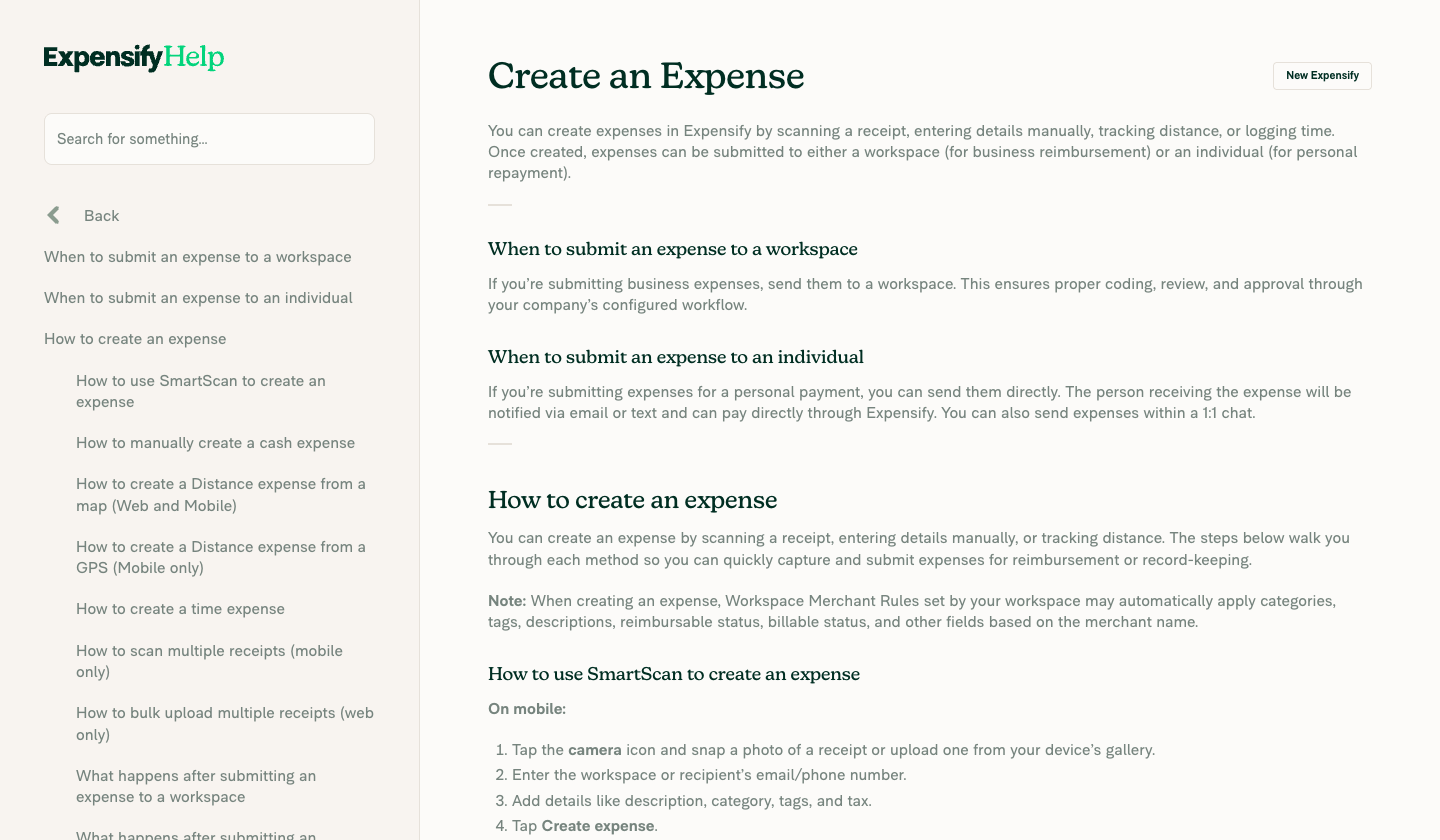
For a clean taxi receipt, extracted merchant, currency and total may be enough to begin an expense claim. Yet a correct image-to-text result does not show which expense category should be charged. A hotel receipt may include a room, breakfast, city tax and minibar. Some of those expenses may have different reimbursement policies or tax treatment. Managers should see both the source image and any automated coding.
Test the full process with a faded paper receipt, a forwarded digital PDF and an itemized email invoice. Confirm that the captured values match the original, that duplicate submissions can be reviewed, and that the accountant can open the evidence after export. A vendor may advertise accuracy; a business needs to measure the documents it actually receives.
✅ Expense Policies, Approvals and Audit Trails
An emergency flight after a cancelled connection can exceed policy limits without being inappropriate; the approver needs the travel context recorded. Instead of deleting the transaction or silently altering its category, the company should let an authorized manager document an exception. The audit trail must preserve who submitted, approved and edited the entry.
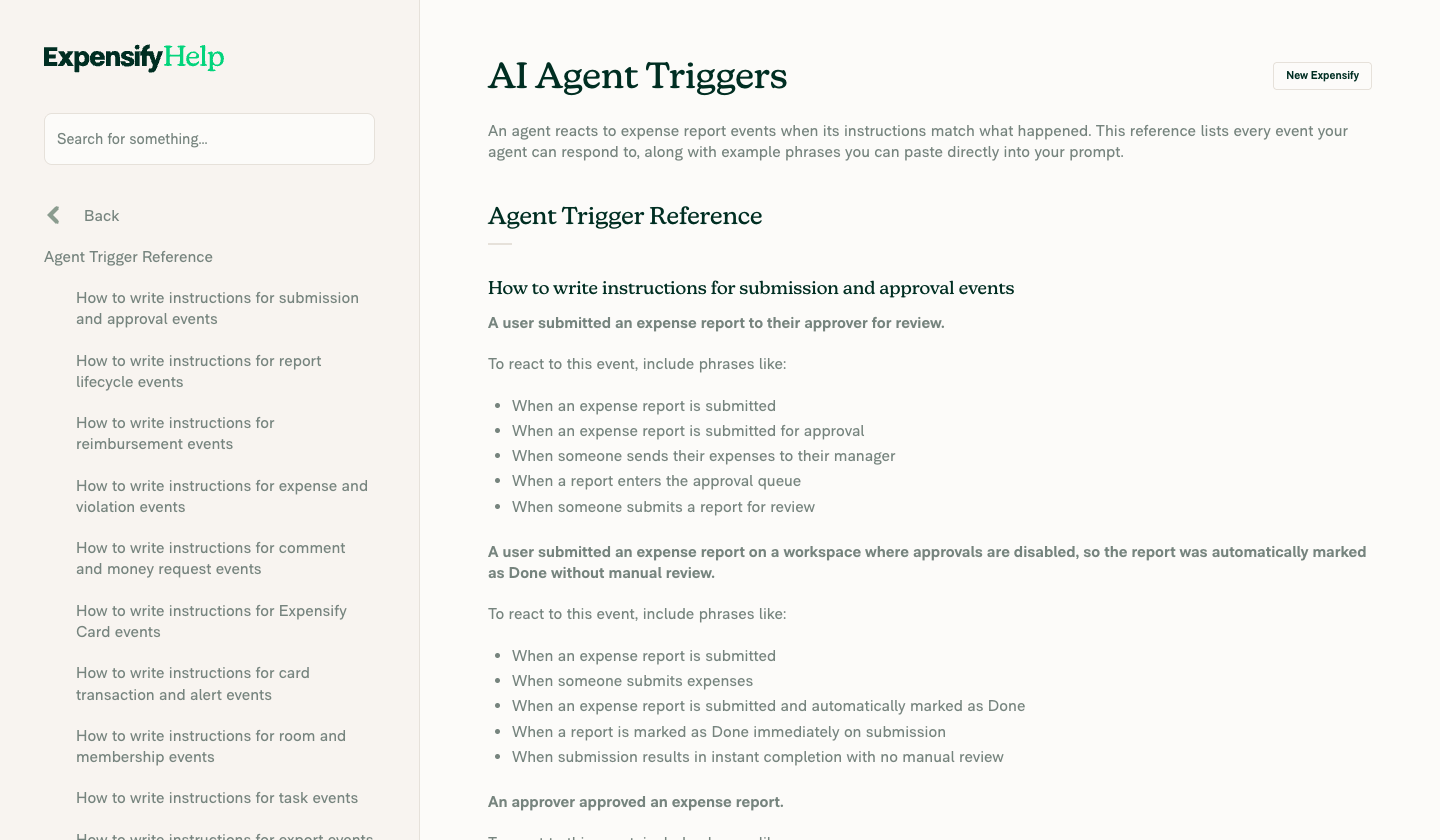
For a distributed team, consider four controlled cases: correct claim, claim beyond policy, expense reimbursed in a different currency and a receipt submitted twice. Then ask whether an approver can review exceptions without viewing unrelated employees’ private details. Expense software improves consistency only after a policy has been translated into usable roles and triggers.
🛠️ Reimbursements Across Countries and Currencies
Expensify reimbursements need two confirmations: an approver must authorize the employee claim, and the funding bank must actually settle the payout. For Expensify global reimbursements, verify supported recipient countries and fees rather than assuming a multi-country dashboard guarantees every payout rail.
For a US company reimbursing someone in Romania, determine which receiving account can accept the funds, the employee’s payment currency and the reconciliation exchange rate. A USD-billed company reimbursing a worker in Europe should document the employee’s claim currency, approval currency, settlement amount and any banking fee. A reimbursement initiated is not necessarily a reimbursement received.
Country availability and local card-issuing arrangements can vary. Expensify’s vendor disclosure describes broad international reach, but that does not imply identical banking rails or product features in every jurisdiction. A buyer should review the precise entity, employee country and payout flow rather than citing a global country count as a guarantee.
⚖️ Expensify Card vs Bring Your Own Card
Expense capture and corporate-card issuance are adjacent but distinct capabilities. If a firm already issues bank cards with favorable rewards, it may prefer to connect those transactions rather than replace the card program. Test whether imported charges match receipt entries and whether late postings create duplicates after a manual report is submitted.
The Expensify Card offers the potential for cleaner end-to-end capture and an applicable Control pricing incentive. But the business should examine account permissions, spending limits, card cancellations and dispute handling. A poorly configured card workflow can simplify data collection while making unauthorized spending easier; the objective is appropriate controls, not just faster reconciliation.
🛠️ Distance Tracking, Per Diem and Travel Expenses
Expensify mileage tracking can help capture trips, but local allowance rates and the distinction between commuting and business travel still come from company policy. A test should compare recorded kilometres with the approved route and identify duplicated mileage-and-receipt claims.
Mileage claims can become contentious when a worker enters an estimated route instead of a documented journey. The expense policy should state the applicable mileage rate, evidence expectations and whether the trip was personal, business or mixed purpose. Expensify includes distance-tracking functionality, but reimbursement amounts still depend on company policy and local tax rules.
Per diem and travel policies require separate consideration. A hotel meal might be covered by a daily allowance or reimbursed by receipt, but generally should not be counted both ways. Create a controlled travel itinerary with transportation, lodging and meals and ensure the report classifies each expense once. Small checks of duplicate allowances can prevent recurring overpayments.
🔗 Accounting Integration: QuickBooks, Xero and NetSuite
To validate the Expensify accounting integration, export an approved project expense and check that account code, client and tax treatment survive in the ledger. In a test of Expensify QuickBooks Online sync, a corrected client-project expense should not create a second expense line when the original record is amended.
Connecting Expensify to a ledger is useful only when the journal mapping is correct. A marketing employee’s restaurant charge might be coded to a client-entertainment category or an employee-meal benefit with different tax implications. If every import defaults to one generic expense account, the integration has moved data but not improved accounting.
Run a controlled test: submit an expense, approve it, export the item, then refund a portion of the payment. The finance team must see whether Expensify and the ledger both recognize the adjustment. Verify the employee identifier, project or class dimension, tax code and duplicate protection. The best accounting integration is one that produces explainable books, not the most integration logos.
Sage Intacct and ERP requirements
Large finance teams often require dimensions, entities, department codes and structured accounting periods. Expensify lists integrations including Sage Intacct and NetSuite, but availability and field mappings are not universal. Get a list of supported objects and ask what happens when a project or vendor account is inactive. A failed sync must be visible to the finance administrator, not silently ignored.
An ERP rollout may also demand a formal migration of reimbursements that are already pending. Decide whether those are settled in the old platform or transferred as liabilities. Paying the same approved report in two systems is a more serious failure than a slightly delayed attachment.
⚖️ Expensify vs Ramp, Brex, Airwallex and BILL
The useful Expensify alternatives depend on whether employee reimbursements, cards or vendor bills cause more work. The Expensify vs Ramp decision, for example, is different for a consultancy paying employee travel than for a retailer issuing dozens of controlled purchasing cards.
| Alternative | Best comparison dimension | Main buyer question |
|---|---|---|
| Expensify | Receipt-first employee claims and reimbursement | Are expense policies and ledger export the priority? |
| Ramp | Corporate cards, spend controls and accounts payable | Is controlled card spending the core workflow? |
| Brex | Cards, expense policy and financial ecosystem | Is company/card eligibility suitable? |
| Airwallex | Cross-border account, FX and spend stack | Are multi-currency transfers and global payments essential? |
| BILL | Payables approvals and vendor disbursement | Are supplier invoices more important than employee claims? |
These products overlap, but they are not direct substitutes in every situation. A company with recurring foreign-currency supplier invoices may evaluate Airwallex or BILL alongside Expensify, whereas a service organization processing employee mileage claims may place receipt handling above international payment rails.
🚚 Migration, Data Export and Operational Ownership
Expense files may reveal an employee’s itinerary, home address or personal banking details, even when the claim itself is routine. Migration therefore requires privacy and access decisions, not just a CSV import. List the retention policy, what employee data is required to operate reimbursements, and who can export historical reports. A departing employee must lose access without causing the finance team to lose legitimate company records.
At exit, require an export of approved and pending expenses, receipt attachments, reimbursement status and journal identifiers. An accountant must be able to reconcile balances outside the software. If a vendor supplies only a summary report while leaving evidence behind in the platform, the switching cost may be far larger than the subscription difference.
⚖️ Expensify Pros and Cons
| Strengths | Cautions |
|---|---|
| Receipts, claims, reimbursements and expense workflows | Cost depends on unique-member and billing rules |
| Native card plus third-party-card paths | Discounted Control pricing has an Expensify Card condition |
| Cross-border capabilities and ledger integrations | Local payout methods and fees vary |
| Distance tracking and team travel workflows | Policy configuration and approvals require work |
| Broad integration ecosystem | Integration mapping must be checked against real journal cases |
🧪 Evaluation Method and Practical Trial Plan
This review uses official public Expensify information, not an authenticated implementation. Before selecting a plan, a buyer can conduct five acceptance checks: scan a difficult receipt, submit a duplicate, process an authorized policy exception, reconcile a partial reimbursement and export an approved claim into the accounting ledger. Record actual human review time and exception handling rather than believing that scanning automatically eliminates all work.
The final choice depends on whether expenses primarily come from personal-card reimbursement or controlled corporate spending. Collect may be sufficient for straightforward expense administration; Control is more relevant to teams seeking deeper controls and card-linked economics. A firm should get a current quote based on member usage and payment methods before declaring a total cost of ownership.
🧪 A Twelve-Person Expense Pilot: What to Measure
An expense-management pilot should begin with a small, representative workforce rather than migrating an entire company. Include two frequent travelers, several office-based employees, someone using a personal card, an occasional approver and at least one worker submitting expenses in another currency. Give these participants realistic but permitted sample tasks: submit a legible receipt, recover a missing receipt, claim business mileage and attach a client project code. Record the steps that require human intervention and whether each member understands who approves the report.
Map who submits, approves, reimburses and exports claims, then use the pilot’s activity to estimate billed members. Check how many distinct members appear in the monthly billing base, not simply how many people receive invitations. A failed pilot is useful if it reveals duplicated expense coding, a confusing approval route or a mismatch between currencies in reimbursement and the ledger. Collecting those observations before opening accounts for hundreds of employees limits change-management risk.
🛠️ The Life Cycle of One Expense, From Purchase to Close
Consider an employee who pays $240 for travel with a personal card. They submit a receipt, a team lead reviews the claim, finance approves it, reimbursement is initiated, and the bank statement later shows the actual payout. These records describe different points in the payment process. A manager should never interpret an 'approved' badge as proof that the employee received the money. Each approval, reimbursement instruction and bank settlement needs its own date and reference.
A second example uses a corporate card rather than the worker's own funds. In that case, reimbursement may be inappropriate: the company has already paid or owes the card issuer, while the employee must only categorize the charge and supply evidence. Expensify can support both styles, but the company must prevent an uploaded receipt from triggering a personal reimbursement when the same transaction was already charged to the corporate card.
🛠️ Policy Enforcement Without Blocking Legitimate Travel
A policy flags an $85 client meal when the normal allowance is $75. It is not an automatic rejection: the claimant attaches the client name and business purpose, and the authorized approver records the exception. The expense report should distinguish the threshold alert from the approval decision. A blanket rule that quietly rejects every $76 receipt may be simple to configure but creates a separate burden of email exceptions outside the system.
Mileage policies may change on July 1. An employee who submits two journeys in August—one from June and one from July—may be owed different amounts if the approved rate changed between those dates. The report needs the journey date and the policy version, not just the date the claimant pressed Submit. Otherwise a late report can be reimbursed under the wrong rule even though all the approvals appear complete.
🔐 Duplicate Receipt Detection and Expense Fraud Controls
A traveller photographs a £38 taxi receipt and later forwards the original email receipt. The two files look different, but the merchant, transaction time and card charge match. A duplication warning is useful here; deleting either entry automatically is less safe because two employees could also share a legitimate group taxi purchase. Finance should see the underlying evidence and decide whether the records are duplicates, related claims or separate expenses.
An employee might buy four identical train tickets for colleagues and attach one invoice. Another person might split a single $400 restaurant bill into two $200 claims to avoid a manager’s threshold. The receipts, number of travellers and project identifiers distinguish those cases better than totals alone. The review workflow needs itemized documents, people or project details and an exception log. A detector should prompt scrutiny, not accuse staff of fraud based on a pattern that may have an ordinary explanation.
🛠️ Managing Reimbursements for Contractors and Remote Teams
A contractor billing through an agency and an employee using a personal bank account may submit similar-looking expense claims, but the payment route and tax documentation can differ. Before adding both to Expensify, determine whether the contractor’s travel belongs on an agency invoice and whether the employee can receive a permitted reimbursement in the destination country. This prevents duplicate settlement through accounts payable and employee expenses.
For remote teams, data protection is another concern. Receipts can contain home addresses, dietary details, travel routes and medical or personal purchases accidentally mixed with business evidence. Role permissions should ensure that line managers see only the transactions necessary for approval. Define retention and deletion practices before broad deployment, and avoid keeping detailed receipts in open chat channels as a fallback.
🧾 Accounting Codes, Client Projects and Tax Treatment
A project manager approves £130 for a consultant’s rail journey. The expense account ‘Travel’ may be correct, but the client and job code determine whether the agency can rebill the cost. If Expensify exports only the expense category, a bookkeeper must add the project dimension by hand. Map the project code in the source report, confirm it exists in the accounting ledger and reject the export visibly if it does not.
After month-end, finance discovers that a $120 hotel claim was charged to the wrong department. Correcting the department should not create another payable or trigger a second reimbursement. The original approval, export identifier and correcting entry need to be traceable. This is particularly important when the expense system and accounting ledger do not support identical editing rules for a closed period.
💳 Financial Control Around the Expensify Card
An organization attracted by the reduced Control rate needs a plan for reaching the applicable settled-spend condition without creating unnecessary or risky card usage. Start by identifying purchases that can safely use a company card, such as known software subscriptions, travel bookings and controlled operational spend. Do not shift expenses onto the card simply to achieve a discount if doing so weakens existing fraud controls or supplier agreements.
Card permissions need an owner from the moment a card is issued. Document who can change limits, freeze a card, review a dispute and close the account after an employee departs. Confirm how transactions posted after a card freeze are handled and whether outstanding refunds remain traceable. The cost of card administration belongs in the same model as the lower advertised per-member subscription.
🏦 Month-End Reconciliation: A Finance Team Checklist
The month-end expense queue should distinguish a report awaiting a manager, an approved claim awaiting reimbursement, a payout awaiting bank settlement and an item rejected by the accounting connector. Each queue has a different owner: approvers, payment operations or accounting reconciliation. A finance lead should reconcile them against bank statements and journal exports rather than interpreting one green approval badge as proof that the whole transaction has finished.
Run the process with an intentional failed payout and one item whose accounting export is rejected. Does the report explain the failure or simply disappear from the queue? A company should not consider migration complete until it can resolve those cases and produce a repeatable reconciliation report. The operational benefit comes from fewer missing receipts, cleaner approvals and controlled follow-up—not a headline claim that expense software automatically eliminates manual work.
🏦 Expense Reconciliation When Employees Change Teams
Employees often change managers during long-running projects. Suppose a consultant submits a delayed hotel claim after moving from one client team to another. The expense still belongs to the original project's budget and should follow a documented approval process. An administrator must decide whether the historical manager or current department head approves it, which project code applies and how the reporting period will be handled. Expensify's group and workflow settings should be tested against this organizational change rather than assuming employee-directory updates always preserve accounting ownership.
A related case occurs when a departing employee has legitimate unpaid expense reports. HR should revoke general system access promptly, but finance must still settle approved obligations, retrieve receipts and maintain an audit trail. A good offboarding checklist assigns a replacement approver, confirms reimbursement bank details through a trusted process and exports all company records needed for the financial close. The company should never require a former employee to retain broad workspace access simply to receive a valid reimbursement.
💳 Choosing Between Personal Cards and Company Spend
Some businesses prefer workers to use personal cards and file expenses, while others rely on company cards to avoid out-of-pocket payments. Neither design is universally better. Personal-card claims can be easier to start but put cash-flow pressure on employees and generate reimbursement work. Corporate cards shift the controls to card issuance, limits, merchant rules and statement reconciliation. Expensify can connect these parts, but the organization must choose one default method for each expense type.
When selecting the approach, measure not just subscription cost but the expense process's total administrative burden. Count lost receipts, late reimbursements, denied charges, bank fees, disputed transactions and accountant correction time. A policy that encourages only one approved channel for recurring team subscriptions will often be easier to audit than allowing every employee to choose a different card and reporting route without documentation.
📚 Official Sources
- Expensify 2026 company and pricing disclosure
- Expensify expense management
- Expensify product and integrations index

Frequently Asked Questions
Is Expensify free in 2026?
Expensify advertises an individual Submit experience, while business expense management plans carry separate membership rates. Confirm what features the specific free workflow covers rather than assuming reimbursing an entire team costs nothing.
How much does Expensify Collect cost?
The vendor’s published disclosure lists $5 per unique member per month for applicable newer workspaces. Older accounts may remain on legacy pricing and should check their contract.
What does Expensify Control cost?
Published USD rates include $9 with the qualifying card-spend discount on annual terms, $18 without that card condition on annual terms, and $36 pay per use. Check renewal and eligibility details.
What is the Expensify Card discount requirement?
For the published discounted $9 Control rate, at least half of total settled monthly spend must use the Expensify Card under the relevant terms. A card issued but barely used does not establish eligibility.
Can Expensify scan receipts automatically?
It provides receipt-scanning and expense-capture functionality, but merchants, amounts, taxes and categories should still be reviewed against the original receipt.
Does Expensify support mileage tracking?
Yes, distance tracking is among the product’s documented features. The employer must set reimbursement policy and apply the correct local rules.
Can Expensify reimburse employees internationally?
Its platform serves many countries and supports global reimbursement use cases, though bank accounts, funding rails and eligibility vary by country. Confirm each relevant jurisdiction.
Does Expensify integrate with QuickBooks Online?
Expensify documents integrations with QuickBooks Online and other accounting products. Test the actual category, tax and project mappings before enabling automatic exports.
Is Expensify better than Ramp?
Expensify is often a natural shortlist for receipt-first employee reimbursement; Ramp can be a stronger comparison for card-spend controls. The company should test both against its priority workflow.
Can Expensify replace a general ledger?
No. It helps capture, approve and export expenses. The company’s accounting system remains responsible for complete financial records and reporting.
What should I verify before signing up?
Check unique-member definitions, terms, card requirements, payout eligibility, the selected accounting integration, data retention and a safe export process.
EXPLORE NEXT ON DIGIOFFLY
🔍 Explore More on DigiOffly
Compare the finance tools in this review with published alternatives and related workflow guides.
Finance and software categories
- Finance & Accounting — Explore finance services
- Software Directory — Discover software reviews
- Software Stacks — Build a practical team toolkit
Compare and calculate
- Compare Software — Compare capabilities
- AI Software Finder — Find task-specific tools
- Software Cost Calculator — Budget for fees and usage
Related finance reviews
- Ramp — Read the separate comparison and pricing guide
- Brex — Read the separate comparison and pricing guide
- BILL — Read the separate comparison and pricing guide
- Wise Business — Read the separate comparison and pricing guide
- Sage Accounting — UK accounting, VAT and reconciliation
- Airwallex — International accounts, FX and cross-border payments
Pricing, eligibility and product availability can change; verify the provider’s current contractual terms.