

Source check — October 28, 2026. Official Matomo Cloud and On-Premise pricing, technical guides and open-source licensing information checked October 28, 2026. Vendor-site images below are public documentation captures. No authenticated test account, accuracy benchmark or vendor-specific performance score is claimed.
Matomo is best judged by a decision, not by the length of its feature menu. The appeal is ownership and configurability, with a very real operational price for taking control. That premise deserves scrutiny because web analytics products are often compared as though one chart, one visitor and one billable event meant the same thing. They do not.
The ability to control deployment and the underlying analytics dataset is a meaningful difference from a narrow SaaS dashboard. Matomo offers a route for teams that need to choose their hosting environment and audit their instrumentation. That control is not effortless. A small content site may spend more on configuration and maintenance than it would save in subscription fees. Cloud hosting reduces that burden but introduces a subscription dependent on tracked hits and plan terms.
This matomo analytics review evaluates the documented functions, current public subscription terms, limitations, and the questions a buyer should test. We reviewed the official public webpages on October 28, 2026. Screenshots below are captures of those sources, not evidence that DigiOffly completed an authenticated hands-on test. We distinguish verified vendor statements from our editorial assessment.
The target user is organizations with compliance teams, developers who want self-hosting and website operators needing deeper reporting. A useful first step is to write down what you intend to learn in the next month, who owns tracking quality and which action will follow. Before installing, list each site, define the base URL, map ecommerce actions, estimate monthly hits and decide whether the team will support a server. Run test sessions, verify goal conversions and design a regular patching and restore procedure if self-hosting.
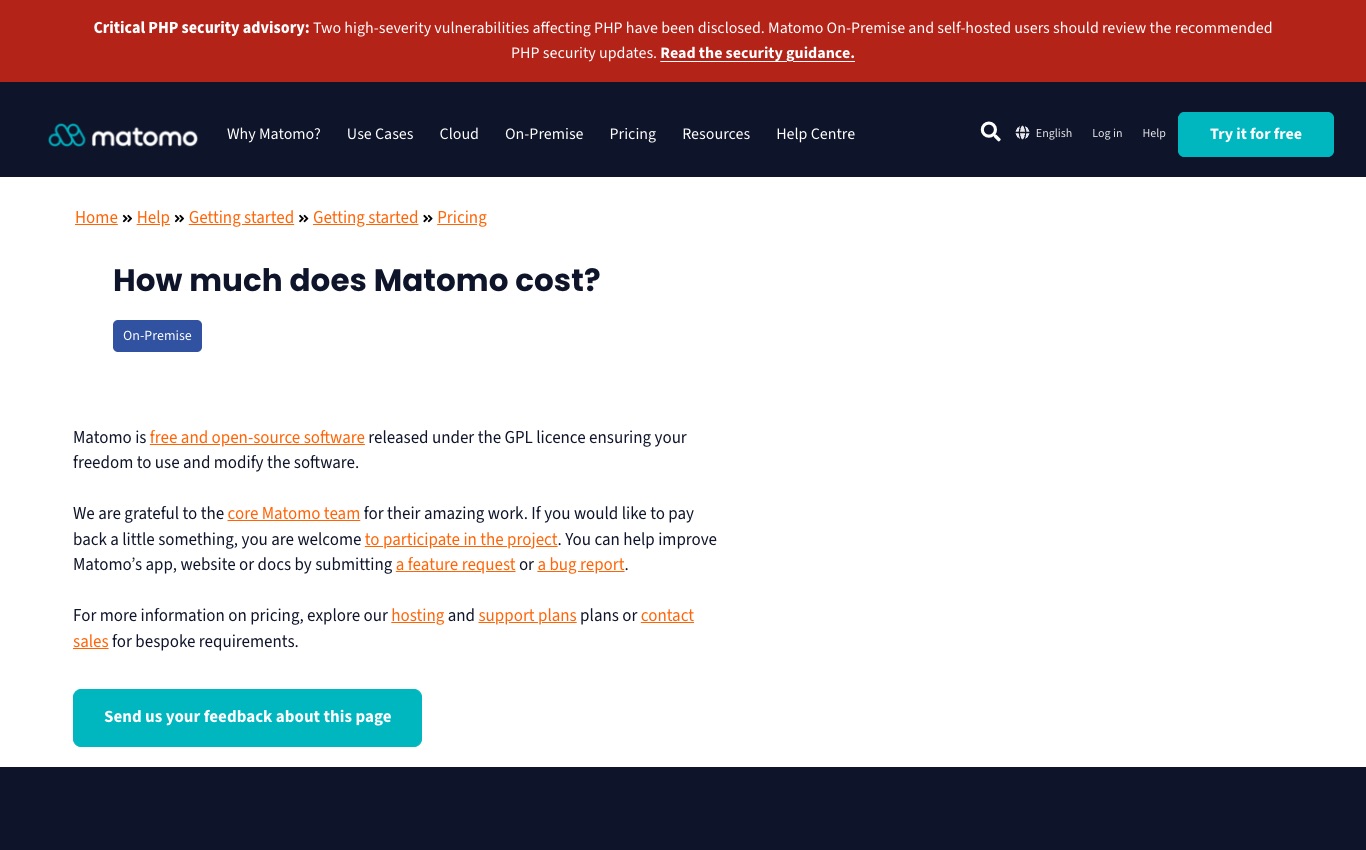
Pricing requires careful language. On-Premise Community is open-source. Paid On-Premise Team, Business, Enterprise and VIP bundles address premium capabilities and support. Cloud offers hosted Business and Enterprise arrangements; the live pricing calculator should determine a suitable traffic tier. The primary unit is monthly hits, optional add-on and hosting infrastructure; our cost analysis does not assume that an introductory figure survives a renewal or applies to a different region.
Matomo pricing has two distinct starting points. Matomo Cloud handles the hosting service, whereas Matomo On-Premise leaves an organization responsible for server maintenance, patches and recovery. For a self-hosted Matomo analytics installation, an apparently free license can still carry ongoing operational costs. For Cloud, traffic and additional capabilities affect the subscription. Put these scenarios side by side before choosing a plan.
📊 Matomo Review Summary
Matomo offers both self-hosted analytics and a managed cloud option. Data ownership and customization are meaningful advantages for some teams, while maintenance, hit-based pricing and premium features deserve a realistic cost comparison.
⚡ Quick Verdict: Is Matomo Worth It in 2026?
Our editorial view: The ability to control deployment and the underlying analytics dataset is a meaningful difference from a narrow SaaS dashboard. Matomo offers a route for teams that need to choose their hosting environment and audit their instrumentation. That control is not effortless. A small content site may spend more on configuration and maintenance than it would save in subscription fees. Cloud hosting reduces that burden but introduces a subscription dependent on tracked hits and plan terms.
The right reader is organizations with compliance teams, developers who want self-hosting and website operators needing deeper reporting. The most important trade-off is not the number of features but whether the collection workflow produces reliable evidence while respecting the organization’s resources and privacy obligations.
| Buyer question | What current vendor documentation supports | The limit to verify |
|---|---|---|
| What does the product cover? | tracked hits, hosting resources and optional licensed plugins | That control is not effortless. A small content site may spend more on configuration and maintenance than it would save in subscription fees. Cloud hosting reduces that burden but introduces a subscription dependent on tracked hits and plan terms. |
| Is there a free option? | free open-source On-Premise Community edition, not free managed hosting | Check live terms and whether collection stops at the limit. |
| What determines the bill? | monthly hits, optional add-on and hosting infrastructure | Forecast actual capture, traffic and overage conditions. |
| Who should trial it? | organizations with compliance teams, developers who want self-hosting and website operators needing deeper reporting | Choose one measurable real workflow. |
| What is the largest risk? | Matomo Community has no software license price, but self-hosting turns updates, backups, uptime, monitoring and security into your own responsibility. Some advanced reports and plugins belong to paid bundles instead of the Community core. | Test this risk before paid procurement. |
🧠 Matomo in plain English
In Matomo, the strongest question here is not whether a dashboard exists, but whether the team knows how to use it for matomo in plain english. Think of Matomo as an analytics platform with deployment choices, not simply a colorful counter. The ability to control deployment and the underlying analytics dataset is a meaningful difference from a narrow SaaS dashboard. Matomo offers a route for teams that need to choose their hosting environment and audit their instrumentation. A public institution needs the ability to select a hosting region and keep ownership of analytics data.
In practice, start with a narrow experiment: A public institution needs the ability to select a hosting region and keep ownership of analytics data. If a result is ambiguous, keep that uncertainty in the final buying note rather than hiding it behind a generic product score.
🔐 Data ownership versus convenience
For teams using Matomo, begin with a real customer or visitor question: data ownership versus convenience deserves a report only if it changes an action. Control matters when an organization must account for every processor and database location. On-Premise Community is open-source. Paid On-Premise Team, Business, Enterprise and VIP bundles address premium capabilities and support. Cloud offers hosted Business and Enterprise arrangements; the live pricing calculator should determine a suitable traffic tier. Before trusting a recommendation for data ownership versus convenience, ask the Matomo owner to explain the relevant outcome using a single controlled visitor example.
🔎 Cloud and On-Premise decision
A feature grid can obscure a more practical issue: what does cloud and on-premise decision actually require? Do not compare the free server edition to an all-inclusive cloud plan without infrastructure costs. Before installing, list each site, define the base URL, map ecommerce actions, estimate monthly hits and decide whether the team will support a server. Run test sessions, verify goal conversions and design a regular patching and restore procedure if self-hosting. A useful Matomo buying test is to map cloud and on-premise decision to an action the business can change, and record when a different tool would be enough.
Do not compare the free server edition to an all-inclusive cloud plan without infrastructure costs.
💰 Hit counts and the billing model
A trial of Matomo makes this concrete: in this part of the buying decision, hit counts and the billing model is less about attractive charts than dependable definitions. One page can produce multiple hits depending on how tracking is implemented; forecast event volume. That control is not effortless. A small content site may spend more on configuration and maintenance than it would save in subscription fees. Cloud hosting reduces that burden but introduces a subscription dependent on tracked hits and plan terms. To evaluate hit counts and the billing model, compare the Matomo report with the corresponding application record rather than judging the visual polish of a chart.
Consider what happens during a normal working week: To evaluate hit counts and the billing model, compare the Matomo report with the corresponding application record rather than judging the visual polish of a chart. Record the exact source page and the date you checked it, then separate what the vendor promises from what your own installation proves.
📈 Core dashboards and campaign reports
In Matomo, how a team interprets core dashboards and campaign reports depends on its source data and the event definitions behind the interface. Reports are useful only when campaign naming and goal definitions are consistent across teams. Hosting in your own infrastructure can help with data control but does not automatically make collection lawful. Anonymization settings, retention, consent choices, data access, backups and vendor contracts still require documented decisions. When interpreting core dashboards and campaign reports in Matomo, annotate the time window, identity assumptions and any filtering that could change the number presented to managers.

🎯 Event tracking and goal definitions
The first choice around event tracking and goal definitions is surprisingly operational, rather than purely technical. Verify which interaction fires a conversion and whether duplicate triggers inflate completion rates. Matomo Community has no software license price, but self-hosting turns updates, backups, uptime, monitoring and security into your own responsibility. Some advanced reports and plugins belong to paid bundles instead of the Community core. A marketer wants funnel reports, but discovers premium on-premise bundles can cost more than the free Community edition.
In practice, start with a narrow experiment: A marketer wants funnel reports, but discovers premium on-premise bundles can cost more than the free Community edition. If a result is ambiguous, keep that uncertainty in the final buying note rather than hiding it behind a generic product score.
| Plan / route | Published position | Decision note |
|---|---|---|
| Entry | free open-source On-Premise Community edition, not free managed hosting | Treat a limited trial differently from an ongoing free tier. |
| Individual / growing usage | On-Premise Community plus paid On-Premise bundles and Matomo Cloud traffic tiers | Confirm supported features in the exact vendor tier. |
| Usage metric | monthly hits, optional add-on and hosting infrastructure | Costs vary with measured workload, not just time. |
| Enterprise or advanced | On-Premise Community is open-source. Paid On-Premise Team, Business, Enterprise and VIP bundles address premium capabilities and support. Cloud offers hosted Business and Enterprise arrangements; the live pricing calculator should determine a suitable traffic tier. | Confirm written scope, platform needs and renewal terms. |
| Official plans | https://matomo.org/pricing/ | Source checked October 28, 2026; offers can change. |
🛠️ Premium plugins and feature gaps
When reviewing Matomo, evaluate premium plugins and feature gaps in the edition the organization would actually buy, not in a polished enterprise demo. A feature in a product screenshot may require a premium plugin or higher bundle on-premise. tracked hits, hosting resources and optional licensed plugins Check whether Matomo includes the exact premium plugins and feature gaps capability in the selected subscription; a demonstration environment can show features outside the buyer's tier.
🔎 Matomo for ecommerce data
A trial of Matomo makes this concrete: an apparently simple issue in matomo for ecommerce data can become a tracking and data-quality task. Separate recorded order revenue from refunds, taxes and shipping so dashboards reconcile. ownership and configurability, with a very real operational price for taking control The first matomo for ecommerce data trial in Matomo should include a deliberately failed event or page flow so that the team can see what is silently omitted.
A realistic team request makes the distinction clearer: The first matomo for ecommerce data trial in Matomo should include a deliberately failed event or page flow so that the team can see what is silently omitted. Ask whether the report would change spending, onboarding, content, security or a customer-support response; if not, remove the measurement.

🔐 Consent and anonymization settings
Sensitive information can appear unexpectedly when teams configure consent and anonymization settings without a review. Document legal basis, cookie handling and suppression of sensitive values with counsel if needed. The ability to control deployment and the underlying analytics dataset is a meaningful difference from a narrow SaaS dashboard. Matomo offers a route for teams that need to choose their hosting environment and audit their instrumentation. Treat consent and anonymization settings within Matomo as a data-governance decision: define which tracked hits, hosting resources and optional licensed plugins information is collected, masked or made available for export.
Consider what happens during a normal working week: Treat consent and anonymization settings within Matomo as a data-governance decision: define which tracked hits, hosting resources and optional licensed plugins information is collected, masked or made available for export. Record the exact source page and the date you checked it, then separate what the vendor promises from what your own installation proves.
🔎 Hosting performance and maintenance
For teams using Matomo, do not assume two reporting systems measure hosting performance and maintenance in an identical way. A server that is undersized may distort freshness, making monitoring part of analytics accuracy. On-Premise Community is open-source. Paid On-Premise Team, Business, Enterprise and VIP bundles address premium capabilities and support. Cloud offers hosted Business and Enterprise arrangements; the live pricing calculator should determine a suitable traffic tier. Run a parallel hosting performance and maintenance report during a small window and explain any difference between Matomo and the source system before switching dashboards.
A server that is undersized may distort freshness, making monitoring part of analytics accuracy.
🔐 Security patches and backups
When reviewing Matomo, the difficult part of security patches and backups is choosing the right denominator and reporting window. Schedule database and application backups and rehearse restore, not just installation. Before installing, list each site, define the base URL, map ecommerce actions, estimate monthly hits and decide whether the team will support a server. Run test sessions, verify goal conversions and design a regular patching and restore procedure if self-hosting. A small publisher sees free software and forgets server administration, incident response and backup costs.
| Controlled test | Expected evidence | Possible false conclusion |
|---|---|---|
| First page or launch | One correctly attributed visit or event | A broken tag looks like a traffic collapse. |
| Signup or goal | One completed outcome with exact definition | A submit click is counted even if the service failed. |
| Repeat use | Consistent return window and identity | An anonymous cookie is mistaken for a retained customer. |
| Mobile check | Same event schema across devices | A mobile-only failure hides in a desktop total. |
| Privacy test | Sensitive values suppressed before collection | A replay or export exposes private fields. |
📊 Team permissions and reporting
A report about team permissions and reporting is useful when someone is accountable for checking and acting on it. An analyst who cannot administer server access still needs usable permissions and audit trails. That control is not effortless. A small content site may spend more on configuration and maintenance than it would save in subscription fees. Cloud hosting reduces that burden but introduces a subscription dependent on tracked hits and plan terms. If team permissions and reporting is useful to the organization, assign a named owner for the Matomo report and specify which weekly decision will respond to a change.
A useful counterexample is easy to miss: If team permissions and reporting is useful to the organization, assign a named owner for the Matomo report and specify which weekly decision will respond to a change. Repeat the same exercise on mobile and desktop wherever device behavior affects the workflow, and keep an honest record of exceptions.
🔎 Historical imports and comparability
In Matomo, collaboration matters in historical imports and comparability because sharing can reveal far more information than intended. Imported data must retain its original measurement definitions and consent limitations. Hosting in your own infrastructure can help with data control but does not automatically make collection lawful. Anonymization settings, retention, consent choices, data access, backups and vendor contracts still require documented decisions. Before sharing historical imports and comparability in Matomo, review the audience's access to raw records and whether links could expose another customer's data.
🧪 What a meaningful pilot looks like
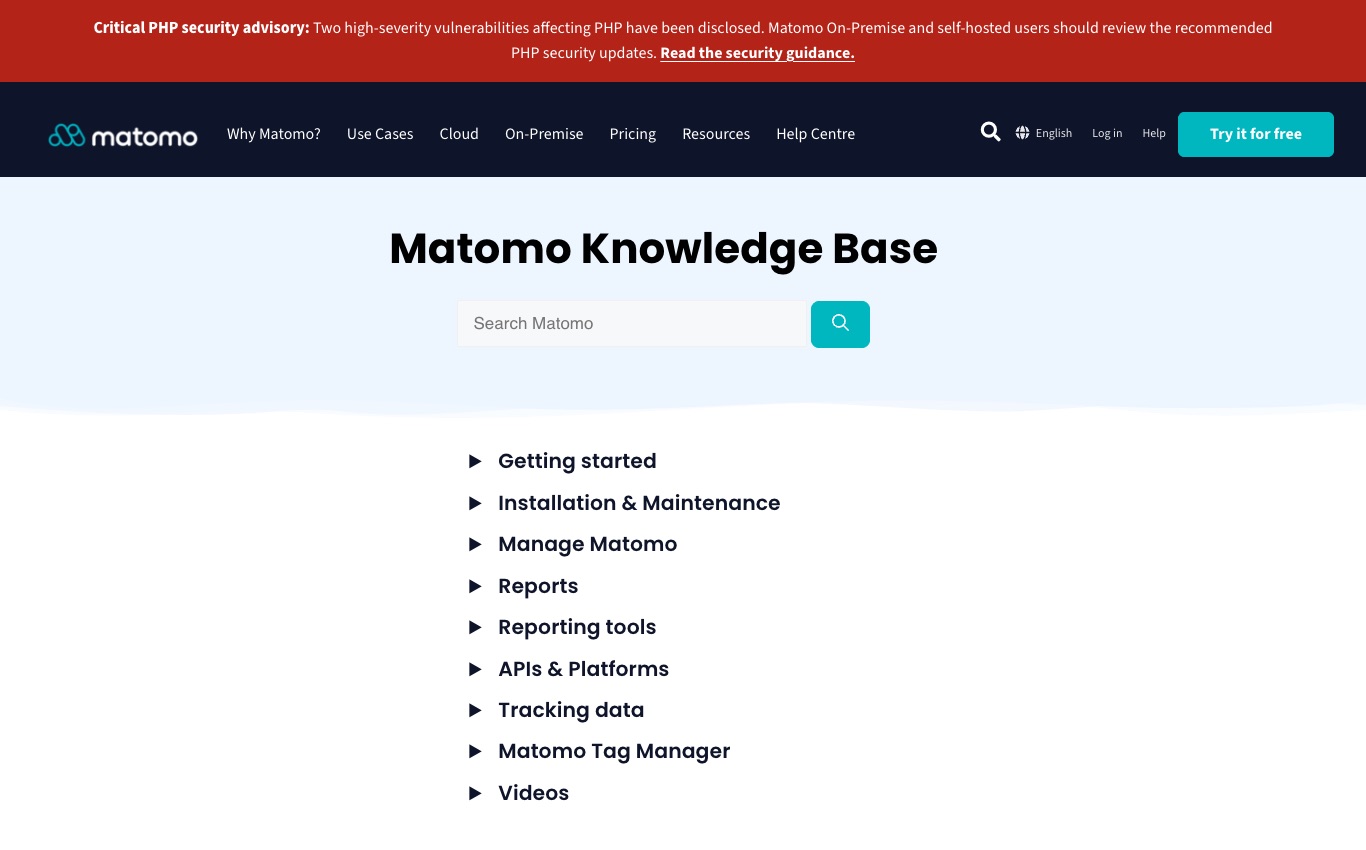
For teams using Matomo, data migration makes what a meaningful pilot looks like a question about ownership as well as features. Test a clean visit, a UTM campaign, a goal, an ecommerce order and an export. Matomo Community has no software license price, but self-hosting turns updates, backups, uptime, monitoring and security into your own responsibility. Some advanced reports and plugins belong to paid bundles instead of the Community core. Test a small historical export involving what a meaningful pilot looks like from Matomo, including the dimensions that would matter when moving to another reporting platform.
Consider what happens during a normal working week: Test a small historical export involving what a meaningful pilot looks like from Matomo, including the dimensions that would matter when moving to another reporting platform. Record the exact source page and the date you checked it, then separate what the vendor promises from what your own installation proves.
💰 A real total-cost model
Treat a real total-cost model as something to validate against a known record, not a claim to take at face value. Account for engineer time, plugins, infrastructure, security and support as well as license. tracked hits, hosting resources and optional licensed plugins Use one deliberate positive and negative test for a real total-cost model in Matomo; those checks reveal whether a tracked hits, hosting resources and optional licensed plugins event is counted as intended.
Account for engineer time, plugins, infrastructure, security and support as well as license.
🔎 When an organization outgrows Community
A trial of Matomo makes this concrete: attribution debates become more productive when when an organization outgrows community is clearly defined. The question is when operational risk becomes costlier than the premium license. ownership and configurability, with a very real operational price for taking control An ecommerce operator wants revenue events and goals that reconcile with its actual checkout records.
In practice, start with a narrow experiment: An ecommerce operator wants revenue events and goals that reconcile with its actual checkout records. If a result is ambiguous, keep that uncertainty in the final buying note rather than hiding it behind a generic product score.
📈 Cloud traffic tier changes
In Matomo, an evaluation of cloud traffic tier changes should start from a testable workflow rather than a guided product tour. Monitor hits monthly and recalculate before upgrading or signing an annual commitment. The ability to control deployment and the underlying analytics dataset is a meaningful difference from a narrow SaaS dashboard. Matomo offers a route for teams that need to choose their hosting environment and audit their instrumentation. Write a short evaluation script for cloud traffic tier changes with Matomo: specify an expected report, the input activity and the conditions that would disprove the purchase case.
A useful counterexample is easy to miss: Write a short evaluation script for cloud traffic tier changes with Matomo: specify an expected report, the input activity and the conditions that would disprove the purchase case. Repeat the same exercise on mobile and desktop wherever device behavior affects the workflow, and keep an honest record of exceptions.
⚖️ Matomo against simpler alternatives
The financial case for matomo against simpler alternatives is about predictable usage and operating effort together. Plausible is narrower and lighter; Google Analytics has a different advertising ecosystem. On-Premise Community is open-source. Paid On-Premise Team, Business, Enterprise and VIP bundles address premium capabilities and support. Cloud offers hosted Business and Enterprise arrangements; the live pricing calculator should determine a suitable traffic tier. Forecast matomo against simpler alternatives over an ordinary month and a campaign peak using Matomo's monthly hits, optional add-on and hosting infrastructure unit; do not confuse that with a simple customer count.
A realistic team request makes the distinction clearer: Forecast matomo against simpler alternatives over an ordinary month and a campaign peak using Matomo's monthly hits, optional add-on and hosting infrastructure unit; do not confuse that with a simple customer count. Ask whether the report would change spending, onboarding, content, security or a customer-support response; if not, remove the measurement.
| Practical buyer situation | Why it matters | What to validate |
|---|---|---|
| A public institution needs the ability to select a hosting region and keep ownership of analytics data. | Shows ordinary recurring value | A saved report, a relevant action and a documented owner. |
| A marketer wants funnel reports, but discovers premium on-premise bundles can cost more than the free Community edition. | Changes team or plan requirements | Permissions and the appropriate usage tier. |
| A small publisher sees free software and forgets server administration, incident response and backup costs. | Tests a poor-fit assumption | Features the platform does not promise. |
| An ecommerce operator wants revenue events and goals that reconcile with its actual checkout records. | Exposes cost or data-quality risk | Metering, identity and source reconciliation. |
⚠️ Risks that procurement should document
When reviewing Matomo, to compare alternatives, give each tool the same task involving risks that procurement should document. A privacy claim can break if the implementation leaks URL parameters or identity values. Before installing, list each site, define the base URL, map ecommerce actions, estimate monthly hits and decide whether the team will support a server. Run test sessions, verify goal conversions and design a regular patching and restore procedure if self-hosting. To compare risks that procurement should document fairly, give Matomo and a shortlisted alternative equivalent inputs, a fixed date window and the same success definition.
A privacy claim can break if the implementation leaks URL parameters or identity values.
🏆 Final fit: own the stack or outsource
A trial of Matomo makes this concrete: the final verdict about final fit: own the stack or outsource ought to include the situation in which this product is the wrong fit. Choose Matomo when deployment control and reporting depth justify the maintenance. That control is not effortless. A small content site may spend more on configuration and maintenance than it would save in subscription fees. Cloud hosting reduces that burden but introduces a subscription dependent on tracked hits and plan terms. End the final fit: own the stack or outsource assessment by naming one realistic situation where Matomo is too complicated, too expensive or unsuitable for the data involved.
For a concrete check, work through this situation: End the final fit: own the stack or outsource assessment by naming one realistic situation where Matomo is too complicated, too expensive or unsuitable for the data involved. A good review should make that trade-off visible before the reader clicks a paid checkout button.
🎯 Advantages, drawbacks and editorial fit
What works: The ability to control deployment and the underlying analytics dataset is a meaningful difference from a narrow SaaS dashboard. Matomo offers a route for teams that need to choose their hosting environment and audit their instrumentation. Before installing, list each site, define the base URL, map ecommerce actions, estimate monthly hits and decide whether the team will support a server. Run test sessions, verify goal conversions and design a regular patching and restore procedure if self-hosting.
What needs attention: Matomo Community has no software license price, but self-hosting turns updates, backups, uptime, monitoring and security into your own responsibility. Some advanced reports and plugins belong to paid bundles instead of the Community core. Hosting in your own infrastructure can help with data control but does not automatically make collection lawful. Anonymization settings, retention, consent choices, data access, backups and vendor contracts still require documented decisions.
Editorial fit — Matomo
Good fit: organizations with compliance teams, developers who want self-hosting and website operators needing deeper reporting.
Less suitable: That control is not effortless. A small content site may spend more on configuration and maintenance than it would save in subscription fees. Cloud hosting reduces that burden but introduces a subscription dependent on tracked hits and plan terms.
Review official pricing and eligibility before deciding. This is a vendor information link, not a verified promotional discount.
🧪 Sources and review methodology
Public primary sources checked October 28, 2026. These links allow readers to recheck prices, terms and feature limits. Screenshots are vendor website captures, not evidence of independent usage:

Frequently Asked Questions
Is Matomo free to self-host?
Yes. Matomo On-Premise Community is open-source software without a license charge. It is not cost-free to operate: servers, updates, technical support, backups and optional premium plugins can have expenses.
Is Matomo Cloud a free product?
No, Cloud hosting is a separate paid service, though Matomo advertises a free Cloud trial. Hosting, maintenance and automatic updates are included in a Cloud subscription rather than the self-managed edition.
What counts as a Matomo hit?
Matomo describes usage in tracked hits, which can include pageviews and events depending on configuration. A high-interaction site may produce more hits than pageviews, so forecast the meter from real tracking rather than sessions alone.
How do Cloud and On-Premise differ?
Cloud provides hosting, updates and managed infrastructure. On-Premise gives an organization control over its own deployment but assigns it maintenance, infrastructure and operational security work. Features and premium plugins can differ.
Are heatmaps and session recordings included?
Some heatmaps, recording and other specialized features are part of premium On-Premise plugin bundles; Cloud feature inclusion is structured differently. Never assume a premium screenshot belongs to the free Community setup.
Can I import Google Analytics data?
Matomo offers migration and import routes for historical data, including Google Analytics information. Verify what dates and dimensions are transferable and expect definitions to differ rather than claiming a perfect numerical match.
Is Matomo automatically GDPR compliant?
No analytics platform is automatically compliant in every configuration. Matomo offers controls for privacy, consent and anonymization; the website operator must still evaluate lawful basis, notices, data access and retention.
How much work does self-hosting require?
You need capacity planning, updates, monitoring, backups and an owner who can fix the installation. For a small publisher, the administrative time may outweigh subscription savings from using Community.
Does Matomo support ecommerce tracking?
Yes. Matomo supports ecommerce and conversion-oriented tracking. Orders, refunds, shipping and currency handling should be reconciled against the store’s transaction records before financial dashboards are trusted.
How does Matomo handle data ownership?
On-Premise data can be held on infrastructure selected by the operator. Matomo also emphasizes data ownership in Cloud. Data stewardship still includes access policies, deletion workflows, contracts and backups.
When would a simpler tool be better?
Plausible or Fathom can be more appropriate when the entire task is simple traffic reporting and a small number of goals. Choose Matomo when deployment control and reporting depth justify added complexity.
Explore More on DigiOffly
Analytics research
- Growth & Marketing
- E-commerce & Online Selling
- Security & Privacy
- Analytics software comparisons — Review web and product analytics alternatives.
- Plausible Analytics review — Consider simpler managed traffic reporting.
- Fathom Analytics review — Compare privacy-focused hosted analytics.
Software tools
Planning and savings
Want an update when our next analytics comparisons are published? Subscribe to DigiOffly Deal Alerts for relevant category updates.