

Research updated: October 30, 2026. This Sage Accounting review is based on official Sage UK pricing, its feature matrix, product updates and US retirement notice. It is not a paid-account walkthrough. Screenshots document public Sage source material, not our authenticated use of a customer’s books. Currency and tax treatment are country-specific.
Sage Accounting is a cloud bookkeeping product for small businesses, but the purchase decision starts with country, not with its invoice editor. Sage Business Cloud Accounting in the United States was retired on December 31, 2024, and its US support and access ended January 31, 2025. Sage Accounting remains available in the United Kingdom and certain other markets. A US buyer should not mistake a UK subscription page for an available US offer. Sage’s US catalog instead includes Sage 50, Sage Intacct and other products, which are distinct choices.
Quick verdict: Sage Accounting deserves consideration for a UK business that needs bank feeds, sales invoicing, VAT workflows and a clear upgrade path to supplier management, multi-currency work and stock. It is a weaker fit for a US business seeking the retired Business Cloud Accounting edition or for a company wanting to use UK tax controls in another country without local confirmation.
📊 Sage Accounting Review Summary
| Decision point | Current evidence | Buyer implication |
|---|---|---|
| Primary market reviewed | UK Sage Accounting | Confirm the account’s legal entity country |
| US Sage Business Cloud Accounting | Retired; support and access ended January 2025 | Do not recommend for new US signups |
| Start list price, UK | £20/month excluding VAT after promotion | Entry bookkeeping and invoicing |
| Standard list price, UK | £43/month excluding VAT after promotion | Supplier workflows, cash-flow forecast and reports |
| Plus list price, UK | £59/month excluding VAT after promotion | Multi-currency, budgets and stock |
| Product category | Cloud accounting and VAT/bookkeeping | Not interchangeable with Sage 50 or Intacct |
| Evidence boundary | Official public documents | No live reconciliation or filing test |
🧭 Contents and Navigation
Jump to pricing, features, comparisons, methodology and official sources.
🧠 What Is Sage Accounting?
The US Sage Business Cloud Accounting retirement is an important product-identity check: the former US service is not the same subscription as today’s UK Sage Accounting plans. Confirm the product and country with Sage before exporting books from a current US system.
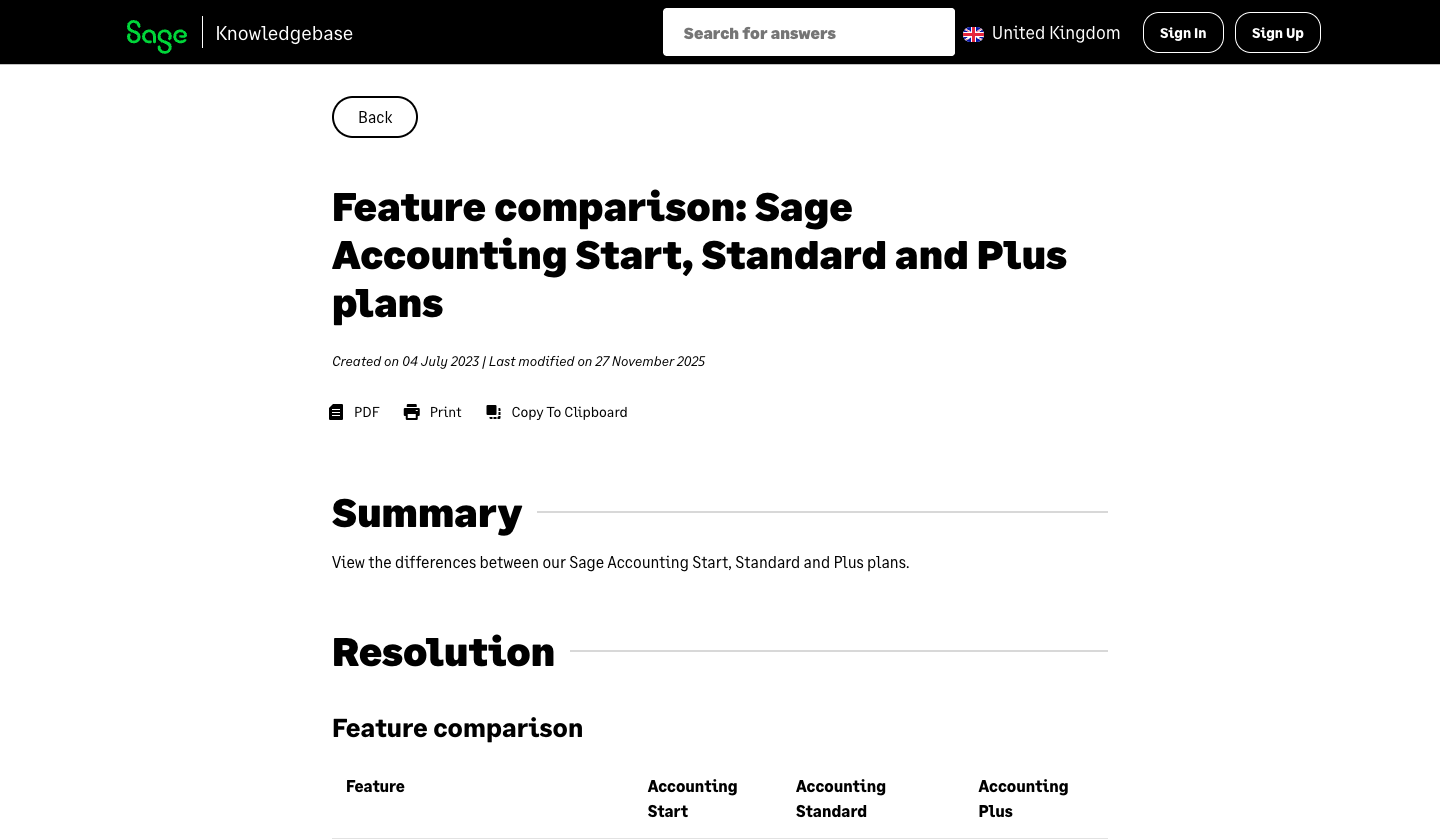
A sent invoice is not cash, and a bank deposit is not necessarily one customer’s payment. Sage Accounting has to preserve the link between receivables, cash and the ledger. A bank feed imports transactions, but the operator still has to match a deposit to the right receivable. A bank feed can import transactions, but the operator still needs to decide which payment belongs to which sale and what tax treatment applies. The strongest argument for Sage Accounting is a disciplined bookkeeping process, not a claim that software can automatically understand every transaction.
Sage’s regional product names can mislead buyers who land on a UK pricing page after searching for a US accounting package. Sage Accounting is the UK-style cloud product discussed here. Sage 50 is a different Sage accounting product with a separate interface, inventory depth and US pricing. Sage Intacct serves more complex finance organizations. A review that merges all three feature sets will promise an entry-level subscriber functionality they may never receive.
💰 Sage Accounting Pricing in 2026
For Sage Accounting UK pricing, compare the £20 Start, £43 Standard and £59 Plus ordinary monthly prices after any introductory discount. It is the month-seven bill, not the first promotional charge, that determines whether the subscription fits a small firm’s cash-flow budget.
The public Sage UK pricing reference lists Start £20, Standard £43 and Plus £59 monthly before VAT at ordinary post-promotion rates. Advertised introductory offers, currently described as 90% off for six months on the Sage UK page, must not be presented as the permanent price. The region, available promotions and VAT treatment should be captured on the date the business subscribes.
| UK plan | Ordinary monthly list price (ex VAT) | Twelve months at unchanged list rate | Why it may be worth upgrading |
|---|---|---|---|
| Accounting Start | £20 | £240 | Core invoicing, bank reconciliation and VAT |
| Accounting Standard | £43 | £516 | Supplier processing, estimates, forecasts and reports |
| Accounting Plus | £59 | £708 | Inventory, multi-currency and financial budgets |
These annual totals are simple illustrations before introductory discounts, VAT and add-ons. They are not annual contracts quoted by Sage. A small firm should model month seven, when a temporary discount might end, rather than budget indefinitely at £2 per month. Ask which version of the plan’s allowances and Sage Copilot seats apply to the actual contract.
Start vs Standard: purchase invoices and workflow depth
The Sage Accounting Start vs Standard question is mainly about process depth, not which invoice editor looks nicer. Standard’s supplier and reporting capabilities should be evaluated against a real sample of outstanding bills, purchase documents and month-end handoffs.
Start covers the bookkeeping basics, but Standard broadens workflow capabilities. Sage’s official feature comparison identifies supplier purchase invoices, cash-flow forecasting and quotes or estimates in Standard and Plus, not Start. That makes supplier handling a decision criterion: if the owner receives two bills a month, a manual control may suffice; if an operations coordinator processes scores of bills with different payment terms, the additional subscription could pay for itself in reduced reconciliation effort.
Attaching a supplier’s PDF is only evidence of a proposed payable; approval still depends on the purchase and delivery records. A responsible test creates a supplier invoice, attaches a source file, gives it a due date, settles only part of it and confirms the resulting remaining balance. If that process cannot be explained to the bookkeeper, a paid upgrade will not fix the underlying approval policy.
When Plus is necessary
Sage Accounting Plus multi-currency support belongs on the shortlist only when a company actually invoices, receives or settles in multiple currencies. An occasional foreign supplier payment may be simpler to handle with a documented conversion than a permanent tier upgrade.
Plus matters when multi-currency bank accounts, currency invoicing, stock items or budgets are part of the operational record. Consider a UK distributor invoicing an EU buyer in euros. The company must understand exchange differences, whether VAT is applicable and how the foreign-currency payment reconciles to a sterling bank account. A vendor’s multi-currency label is not proof that every tax or FX scenario is automated correctly.
A retailer with returns and multiple warehouses needs to establish how Sage records cost-of-goods-sold and whether fulfilment stays in a separate system. Sage Accounting Plus can manage stock items but should not be assumed to replace a dedicated warehouse management system. Test a returned item, damaged stock and a supplier cost change before relying on inventory reports.
💳 Invoicing, Payment Collection and Credit Notes
The invoice flow starts with the customer record and accurate line items. A business that charges for both goods and consulting must classify the sale correctly; otherwise a single invoice can contain more than one tax treatment. In the draft invoice, inspect contact details, payment terms, VAT code, currency and whether sending the invoice creates the expected receivable entry. An attractive invoice template says little about whether the right tax codes and receivable entries were posted.
A refund illustrates why editing the original invoice in place is risky. Imagine a design studio billing £2,000 and later granting a £300 adjustment. The finance team should issue a traceable credit note rather than silently editing a paid document. Check how the adjusted amount affects aging, VAT returns and customer statements. A platform’s ability to create a PDF does not establish that the ledger is correct after a dispute.
🏦 Bank Reconciliation and Duplicate Transactions
Sage Accounting bank reconciliation needs an explicit rule for card settlements: a processor may deposit £970 against a £1,000 sale after deducting £30 in fees. Matching only the net deposit to the invoice would hide the expense.
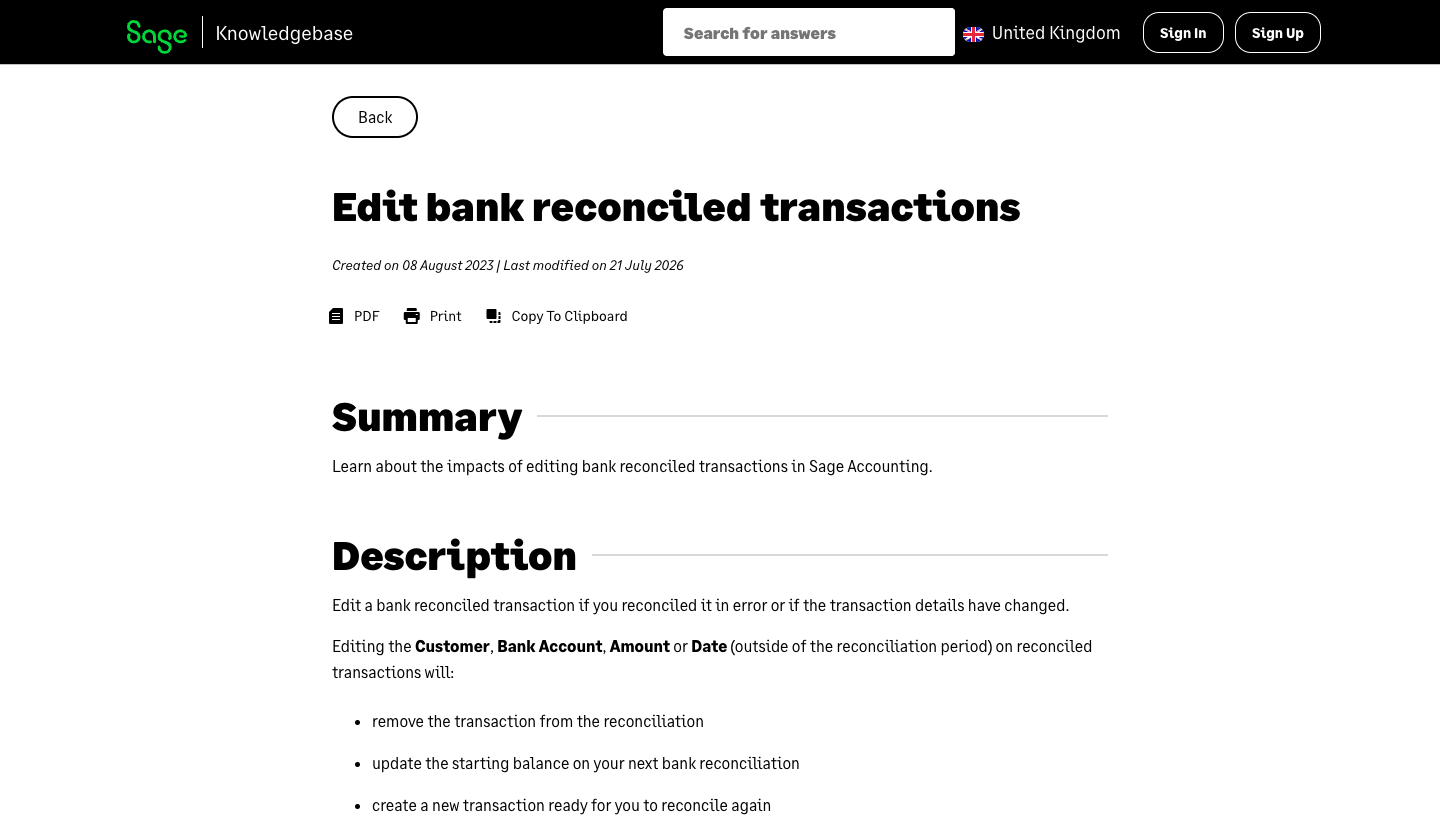
Bank feeds reduce manual imports but cannot resolve ambiguous transactions without rules and review. A bank line might represent a deposit containing several customer payments net of processor fees. Matching that total against a single invoice would understate the fee and may leave another receivable unpaid. Build a test reconciliation around a direct bank transfer, a card-settled invoice and a partial refund.
A reconnected bank feed can overlap with a previously imported CSV, creating duplicate-looking lines. If a business uploads a CSV after a bank connection resumes, duplicate lines may appear. Compare dates, reference numbers and value before applying categorization rules. The accountant should approve the reconciliation outcome and retain an exception log; accepting every suggestion automatically is not an accounting policy.
🧾 VAT, Making Tax Digital and UK Compliance
A Sage Accounting VAT return should be reviewed against the actual invoice register and the company’s VAT scheme. Sage Accounting VAT features help record and submit tax data; they do not decide whether an unusual sale is exempt, zero-rated or subject to special treatment.
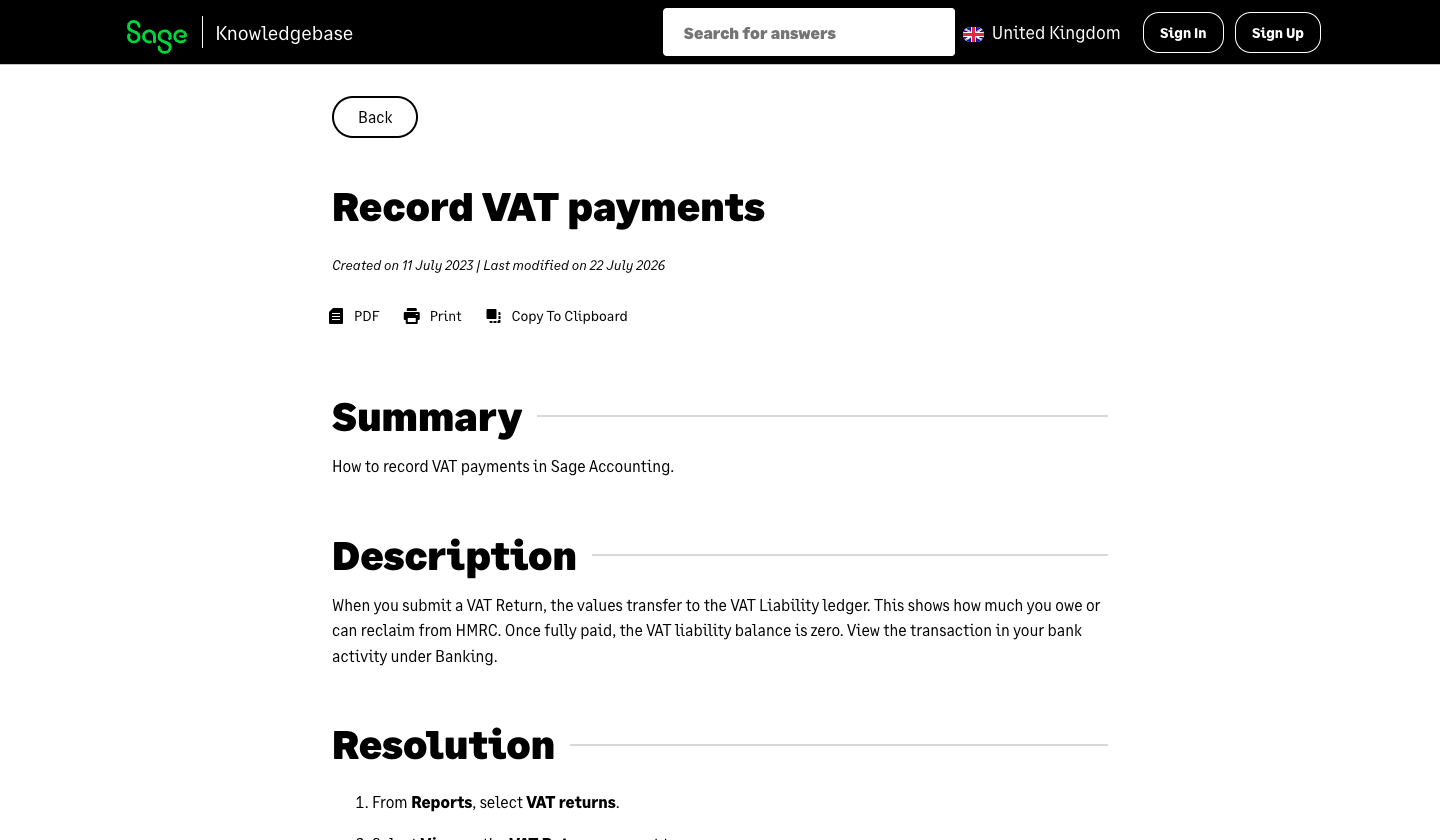
Sage UK advertises tax and Making Tax Digital features. Check whether the company is VAT-registered, which scheme applies and whether the selected edition meets the accountant’s record-keeping needs. The buyer should verify domestic sales, exempt items, reverse-charge situations and credit notes against its own business model. These are matters of tax treatment, not just platform setup.
When preparing a return, reconcile recorded revenue and expenses to supporting documents and review transactions changed after the previous period closed. Sage’s public product updates mention improved adjustment support and audit visibility, but the business still carries responsibility for filing accurately and on time. A company operating outside the UK should seek its local tax product rather than imitate UK VAT labels.
🧪 Sage Copilot and Receipt Capture
Receipt OCR may shorten data entry, but missing invoice details and tax codes still require human checking. An OCR system can read an invoice total while missing its VAT registration number or allocating the wrong expense category. Set a threshold for human review and sample the exceptions. A useful test feeds a hotel bill with meals, tax and other charges and asks whether the resulting coding can be justified.
Sage’s newer plan documentation distinguishes allowances for captured documents and extra users. The commercial decision should include overage rates and the cost of an additional operator who only occasionally checks reports. An AI feature included for one user is not necessarily a company-wide free entitlement.
📈 Sage Accounting Reporting, Cash Flow and Budgets
Sage Accounting cash-flow forecasts are useful when a finance manager can separate confirmed receipts from invoices that are routinely paid late. Test a scenario in which the largest client delays payment beyond payroll; the resulting shortfall matters more than the chart design.
Cash-flow forecasts are only as credible as the invoices, payroll schedules and payment assumptions feeding them. For a small contractor, a report showing £40,000 outstanding may still be overly optimistic if the biggest customer habitually pays 45 days late. Compare forecasted receipts with historical collection patterns and committed payments to suppliers.
Standard includes more detailed forecasts and custom reports; Plus adds budgets and multi-currency depth. For a contractor facing late client payments, a cash forecast has a practical consequence: postpone equipment purchases before the next payroll date. Report availability alone is not the business result.
✅ Collaboration, Permissions and Accountants
Bookkeepers, directors and external accountants should not necessarily have the same rights. A sales assistant may create customer invoices while the finance manager posts corrections and a separate reviewer confirms month-end adjustments. Ask which roles and audit records are available in the specific plan, including how access is revoked when a contractor leaves.
An accountant-facing Sage price may differ from the subscription sold directly to a business. Never substitute the ‘per-client’ accountant price for a retail subscription estimate. Clarify who owns the account, how the adviser is invited and whether the business can take a complete export of its records at termination.
⚖️ Sage Accounting vs QuickBooks, Xero and FreshBooks
When comparing Sage Accounting alternatives, start with legal entity location and tax support. The Sage Accounting vs Xero decision often hinges on the accountant’s preferred ledger workflow and migration cost, while Sage Accounting vs QuickBooks may turn on the available country edition and integrations.
| Product | Relative strength | Reason to compare carefully |
|---|---|---|
| Sage Accounting | UK bookkeeping, VAT and supplier workflows | Product availability differs by country |
| QuickBooks Online | Broad accounting ecosystem, invoicing and workflows | Country editions and add-ons vary |
| Xero | Accounting collaboration and bank integrations | Depth of stock or specialist workflows differs |
| FreshBooks | Client-focused invoicing and time/expense workflows | Not always ideal for complex inventory |
| Zoho Books | Workflow automation and Zoho integrations | Country-specific tax features need verification |
If a company already uses Xero successfully, a switch to Sage Accounting only makes sense after its accountant maps the chart of accounts, VAT history, customer balances and bank transactions. Exporting a contact list is not a full accounting migration. Compare the cost of migration downtime and parallel reconciliation with any perceived saving in subscription fees.
QuickBooks Online may be more familiar to a US bookkeeper, while UK Sage Accounting may align well with an accountant’s existing workflow. This is not an assertion that one vendor is universally faster or more compliant. The correct shortlist depends on the legal entity, transactions and the accounting practice supporting the company.
🚚 Migration Checklist and Exit Risks
A careful transition begins with a controlled opening balance, not with importing the largest available CSV. Reconcile the previous period, agree cut-off dates, move the customer and vendor ledgers, then import unpaid documents and compare the trial balance. Historic attachments and foreign-currency balances may require special treatment. Keep a read-only copy of the prior system until the first Sage-led closing process has been verified.
Before migrating, establish what Sage will let the company export if it leaves two years later. Ask whether general-ledger transactions, source documents, customer records and audit history can be exported independently. The company should have a process for administrator access after an employee departure and a plan for payment data that remains in banking integrations after the accounting contract ends.
⚖️ Sage Accounting Pros and Cons
| Strengths | Limitations |
|---|---|
| UK-focused bookkeeping, invoicing and VAT | Retired Business Cloud edition cannot be bought in the US |
| Bank feeds and reconciliation workflows | Human accounting controls remain necessary |
| Standard supplier and forecast functions | Start lacks several advanced workflow features |
| Plus multi-currency, inventory and budgets | Advanced inventory or global tax needs may exceed the product |
| Accountant-oriented ecosystem | Published promotional pricing can obscure normal renewal cost |
🧪 Evaluation Method and Evidence Boundaries
This article compares official public product and pricing information. It does not assert that DigiOffly created a Sage tenant, submitted a VAT return, tested bank-feed accuracy or observed customer support response times. The proposed migration and reconciliation tasks are acceptance tests for an actual buyer, not completed test results.
The product is recommended conditionally: Sage Accounting UK can be sensible for an eligible UK entity with routine small-business accounting needs. For a US buyer seeking the discontinued Sage Business Cloud Accounting offering, the right next step is to evaluate current Sage US offerings and alternatives instead.
🛠️ Realistic UK Bookkeeping Setup: Five Opening Decisions
Sage Accounting small-business bookkeeping requires a clean opening trial balance, consistent tax codes and an owner for unresolved bank items. Importing years of transactions without those decisions simply recreates the old reconciliation backlog in a new interface.
Before importing transactions into Sage, map the sales process, supplier approvals, tax codes and the bank accounts that must reconcile. First, identify the legal entity and the primary accounting currency. Second, decide the chart of accounts and which spending categories need separate reporting. Third, list every bank, card and payment processor whose activity must be reconciled. Fourth, assign an owner to customer invoicing and a different reviewer to year-end adjustments. Finally, decide whether inventory, multi-currency or purchasing requires Plus from the start. A clear setup memo is more useful than toggling every available feature at once.
For example, a UK consultancy may collect retainers in advance and invoice project milestones later. The team must determine when the cash receipt is a prepayment, when work is delivered, and which documents support recognizing revenue. Sage Accounting can record transactions, but the accounting policy must come from the business and its adviser. If the company sells both goods and services, its VAT treatment and revenue categories should be defined separately. A three-hour discovery call with its accountant may prevent far more expensive cleanup after the first quarter.
🧪 Sales Invoice Testing: Payment Links, Deposits and Cancellations
A UK design agency invoices £4,000 for a website rebuild. The client pays £2,000 upfront, another £2,000 on delivery, and later receives a £200 credit for a removed feature. The ledger should record both instalments and the £200 credit separately, without altering the original invoice. Bank reconciliation, receivables and the credit-note register should all explain the same balance.
Consider the reverse sequence: a customer has paid the full price, but the agency then cuts the scope and refunds £200. A credit note should explain the reduction, and the bank refund should remain a distinct movement. Reopening the original paid invoice to change its value can make the payment history harder to reconstruct. During migration, preserve the dates and supporting documents of both events, because their VAT treatment and posting periods may differ.
💳 Supplier Invoices and Payment Authorization
Sage Accounting supplier purchase invoices should be checked against the approved order, invoice terms and any items received. Where purchasing and bill approval are handled by separate people, document the handoff so the same liability cannot be approved twice.
A consultancy receiving twelve predictable SaaS invoices each month has little reason to buy advanced purchasing controls solely for their own sake. A stock distributor presents a harder case: the purchase order says 200 units, the delivery note shows 190 and the supplier invoice demands payment for 225. Standard and Plus may offer more purchase workflows than Start, but the specific mismatch needs a documented reviewer. Sage cannot decide which quantity was accepted at the loading bay.
Test the workflow using the 225-unit invoice against a delivery note for 190 units. Enter the supplier’s 225-unit invoice and the 190-unit delivery evidence; record who authorizes any exception and how the outstanding amount is calculated. If accounting imports the invoice without the adjustment, the stock balance and the payable may disagree. A purchasing reviewer can then explain the quantity difference before the payable is approved.
📋 How to Evaluate Sage Accounting Mobile Workflows
A business owner snaps a train receipt while travelling. The image is legible, but the client code and expense purpose are missing. In the next reconciliation, the bookkeeper sees only a rail company, a date and a charge. A better mobile workflow prompts for the business context before the receipt is filed. The goal is fewer follow-up emails, not a claim that photographing paper automatically creates a complete expense entry.
Mobile connectivity can introduce a quiet duplicate: the employee submits a receipt, the app appears to stall, and the employee uploads it again. The finance team needs a way to compare the two drafts by merchant, date and amount before export. If a draft is deleted, the original supporting image and any recorded approval should remain traceable as the company’s retention policy requires. Test that condition before relying on field staff to capture every expense from a phone.
🧾 VAT Exception Cases Worth Reviewing Before Filing
An invoice can combine standard-rated goods with services that require a different VAT treatment. If a bookkeeper applies one default code to every imported line, the resulting tax report may be internally consistent yet wrong. Agree a short tax-code guide with the accountant first; use routine supplies, credit notes and unusual reverse-charge transactions as reference cases. Sage’s MTD features can help with reporting, but they cannot choose the legal treatment of an unfamiliar item.
Consider a credit note issued after a previously filed period. The accounting treatment depends on when the adjustment belongs and which filing processes apply. The software's ability to create adjustment evidence is helpful, but a business must document why the correction was made and who approved it. Check whether the return reconciliation includes the affected transaction and supporting source. That is more meaningful than relying on the phrase 'MTD ready' as a guarantee of perfect compliance.
📈 Cash-Flow Forecasting for a Company with Irregular Collections
Suppose a contractor must cover £18,000 of payroll on the 28th, but its largest client has paid twenty days late in each of the past three months. A forecast that places that client’s £22,000 invoice on its stated due date hides the likely cash squeeze. Change the expected receipt date and compare the projected bank balance against payroll and tax obligations. The useful output is the size and timing of the shortfall, not the chart itself.
Run two scenarios in Sage Accounting Standard or the selected forecasting system: first, all major invoices are paid when expected; second, the two biggest customers delay payment by thirty days. Look at the cash balance after payroll, rent and tax obligations. Does the finance team know which numbers can be edited and which originate in posted books? A credible cash-flow forecast is an operating decision tool, not proof that a company will receive the displayed money.
💰 Stock, Cost Changes and Foreign-Currency Purchasing
Plus adds inventory-related features, but a retailer should ask whether the edition handles its specific needs for variants, warehouses, returns and historical cost. Suppose the same product is purchased in two batches at different prices and then partially returned. The cost-of-goods-sold and stock balances must reconcile under the business's chosen method. A simple inventory field may not replace specialist warehouse logic, serial tracking or ecommerce order synchronization.
The same supplier might invoice in euros while the reporting books remain in pounds. That introduces exchange rates, fee deductions and possible gains or losses between purchase and settlement. The accounting team should verify a sample foreign-currency purchase from invoice through bank conversion and final settlement. If the organization sells internationally at scale, ask whether Sage Accounting Plus is sufficient or whether a more advanced system is justified. The answer depends on transactions, not company size alone.
💰 Total Ownership Cost and the First Month-End Close
The posted subscription is only one part of the finance-system cost. Include accountant onboarding, data migration, payroll or capture allowances, additional users, payment processing, document retention and training. A low promotional rate can be financially attractive, but the business should budget on the ordinary renewal price and the staff hours required for reviews and corrections. A £23 monthly difference between tiers may be minor compared with repeated manual supplier work, or wasteful if that work never occurs.
Before making Sage Accounting the production ledger, perform a supervised month-end close with agreed opening balances, representative invoices, expenses and bank lines. Verify the trial balance against the old records and capture every adjustment needed to complete the close. Then assign an owner for unresolved reconciliation items and a date by which they must be cleared. A business that can close its books predictably has demonstrated more value than one that simply imported thousands of historic transactions.
📚 Official Sources
- Sage UK pricing — retail plan pricing and introductory offers.
- Sage UK feature matrix — Start, Standard and Plus entitlements.
- Sage Accounting product updates — documented changes.
- Sage US retirement notice — scope and end dates.

Frequently Asked Questions
Is Sage Accounting available in the United States in 2026?
The US Sage Business Cloud Accounting product retired at the end of 2024 and access/support ceased in January 2025. Sage sells other accounting products in the US, but the UK Sage Accounting plan names and prices must not be represented as a new US subscription.
How much does Sage Accounting cost in the UK?
The official UK pricing page lists Start £20, Standard £43 and Plus £59 per month excluding VAT at ordinary post-promotion rates. Discounts can temporarily reduce the introductory price, so budget for renewal and check current terms.
Is Sage Accounting the same as Sage 50?
No. Sage Accounting is a cloud small-business bookkeeping product; Sage 50 is a distinct product family with its own feature sets, pricing and market positioning.
Does Sage Accounting include a free plan?
Sage UK offers a separate Sage Sole Trader Free product for eligible sole traders. Do not confuse that product with a permanent free edition of the paid Sage Accounting Start, Standard or Plus plans.
Which Sage Accounting plan supports multiple currencies?
The Sage UK feature matrix identifies multi-currency invoicing and banking as Plus features. Confirm the exact currency workflow and supported jurisdictions before changing an existing system.
Does Sage Accounting help with VAT?
Yes, relevant Sage UK plans support VAT records and UK-related submission processes. A business must still validate its scheme, tax codes and compliance with its accountant.
Can Sage Accounting replace Xero?
It might, but the comparison requires a full migration of ledger balances, customer and vendor records, and bank reconciliation history. A feature checklist by itself does not establish equivalent handling for every accounting edge case.
What does Sage Accounting Standard add?
The UK feature matrix lists more detailed supplier and purchase workflows, reporting, estimates and forecasting beyond Start. Use the current plan sheet to verify user and capture allowances.
Is Sage Accounting suitable for international companies?
Sage offers products across multiple countries, but each edition can differ. Choose based on the legal entity’s market and tax requirements, not on a foreign-market promotional price.
How should I test Sage bank reconciliation?
Use controlled samples including a normal bank transfer, processor-net settlement, refund and CSV duplicate. Compare the resulting general ledger and outstanding balances with the source evidence.
What should I verify before purchasing Sage Accounting?
Confirm market eligibility, the correct product family, current post-promotion pricing, user allowances, local tax support, migration plan and a reliable export path.
EXPLORE NEXT ON DIGIOFFLY
🔍 Explore More on DigiOffly
Compare the finance tools in this review with published alternatives and related workflow guides.
Finance and software categories
- Finance & Accounting — Explore finance services
- Software Directory — Discover software reviews
- Software Stacks — Build a practical team toolkit
Compare and calculate
- Compare Software — Compare capabilities
- AI Software Finder — Find task-specific tools
- Software Cost Calculator — Budget for fees and usage
Related finance reviews
- QuickBooks Online — Read the separate comparison and pricing guide
- Xero — Read the separate comparison and pricing guide
- FreshBooks — Read the separate comparison and pricing guide
- Zoho Books — Read the separate comparison and pricing guide
- Expensify — Receipts, expense approval and employee reimbursements
Pricing, eligibility and product availability can change; verify the provider’s current contractual terms.