

ChatGPT Wallet: OpenAI announced ChatGPT Wallet on November 13, 2026. The first rollout is in Dots for US ChatGPT Pro subscribers aged 18 or older with eligible US-issued cards. After the user reviews and approves each purchase, the payment network issues a token for the agent to complete checkout. Here’s what the launch means for shoppers and online businesses, and what it doesn’t.
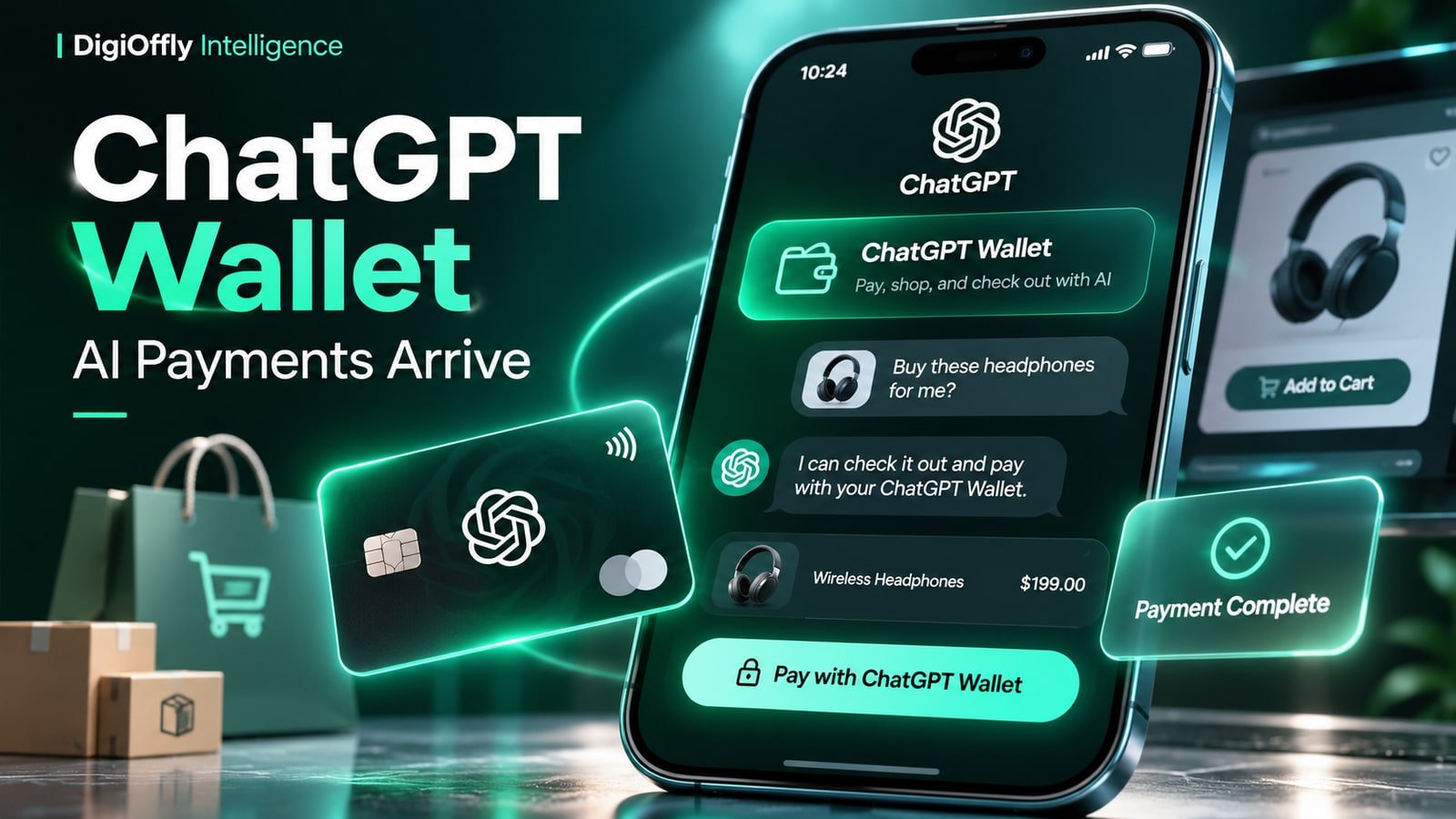
From AI recommendation to authorized checkout
ChatGPT Wallet places a person’s approval between the proposed purchase and the network token. The merchant handles fulfillment and customer service.
What Happened
An AI shopping agent can research products and put an order together, but taking payment introduces a new boundary. OpenAI is using ChatGPT Wallet to address that boundary: the agent can carry out an authorized purchase without being given the actual card credentials. American Express, Mastercard and Visa are working with OpenAI on the launch. The distinction between finding a product and authorizing an order matters more than the novelty of the wallet itself.
Agentic payments are becoming a checkout capability rather than just a shopping recommendation. The merchant still sells the product and remains responsible for its terms, delivery, customer support and returns.
Who Is Affected & When
The ChatGPT Wallet rollout starts with Dots, initially for ChatGPT Pro subscribers aged 18 or older in the United States who have eligible cards issued in the US. A rollout is not a promise that every eligible account has access immediately. ChatGPT Wallet is not announced as a general feature for every ChatGPT plan or every country.
OpenAI has not given a separate wallet price in the launch announcement; we are not treating it as a free standalone service or assuming that a subscription guarantees access. International shoppers and businesses should monitor official availability rather than changing their checkout on that assumption.
What Changes in Practice
1. ChatGPT Wallet keeps purchase approval separate
A user adds an eligible card, reviews the proposed order, total and chosen card, then approves payment. A security verification, such as Face ID or fingerprint authentication, is part of each purchase. ChatGPT Wallet records the authorization so there is a traceable decision. Think of it as a handoff from the AI shopping assistant to the person who owns the payment method.
Payment authorization should not be confused with a general instruction to shop: approval applies to the specific transaction. Review shipping, tax, quantities and return terms before authorizing.
2. Card tokenization separates the agent from sensitive details
Following approval, the network issues payment credentials that substitute for the real card data. Payment tokenization is the mechanism that allows the agent to complete checkout without receiving the actual number or security code of the underlying card. This does not mean a transaction cannot be declined or that every fraud scenario is eliminated. Tokenized payments still move through payment and risk systems. Existing rewards and dispute protections apply where the card and transaction qualify.
For digital wallet security, the useful question is which party has access to each piece of information and who can authorize its use.
3. Agentic commerce depends on the merchant
ChatGPT Wallet is designed to work with existing merchant checkout systems, not to make every website automatically compatible. A store can block an agent at its firewall, reject unfamiliar automated sessions, or flag payment activity for review. OpenAI’s commerce guidance covers product data, signed requests, checkout and coordination with payment providers. Start with accurate stock and prices, then work with your security team on agent access.
Web Bot Auth can help identify signed requests; it is not a reason to disable bot protection wholesale. Secure online checkout remains the priority.
4. What the payment and risk teams need to check
A retailer should compare a normal purchase with an authorized agentic checkout in a controlled test environment. Check that shipping, refunds, discounts and inventory remain consistent, and that records distinguish legitimate purchases from abuse. OpenAI names payment and fraud providers it is working with, including Stripe, Adyen, Checkout.com and several risk specialists. That is not a promise that every integration or merchant account already works.
For payment risk management and ecommerce fraud prevention, ask providers how they handle the new tokens, what triggers a decline and how the business can reconcile approved orders.
5. ChatGPT Wallet versus future delegation
The initial release requires a separate approval each time. OpenAI describes a possible later direction in which users could define spending limits, categories and time windows for advance authorization. That is a future plan, not a launched setting. A useful AI payment agent would need auditable boundaries, especially for repeat purchases. For now, do not assume ChatGPT Wallet can buy things while the user is absent without approval. The immediate improvement is less manual entry during checkout, not unrestricted spending.
| Consideration | ChatGPT Wallet at launch | What to verify |
|---|---|---|
| Access | Dots for eligible US ChatGPT Pro subscribers, age 18+ | Account eligibility and rollout |
| Approval | Separate user authorization and security check for each order | Total, items, card and return terms |
| Card data | Network supplies substitute payment credentials after approval | Card eligibility and payment provider behavior |
| Merchant support | Existing checkout can work, but access and fraud checks can block orders | Test approved agent checkout |
| Future automation | Advance authorization is described as a future goal | No automatic spending assumption |
Why It Matters
For ecommerce software, agentic commerce changes the path to a purchase. Product feeds, fulfillment, payment processing and fraud controls now have to serve a shopper who may interact through an agent. An AI checkout that respects the original merchant is a different proposition from an AI marketplace that controls the transaction. OpenAI’s approach gives store operators a practical starting point, but real adoption will depend on compatibility.
Businesses researching AI agents for ecommerce should not redesign checkout for a single vendor before checking the existing payment flow. In a pilot, measure declines, completed orders, refunds and customer support incidents, using actual authorized tests rather than vendor claims.
Our Take
The strongest feature of ChatGPT Wallet is the explicit approval boundary. An AI commerce system can make browsing easier without becoming an independent financial decision maker. The early US Pro scope is a good reason to keep experimentation narrow. Our recommendation for software buyers is to start with a low-risk purchase only when access is available, and for merchants to review the official Commerce Partner Playbook with their payment and security teams.
Compare this with Google’s newly announced US Wallet connection for Gemini: it provides read-only access for financial insights and cannot execute payments through that connection. We have reviewed the launch documentation, not performed a payment test.
Frequently Asked Questions
What is ChatGPT Wallet?
It is OpenAI’s payment capability for supported AI-agent purchases. A person authorizes a proposed order, and a payment token is used instead of exposing the underlying card details to the agent.
Who can use ChatGPT Wallet today?
The initial Dots rollout is for US ChatGPT Pro subscribers aged 18 or older with eligible US-issued cards. Access can arrive gradually. No broader date was announced.
Can ChatGPT Wallet spend money without my permission?
Each purchase still requires the user’s approval and a security check. Future delegated limits are a plan, not a feature we can verify as available today.
Does ChatGPT Wallet work with every online store?
No universal compatibility is promised. Site access, checkout and payment risk rules may affect whether an order succeeds. Review the merchant guidance and current card eligibility before relying on it.
Official Sources & Dates
Announcement: 2026-11-13; effective or availability date stated by the vendor: 2026-11-13. Check official updates before purchasing or changing production settings.
- OpenAI: ChatGPT Wallet launch
- OpenAI Commerce Partner Playbook
- OpenAI: Introducing Dots
- Google: Gemini Wallet announcement
Editorial note: DigiOffly verified dated primary sources. This is not a claim of hands-on testing unless independently documented. Prices and access conditions may change.