

Research updated October 30, 2026. This Paddle review is based on Paddle’s official pricing, legal merchant-of-record terms and public billing documentation. Screenshots are of public vendor websites; DigiOffly has not processed a real payment, filed tax through Paddle or accessed a production merchant dashboard for this report.
A $29 SaaS subscription sold across multiple countries may require different tax evidence, payment methods and cancellation notices even when the checkout screen looks identical. Paddle positions itself as a Merchant of Record (MoR) for software and digital-product businesses: it becomes the party selling to the end buyer for qualifying transactions, while the software supplier receives a settlement under the commercial agreement.
Quick verdict: Paddle deserves serious consideration when a SaaS company wants to outsource many merchant-of-record obligations along with payments, billing, tax and checkout. The public standard Checkout fee is 5% + $0.50 per transaction. That can simplify operations for an international software seller, but it is expensive for low-ticket payments and should not be compared directly with the headline card-processing fee from a provider where the software company remains the seller.
📊 Paddle Review Summary
| Decision criterion | Official Paddle information |
|---|---|
| Product category | Merchant of Record, checkout, subscription billing and software tax |
| Standard Checkout | 5% of sale price plus $0.50 per transaction |
| Monthly platform fee | No monthly subscription fee advertised for pay-as-you-go |
| Enterprise | Negotiated/custom pricing |
| Invoicing by bank transfer | Published legal terms identify 3.5% in that defined scenario |
| Additional recovery service | Separate terms/fees may apply |
| Principal buyer | Global software and digital-product seller |
| Key trade-off | MoR responsibility and bundled compliance vs percentage fees |
| Evaluation evidence | Official vendor pages; no live transaction test |
🧭 Contents and Navigation
Jump to pricing, features, comparisons, methodology and official sources.
🧠 What Is Paddle, and Why Merchant of Record Matters
Under the Paddle Merchant of Record arrangement, Paddle is the seller for covered purchases. Check which company appears on the customer invoice, who handles billing questions and what tax evidence the transaction produces.
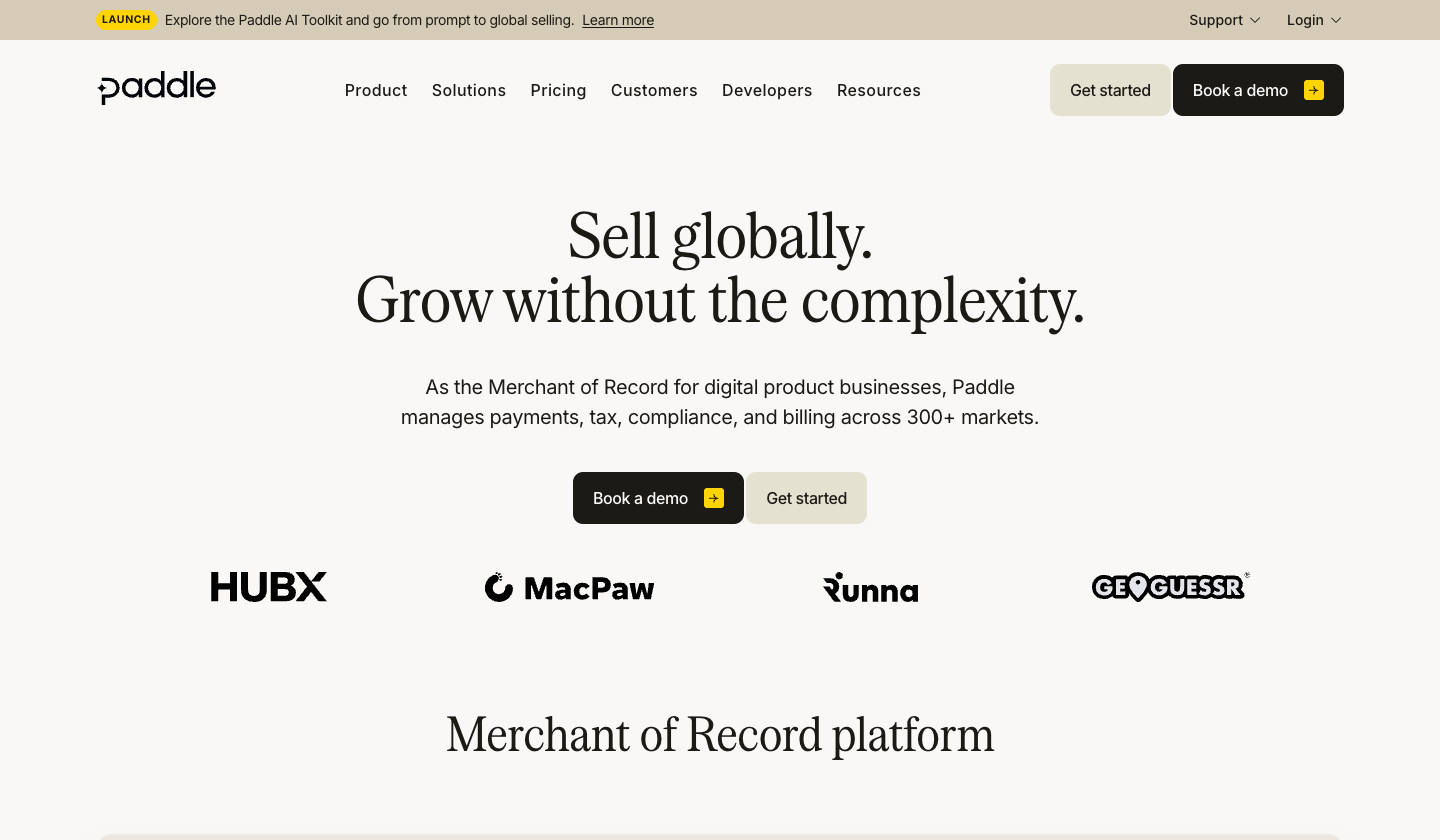
With a standard processor the software company usually remains the seller, so payment acceptance alone does not transfer its tax or customer-billing duties. A Merchant of Record assumes a different contractual position for transactions it processes, purchasing/reselling or legally supplying the digital product to the buyer under its agreement. That changes invoices, customer statements, chargeback processes and tax collection responsibilities. Paddle therefore needs to be evaluated as a contracting merchant, not merely as a checkout widget.
Paddle’s advertised standard Checkout rate bundles payment acceptance with its MoR, tax and subscription functions. The service agreement defines which sales Paddle covers, which duties remain with the software supplier and when separate fees can apply. MoR does not remove the software supplier’s responsibility for its own product, marketing claims, security or customer experience.
💰 Paddle Pricing 2026: 5% + $0.50
Paddle Merchant of Record fees bundle more than card acceptance, while Paddle checkout transaction pricing still has a material fixed component. At the published Paddle 5% plus $0.50 rate, a $5 sale loses $0.75 before any other applicable adjustments, making low-ticket purchases particularly sensitive.
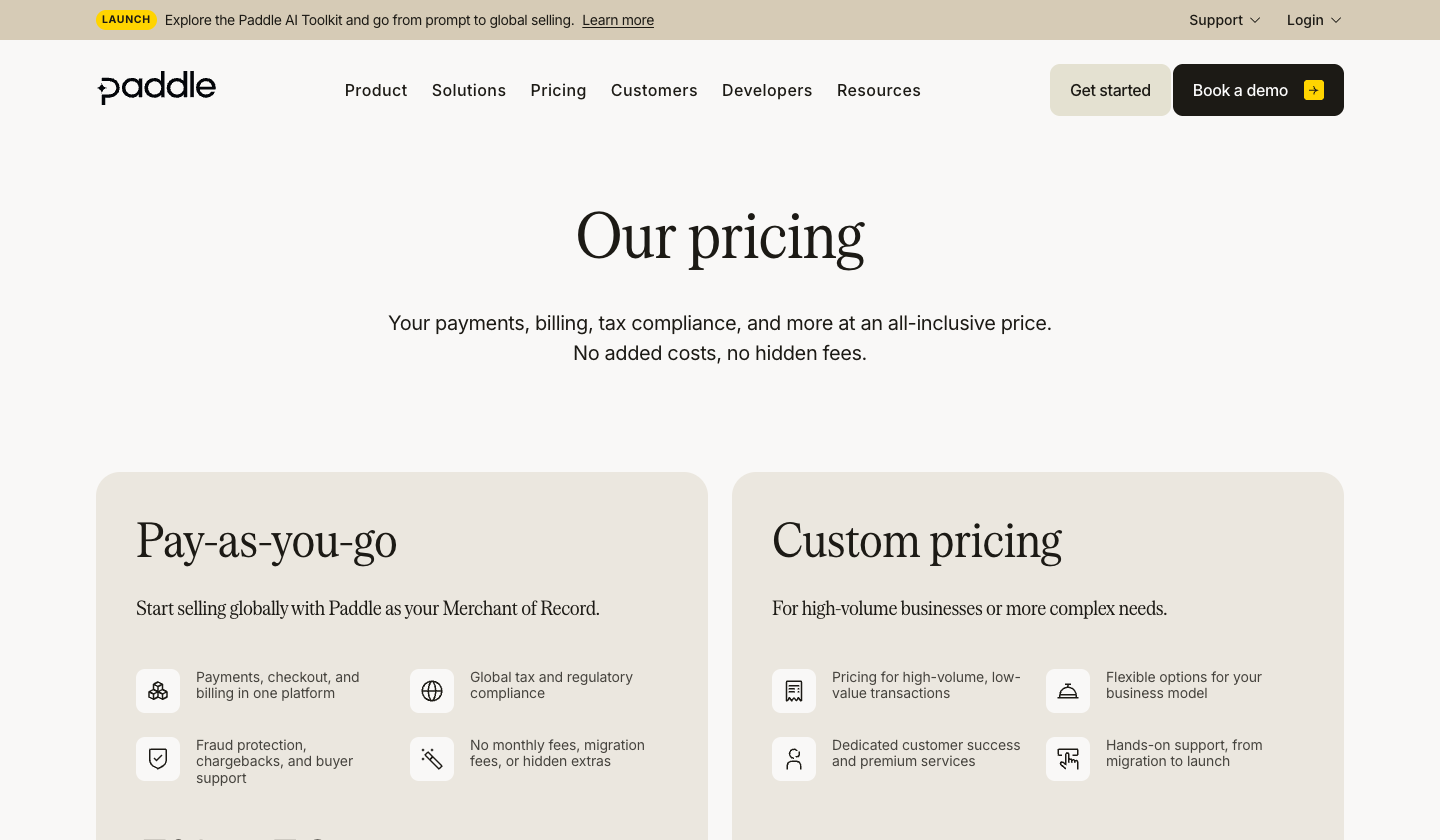
Paddle’s public pricing page lists a pay-as-you-go Checkout fee of 5% plus 50 cents per transaction, alongside custom terms for businesses with special needs or high-volume transactions. The page advertises no monthly, migration or hidden platform fee for its standard package. That statement does not mean chargebacks, optional services or every negotiated contract are identical.
| Checkout purchase amount | 5% variable fee | Fixed fee | Illustrative Checkout fee | Fee as % of gross |
|---|---|---|---|---|
| $5 | $0.25 | $0.50 | $0.75 | 15.0% |
| $20 | $1.00 | $0.50 | $1.50 | 7.5% |
| $50 | $2.50 | $0.50 | $3.00 | 6.0% |
| $100 | $5.00 | $0.50 | $5.50 | 5.5% |
| $500 | $25.00 | $0.50 | $25.50 | 5.1% |
These values are arithmetic examples using the published standard Checkout formula, not binding quotes. They exclude any applicable taxes, optional services or separate fees under the user’s contract. On a $5 purchase, the fixed 50-cent charge alone equals 10% of the basket, before the additional 5% variable fee.
Cost of recurring revenue
Paddle recurring revenue fees have to be modelled across customer prices and billing intervals. A company with many $9 monthly add-ons will see a different effective rate from a company selling $399 annual plans, even if its gross checkout volume is similar.
A SaaS business charging $29 monthly to 1,000 customers would generate $29,000 of gross recurring charges in a full month before refunds and tax effects. At the standard Checkout formula, 1,000 successful $29 transactions carry an illustrative fee of 1,000 × ($1.45 + $0.50), or $1,950. This is not a forecast of recognized revenue or net settlement; failed payments, taxation and customer churn still matter.
A pure payment processor might show a smaller headline card fee, but the seller may then need to pay for a subscription engine, sales tax calculation, registration support, compliance operations and dispute handling. The fair comparison is all-in cost for an equivalent legal and operational outcome, not processor percentages alone.
Invoicing and separate service charges
Paddle invoicing bank transfer arrangements can use different pricing from self-service Checkout. An enterprise buyer paying against an invoice needs a quote for that precise payment route rather than an estimate based on the consumer checkout fee.
Paddle’s legal terms specify a separate 3.5% rate for certain Paddle Invoicing transactions paid by bank transfer. The same terms indicate that a buyer redirected from an invoice to Paddle Checkout follows the Checkout discount instead. Optional Checkout Recovery and Retain products can carry additional charges. A sales team should not describe every Paddle flow as 5% + 50¢ without reading the actual payment route and contract.
💳 Paddle Checkout and Localization
A localized checkout can present suitable languages, currencies and payment methods based on customer location, within supported product and market settings. Published conversion uplift figures are not a forecast for an unfamiliar product with different customers and price points. A real test should compare checkout completion from representative geographies on mobile, including taxes, refund notices and accessible payment explanations.
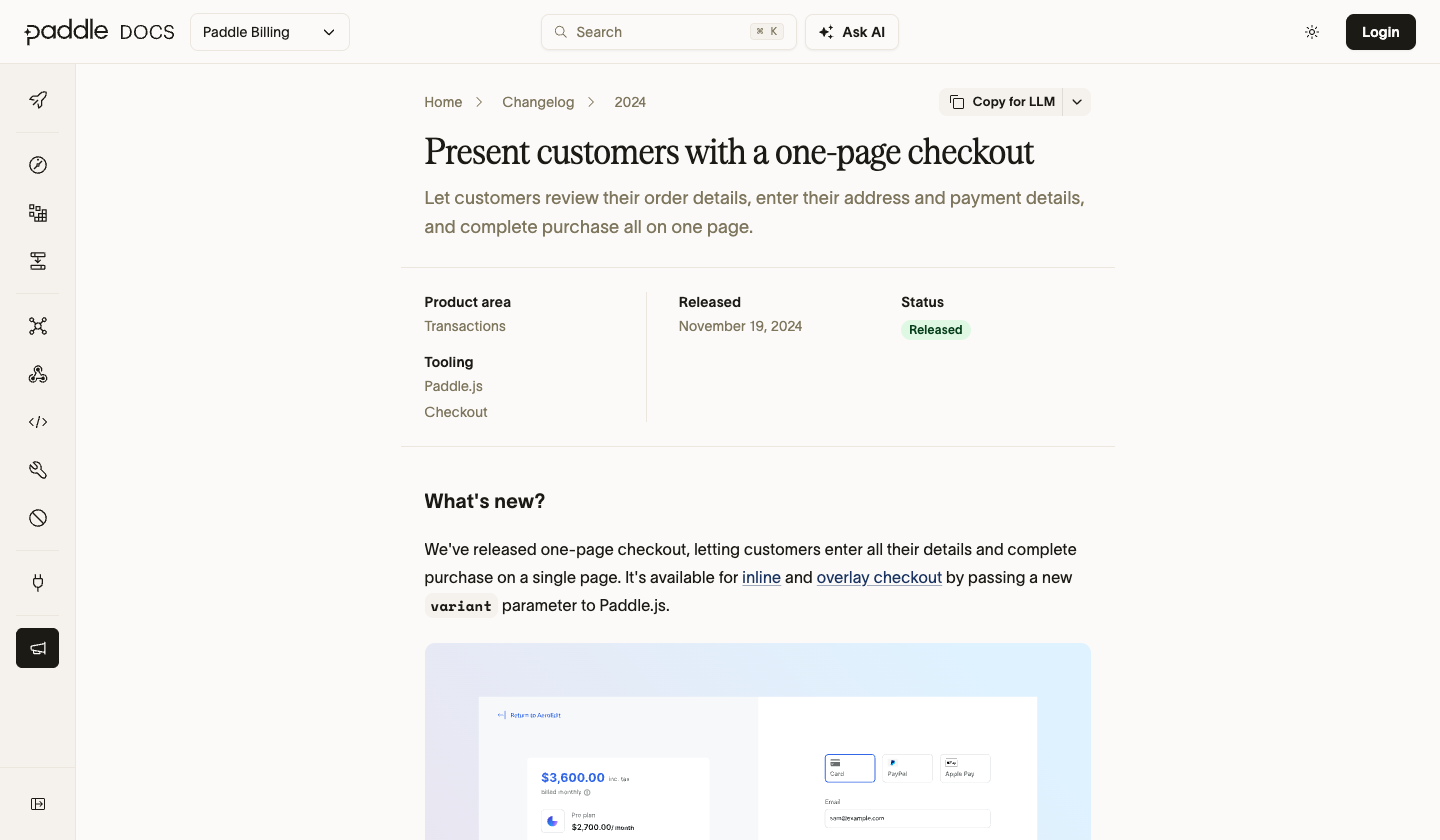
The buyer also needs to understand the transaction descriptor and buyer support pathway. When Paddle is the merchant on the customer’s statement, a customer may contact Paddle about a charge rather than the software brand. The supplier should ensure the support site, onboarding email and payment receipt make that relationship clear, reducing unnecessary disputes.
💰 Paddle Subscription Billing and Plan Changes
Paddle SaaS billing involves more than renewing the same charge: seat changes, trial conversions and prorated upgrades must match the customer’s access rights. Paddle subscription management events should be verified in the application’s backend, not trusted solely from the browser’s success page.
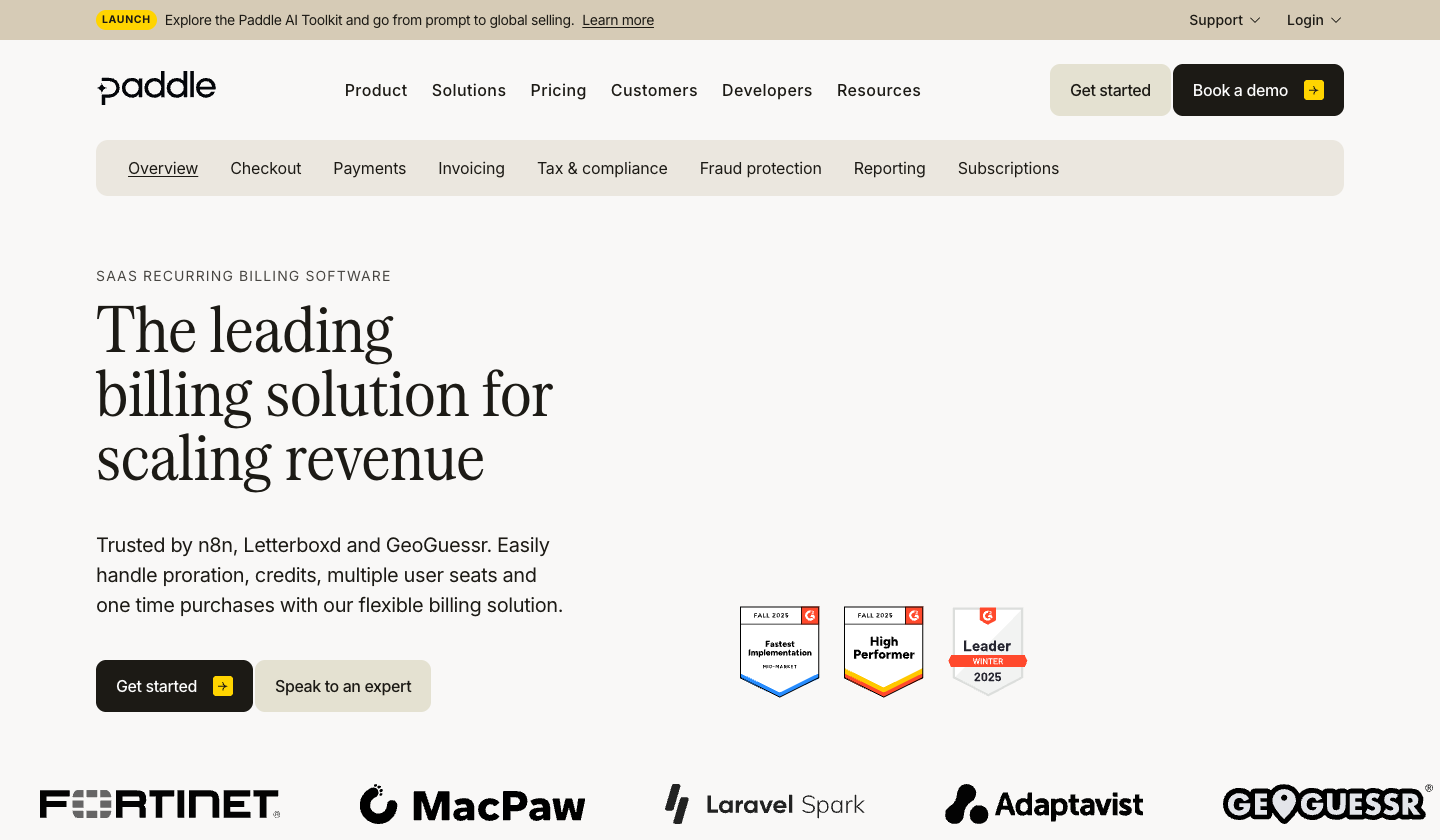
Renewing an unchanged monthly plan is straightforward; upgrades, cancellations and retries reveal whether billing events remain consistent. A SaaS company also needs free trials, seat increases, cancellations, annual upgrades and proration rules. Paddle advertises subscription management tooling, but the business should identify its source of truth for subscription entitlements. A user who downgrades today must not keep an expensive paid feature indefinitely because the app missed a billing webhook.
An acceptance test can create a sandbox subscription, upgrade it mid-cycle, cause a controlled payment failure, restore payment and cancel the plan. Inspect the actual billing periods and event ordering. Webhooks should be processed idempotently so a repeated notification cannot grant duplicate credits or create two memberships.
🧾 Sales Tax, VAT, GST and Global Compliance
Paddle sales tax compliance is a key reason to evaluate the Merchant of Record model, but a supplier still has accounting and income-tax obligations of its own. Compare the contract’s covered sales with the markets and products the company actually offers.
Tax responsibility is the most significant difference between Paddle and many payment gateways. In a conventional seller-of-record model, the software provider often needs to determine its own nexus, registration, VAT evidence, filing and remittance obligations. Paddle’s MoR model can relieve the seller of certain transaction-level duties on covered sales, under applicable terms. That does not mean a company has no tax reporting or corporate income tax obligations.
The finance team must reconcile gross customer charges, taxes collected, discounts, refunds, Paddle’s discount and the final supplier payout. Treating the entire customer-facing invoice amount as the software supplier’s revenue without considering MoR accounting treatment may misstate the books. Ask the company’s accountant how the contract should be reflected under the applicable standards.
⚖️ Paddle as MoR vs Stripe as Payment Processor
The Paddle versus Stripe decision is not resolved by comparing 5% with a card fee. Ask who will legally sell the software, collect indirect taxes, handle disputes, keep buyer records and fund the additional billing or tax services.
| Question | Paddle MoR | Typical Stripe Payments arrangement |
|---|---|---|
| Party selling to buyer | Paddle for covered MoR transactions | Software company normally remains seller |
| Indirect tax collection/remittance | Included for covered transactions under MoR terms | Seller must manage its tax responsibilities, potentially with tools |
| Checkout and recurring billing | Bundled products | Payment tools plus relevant billing/tax services |
| Pricing | 5% + $0.50 standard Checkout | Card fees vary by market, method and product |
| Customer support for billing | Paddle participates as merchant | Seller owns primary buyer relationship |
| Best fit | Cross-border SaaS wanting MoR handling | Seller wanting direct control of payment/tax architecture |
Stripe also offers tax and billing products, so the comparison is not “Paddle has taxes, Stripe has none.” The key distinction is the legal allocation of merchant obligations and which operational pieces a seller must retain. A mature finance team may prefer direct control; a small global SaaS startup may place more value on the MoR arrangement.
🛠️ Dunning, Churn and Customer Recovery
Subscription businesses lose revenue when a saved card expires or a bank declines a renewal. Paddle’s billing ecosystem includes retry, customer communication and retention-related tools, but the actual cost and availability of specific recovery services deserve careful review. It is also important to distinguish involuntary churn from a customer who deliberately cancels an unwanted product.
Measure recovery with a controlled definition. For example, a customer recovered within a short window after an initial failed payment should be counted separately from one who would have updated their card anyway. Vendor case-study uplift percentages cannot establish an identical uplift for an unrelated business.
📈 Reporting, Settlements and Financial Close
Finance needs exports that reconcile transaction IDs to payouts. A customer might pay $100 plus applicable local tax, receive a partial refund two days later and trigger a chargeback after the monthly close. The supplier ledger must track each event without treating a refunded payment as retained revenue. Ask whether reports contain original charge, tax, processing discount, refund and payout identifiers.
Timing is another concern. Monthly recurring revenue dashboards and actual bank settlements operate on different clocks. A successful checkout on the final day of the month may settle later, while recognized revenue may be spread over the service period. A sophisticated SaaS business needs both subscription analytics and correct financial accounting, not a single number copied from a revenue tile.
🔐 Fraud, Chargebacks and Customer Rights
Paddle advertises fraud protection and chargeback support as part of its broader MoR service. Still, the software company must maintain a legitimate product description, clear trial and cancellation terms and responsive product support. A merchant-of-record structure cannot make deceptive offers or unusable software acceptable.
A sensible purchasing test reviews the dispute workflow and what evidence the software vendor must provide: account creation, product access, cancellation communications and digital delivery logs. Chargebacks may also result from a buyer not recognizing the merchant statement descriptor. Proactive receipt and help-center messaging are part of the solution.
🔗 Developer Integration and Webhooks
Paddle billing API webhooks should be handled idempotently: a duplicated payment event must never create a second subscription or grant extra credits. Test cancellation after an upgrade and a delayed retry before giving the integration production access.
Paddle offers API, SDK, sandbox and webhook integration paths. Engineering teams should validate event ordering, retry handling and credential storage. A subscription status should not be derived from a single redirect success page; the application’s backend should verify trusted billing events and handle disputes or cancellations after the fact.
When migrating from another subscription processor, plan for existing subscriptions, stored payment methods, webhook cutover and customer notices. A rushed migration can create duplicate invoices or leave customers paying while their service account is inactive. Ask Paddle about supported migration tools and contract-specific account transitions before announcing a migration date.
⚖️ Paddle vs Lemon Squeezy, FastSpring and Gumroad
Paddle alternatives include other Merchant of Record products and simpler digital-download storefronts, but they do not all solve annual SaaS invoicing, tax and migration in the same way. Compare the operational responsibility retained by the supplier.
| Alternative | Typical buyer focus | Question for the comparison |
|---|---|---|
| Paddle | SaaS and digital-product MoR plus billing | Is tax and payment operations delegation worth the fee? |
| Lemon Squeezy | Digital products and MoR workflows | Which subscription and tax features fit this product? |
| FastSpring | Global software ecommerce and MoR | Which markets, reporting and checkout paths matter? |
| Gumroad | Creator and digital product storefront | Is a simple catalog/creator experience enough? |
| Stripe | Direct payment processing and billing services | Does the team want to remain the seller and own tax operations? |
A downloadable design template sold once is not the same as an enterprise SaaS licence with seats, annual commitments and contractual invoicing. Vendors may support both superficially, but subscription migration, refunds and enterprise procurement controls are where the differences become material.
⚖️ Paddle Pros and Cons
| Strengths | Trade-offs |
|---|---|
| Bundles MoR, checkout, indirect-tax operations and recurring billing | 5% plus fixed fee is costly on low-ticket sales |
| No standard monthly platform fee advertised | Additional products or special contracts may carry charges |
| Global digital-product sales emphasis | MoR buyer-facing merchant identity requires clear communications |
| Subscription APIs and developer sandbox | Integration, event ordering and entitlement management still require engineering |
| Fraud and payment support as part of merchant service | Supplier retains important product, data and corporate tax duties |
🧪 Evaluation Method and Buyer Checklist
The review relies on public Paddle pricing and contracts. It does not claim a real checkout, VAT filing, settlement delay or dispute was measured. A buyer should execute five sandbox tests: a domestic subscription checkout, an international tax-bearing sale, a failed renewal with a retry, a prorated upgrade, and a refund/cancellation. Then verify the resulting webhook events, customer communications and ledger exports.
Paddle is not automatically the cheapest option. It can be the simpler operating model for a company that values the transfer of certain merchant responsibilities. The correct decision is an all-in analysis of payment costs, taxes, engineering maintenance, support operations, compliance scope and expected sales geography.
⚖️ Low-Ticket vs High-Ticket SaaS: Where the Fixed Fee Matters
The fixed 50-cent portion of Paddle's standard Checkout discount is modest for a $500 annual software licence but significant for a $3 one-off digital product. A business should examine the actual basket size distribution rather than multiply an average payment by the headline rate. A company selling both $9 monthly add-ons and $399 annual subscriptions can have a higher effective fee rate on its small transactions. Model transaction counts at each price point, as well as refunds and chargebacks.
Pricing architecture itself may need to change. Instead of charging a customer $2 every time they unlock a small feature, a developer could offer a larger monthly package that reduces fixed transaction charges. This is a product decision, not a recommendation to evade fees. The seller must still respect buyer expectations, billing transparency and contract terms. A merchant-of-record platform is valuable only when its customer and compliance experience justify the total transaction economics.
💰 The Customer Billing Experience Under an MoR Model
The purchase receipt, bank descriptor and cancellation email need to tell the same billing story, especially when Paddle appears as the merchant. When Paddle acts as Merchant of Record, the payment receipt, bank statement descriptor and legal seller information may differ from the software vendor's brand. The onboarding email should explain that relationship plainly. Otherwise a valid charge can look suspicious, and users may open avoidable disputes.
Before going live, check the checkout on mobile and desktop for a buyer in each major market. Verify the total charged, tax line, currency, renewal terms and identity of the seller. Then review the receipt, post-purchase email and cancellation page. All three should communicate consistent product and billing information. The aim is not to hide the MoR arrangement behind branding, but to make it transparent enough that customers know whom to contact.
💰 Subscription Migration Without Double-Billing Customers
Suppose a developer moves 2,000 subscriptions to Paddle with a mix of monthly and annual billing. Some customers have valid saved payment methods, some are still in trial and others have unpaid renewals. The migration plan must map each prior subscription ID to a new record and define exactly which provider will attempt the next charge. Copying customer email addresses alone would leave too much of the contract state behind.
During cutover, use a fixed renewal window and a reconciliation table showing prior ID, Paddle ID, price, next billing date and entitlement. Take the old processor out of the renewal path before the replacement can charge the same customer. Test an annual subscriber, an account in trial and one with a failed payment. Cancellations received mid-migration must update both the handoff log and the application.
🔗 Webhook Idempotency and Out-of-Order Events
A payment succeeds, the backend processes the webhook, and Paddle retries the same event after a brief network timeout. Without an idempotency check, the application could grant two paid months. Store event IDs, authenticate webhook signatures and update access based on the verified subscription state. A later refund or cancellation must override the earlier successful payment when the customer’s rights change.
In the Paddle sandbox, replay a successful payment event, then test a failure that is recovered and an upgrade immediately followed by cancellation. Check that each event leaves one consistent entitlement and one explainable billing history. A system can show an attractive checkout success screen while its backend is silently wrong; the acceptance test belongs in the product’s access rules.
🧾 Tax Records, Refunds and Financial Reporting
Under Paddle’s Merchant of Record model, the customer-facing invoice and the supplier’s settlement report describe different accounting perspectives. The customer may pay a tax-inclusive price, while Paddle deducts its fees and later settles an amount to the supplier. The accountant needs the covered sales, tax, discount and payout records to determine the correct ledger treatment; copying gross customer charges directly into supplier revenue can be misleading.
A refund after month-end can affect a payout that has not yet reached the supplier bank. Retain the original transaction ID, refunded amount, tax adjustment and final settlement reference. If a finance team posts the net payout as revenue without the underlying transactions, the reason for a lower bank deposit may be impossible to reconstruct. This matters even more when a partial refund spans two financial periods.
🛠️ Merchant-of-Record Risk and Product Eligibility
A business selling a downloadable icon pack, a subscription SaaS platform or an AI-generated-media service may face different eligibility questions. Confirm the actual product, customer geography and payment model with Paddle before migrating recurring revenue. An MoR arrangement is a legal and operational service with restricted activities, not a blanket acceptance guarantee for anything labeled digital.
A disputed annual licence payment may leave the customer expecting access while Paddle requests delivery evidence from the vendor. Decide who answers the customer, how access is handled under the service contract and which logs establish delivery and cancellation history. Finance also needs to know whether the disputed value reduces the next settlement. These questions deserve a written procedure before the first real dispute.
🛠️ Invoicing Enterprise Customers and Purchase Orders
An enterprise buyer may reject checkout altogether and insist on a purchase order, approved supplier identity and bank-transfer invoice. This workflow is different from an instant self-service card checkout. Paddle supports invoicing capabilities, but the software company should verify how the buyer's procurement data maps to the MoR seller identity, invoice tax details and payment instructions. A sales deal can stall if the buyer's procurement department does not recognize the billing party.
Ask how payment terms, bank-transfer invoices, partial payments and credit notes are handled under the relevant Paddle plan. Do not assume that the standard Checkout percentage automatically applies to a bank-transfer invoice; official legal terms specify a distinct rate for certain invoicing transactions. A supplier should price an enterprise contract using the actual route that the buyer will follow and the revenue-recognition treatment its accountant approves.
💰 Pricing Experiments and Revenue Analytics
Consider a SaaS developer testing three checkout prices—$19, $29 and $39—while preserving the price identifiers used for existing subscribers. Such experiments require more than changing the displayed number in checkout. The team should maintain a stable mapping among website offer, Paddle price identifier and backend entitlement. A customer renewing an existing plan should not accidentally switch to a new price because a public product page was updated.
Revenue analysis should separate gross bookings, collected cash, refunded transactions, recurring revenue, tax and the supplier's settlement. A dashboard reporting subscription growth is useful, but it does not alone explain cash available to hire staff next month. Combine Paddle analytics with a finance-controlled ledger and a clear churn definition. A change in the number of annual subscriptions should not be compared naively with monthly cash collections without accounting for billing cycles.
🛠️ Refund Policy and Subscription Cancellation Design
Paddle cancellation and refunds are both customer-support and ledger events. A partial refund should produce a traceable payout adjustment and revoke only the entitlements tied to the returned item, not necessarily the entire account.
For a digital-service seller, refunds are both a financial transaction and a customer-trust issue. Paddle's role as merchant does not relieve the developer of writing an understandable offer, delivering access and honoring advertised customer rights. The cancellation screen should state when service access ends, whether further payments are scheduled and how the buyer receives confirmation. A customer who cancels within a trial should not find an unexpected paid renewal because the application's trial state differed from the billing system.
Test a partial refund of a multi-item order as well as a full refund. The application may need to revoke only one entitlement instead of the whole account. Finance must then reconcile the transaction's original tax, Paddle discount and resulting payout adjustment. A support agent should have a documented process to investigate the buyer's complaint without having permission to alter subscription billing arbitrarily.
📈 Reporting a Mixed Monthly and Annual Subscriber Base
A company can have 500 monthly subscribers and 200 annual subscribers yet receive cash unevenly across the year. An annual subscriber may pay $240 once while monthly subscribers pay $24 twelve times. The checkout fee applies when actual transactions occur, but management may recognize subscription revenue across the service term. Consequently, Paddle transaction totals, subscription annual recurring revenue and settled bank receipts will not be identical measures.
A useful monthly finance package separates gross customer payments, renewals, upgrades, cancellations, refund adjustments, tax and net vendor settlements. The same report should identify currency and billing interval. Without this separation, a large wave of annual renewals can make one month look unusually successful even when underlying customer retention is flat. Subscription analytics are only as useful as the definitions accompanying the charts.
📚 Official Sources

Frequently Asked Questions
Is Paddle a payment processor or Merchant of Record?
Paddle positions itself as Merchant of Record for covered software and digital-product transactions. That legal role is broader than handling card payments for the software supplier.
How much does Paddle cost in 2026?
The standard Paddle Checkout pricing page lists 5% + $0.50 per transaction, with custom pricing available for high-volume or specialized businesses. Check the actual contract and any additional service terms.
Does Paddle have a monthly fee?
Its advertised standard pay-as-you-go package has no monthly platform fee. Transaction fees and optional products are separate considerations.
Does Paddle collect VAT and sales tax?
Paddle’s MoR service covers relevant indirect-tax obligations for supported covered transactions under its terms. The supplier still needs professional advice about its own corporate tax and accounting duties.
What does Paddle’s 5% plus 50-cent fee mean?
A $50 checkout would have a base illustrative fee of $3 ($2.50 percentage charge plus $0.50 fixed). Contract terms, refunds and optional services may alter final settlement.
Is Paddle better than Stripe for SaaS?
Paddle can reduce MoR tax and merchant administration for eligible sellers, while a Stripe-based setup may provide more direct control. Compare the legal model and all costs rather than one processor rate.
Does Paddle support subscriptions and free trials?
It provides subscription billing capabilities. The application still needs dependable entitlement logic and tested cancellation and retry handling.
Can Paddle handle global sales?
Paddle is designed for international software selling, subject to market, product and risk eligibility. Confirm countries, payment methods and contractual restrictions.
Can Paddle replace accounting software?
No. Its billing and transaction reports support finance processes, but the supplier still needs an accounting ledger, correct revenue recognition and independent reconciliation.
What is Paddle Invoicing pricing?
The public legal terms list 3.5% for relevant invoicing payments made by bank transfer; an invoice redirected to standard Checkout may instead use the Checkout rate.
What should a developer test before integrating Paddle?
Test sandbox checkout, webhooks and retry idempotency, upgrades, refunds, cancellations, access revocation and payout reconciliation. Keep the application state aligned with verified payment events.
EXPLORE NEXT ON DIGIOFFLY
🔍 Explore More on DigiOffly
Compare the finance tools in this review with published alternatives and related workflow guides.
Finance and software categories
- Finance & Accounting — Explore finance services
- Software Directory — Discover software reviews
- Software Stacks — Build a practical team toolkit
Compare and calculate
- Compare Software — Compare capabilities
- AI Software Finder — Find task-specific tools
- Software Cost Calculator — Budget for fees and usage
Related finance reviews
- Gumroad — Read the separate comparison and pricing guide
- WooCommerce — Read the separate comparison and pricing guide
- Shopify — Read the separate comparison and pricing guide
- Xero — Read the separate comparison and pricing guide
- Airwallex — International accounts, FX and cross-border payments
Pricing, eligibility and product availability can change; verify the provider’s current contractual terms.