

Pricing and product documentation checked on October 29, 2026. This Supabase review uses published vendor material and publicly accessible screenshots, not an authenticated customer account. Features, service quotas and billing terms can change. See the official Supabase pricing source before buying.
Supabase is compelling for teams that want PostgreSQL with managed authentication, storage and developer APIs, while production reliability still depends on data design, backups, compute sizing and row-level access policies. The Supabase review starts with the shape of application data rather than a signup offer. PostgreSQL, authentication and storage form a useful developer platform, but a secure prototype still needs disciplined policy tests and recovery planning.
This Supabase review starts with a real architecture decision: a SQL database, authentication rules and object storage need consistent tenant boundaries. We distinguish quick setup from production obligations such as migrations, backups and predictable resource billing.
Some DigiOffly links may earn a commission at no added cost to readers. Published vendor features and price terms are examined independently of those links.
📊 Supabase Review Summary
Supabase combines a PostgreSQL database with Auth, Storage and functions. SQL is familiar, but authorization through Row Level Security is an explicit application responsibility. A production estimate also needs compute, backup, egress and project allowances rather than the entry subscription alone.
💰 Supabase plans at a glance
| Plan | Official entry price | What to verify |
|---|---|---|
| Free | $0 | Two active projects, 500 MB database and published project quotas |
| Pro | From $25/month | Production-oriented allowances, compute and backups |
| Team | From $599/month | Dashboard SSO and advanced administrative controls |
| Enterprise | Custom | Support and enterprise terms |
⚡ Verdict & Architecture
A founder choosing Supabase for a first product may value familiar SQL and managed authentication. The decision becomes more consequential once tenant isolation, migrations and database backup policies are part of daily operations.
Postgres at the center
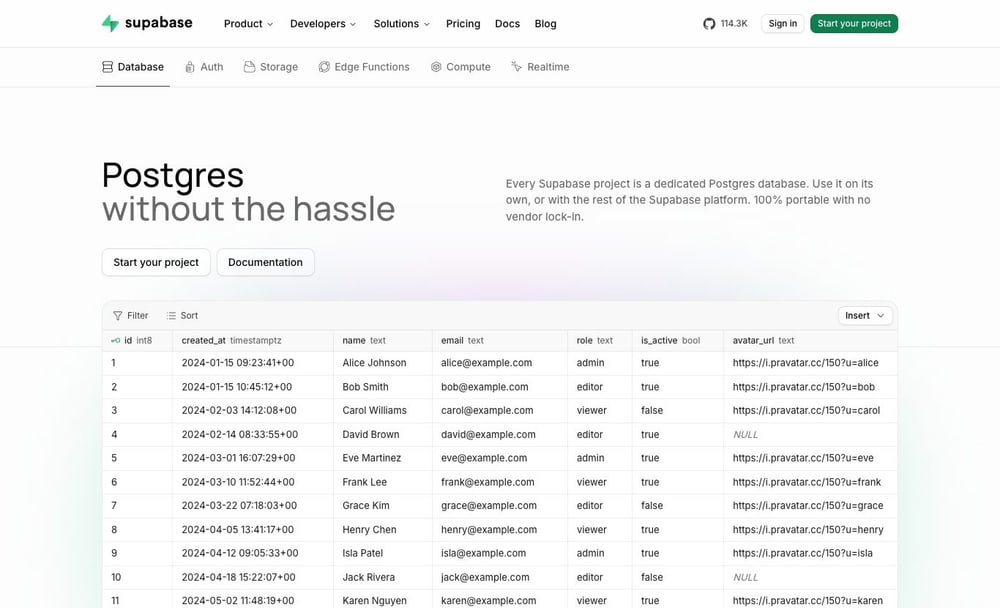
Supabase is oriented around a managed PostgreSQL database. Developers familiar with relational modeling may prefer that to a document-first backend. The Supabase SQL editor supports direct queries, but the execution context and change history deserve production safeguards.
Centering the app around managed PostgreSQL offers powerful relational modeling and native SQL features compared to document-oriented alternatives, but shifts complexity to schema design and connection management. For instance, high-concurrency serverless frontends can easily exhaust connection pools if persistent pooling or a proxy like Supabase’s built-in connection manager is misconfigured under sudden traffic spikes. This is useful for applications requiring strict foreign-key constraints, complex multi-table reporting, and ACID compliance out of the box. Before adopting it, verify how connection limits scale across different pricing tiers—from the entry-level options up to the Pro ($25/month) and Team ($599/month) plans—while assessing whether their application team possesses sufficient PostgreSQL database administration expertise to handle underlying query performance optimization and long-term schema evolution without hitting unexpected resource bottlenecks.
Fast prototype versus production
An app can be created quickly with generated APIs and auth, but production still needs migrations, disaster recovery and least-privilege policies.
Deploying an application rapidly using generated APIs and integrated authentication provides an immediate head start, but transitioning to a robust production environment introduces significant operational overhead. Developers often encounter severe hurdles when automated code generation bypasses necessary architectural planning, leading to brittle database structures that struggle during deployment pipelines. Problems arise when teams deploy unversioned schema changes directly against live tables without staging environments, causing breaking runtime errors for active clients. Managed PostgreSQL and Auth can shorten prototyping, but they do not eliminate the need to test authorization rules. Before moving past the prototyping phase, technical leadership must verify their automated migration workflows, confirm that disaster recovery and backup policies are active on production tiers like Pro ($25/month) or higher, and enforce strict least-privilege access controls across all connected microservices.
Where the platform boundary sits
A managed backend helps with services, not application design. Jobs, external APIs, operational errors and abuse controls still require explicit ownership.
Adopting a managed backend streamlines database hosting and API generation, yet it leaves critical architectural decisions entirely in the hands of the engineering team. The platform handles infrastructure provisioning and service availability, but application-level concerns such as asynchronous background jobs, integrations with external third-party APIs, and comprehensive abuse mitigation remain unmanaged responsibilities. One risk involves neglecting rate-limiting and error-handling logic around external webhook consumers, which can quickly cascade into unmonitored failures and corrupted application states. This clear platform boundary is exceptionally useful for teams that want to offload infrastructure maintenance while retaining absolute authority over business logic and domain architecture. Before signing off on the architecture, technical buyers must audit ownership assignments for asynchronous task queues, external API secrets management, and proactive error monitoring across their chosen deployment tiers.
🗄️ Database & Data Model
Two application tables may be easy to join during a prototype, but authorization through Row Level Security requires careful policy design. A query that returns the right result for one test user may leak another tenant’s rows.
SQL joins and schema migrations
Relational constraints support consistent records, but risky migrations can interrupt an app. Test backwards-compatible changes and restore plans. Supabase database webhooks need idempotent downstream consumers when schema changes or repeated events affect integrations.
Leveraging relational constraints and complex SQL joins ensures data integrity across connected records, but managing schema alterations introduces distinct operational risks. Without careful planning, executing structural updates can lock tables or introduce blocking queries that temporarily halt application traffic during peak usage windows. Problems arise when developers push additive schema changes that immediately break existing client queries because older application versions remain in circulation during rolling updates. This relational model is exceptionally useful for complex domain models requiring deep data normalization and strict referential integrity across multiple distinct entities. Before deploying database alterations to production, engineering teams must verify their rollback strategies, test backwards-compatible migration scripts thoroughly in staging environments, and confirm that automated backup restoration procedures are fully functional on paid tiers like Pro ($25/month) or Team ($599/month).
Row Level Security
RLS can enforce tenant isolation when written correctly. A missing policy or elevated service key can create a serious exposure. A Supabase Auth JWT should not be treated as sufficient authorization without checking Row Level Security policies.
Implementing Row Level Security allows fine-grained tenant isolation directly within the database engine, yet writing these security policies requires meticulous attention to avoid subtle loopholes. When configured correctly, RLS ensures that authenticated users can only access records matching their specific organization or ownership criteria. A Supabase service-role key must not be shipped in a browser bundle. It can bypass Row Level Security and expose records outside the user’s permissions. This security feature is exceptionally useful for multi-tenant software-as-a-service applications where multiple independent customers share a single database instance safely. Before releasing new data tables to production environments, security auditors must verify that every table has RLS explicitly enabled, test various user-role permutations thoroughly, and confirm administrative service keys remain fully secure.
Indexes and performance
A simple query may work with a thousand rows and struggle with a million. Examine query plans, indexing and real workload patterns before upgrading compute. When configuring Supabase connect to database workflows, consider connection pooling and the privileges of each client.
Queries that execute instantly with a small dataset can degrade severely as row counts scale into the millions without appropriate indexing strategies and careful maintenance. Database performance depends heavily on optimizing execution plans and identifying costly sequential table scans before resorting to expensive compute resource upgrades. One risk involves adding indiscriminate indexes to every single column, which unnecessarily bloats disk storage size and noticeably slows down write-heavy database transactions. This index optimization approach is exceptionally useful for read-heavy reporting dashboards and high-frequency search endpoints handling large data volumes. Before upgrading to higher compute tiers like Pro ($25/month) or Team ($599/month), engineering leads must verify query execution plans using database diagnostics, analyze real workload patterns, and ensure proper B-tree or specialized index coverage for critical filter columns.
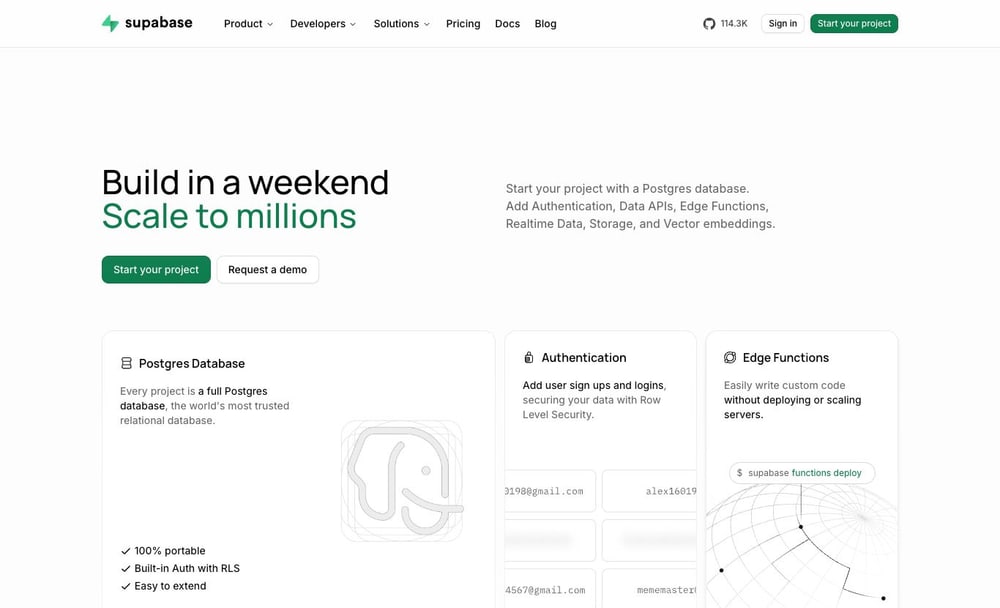
🔐 Authentication & Storage
An Edge Function that processes a webhook has to survive retries and repeated deliveries. Supabase simplifies hosting the function, while the application team still determines idempotency, authorization and secret rotation.
User authentication boundaries
Auth setup does not automatically protect all tables or storage objects. Review session handling, tenant membership and server-side authorization. Supabase Google Auth simplifies one sign-in option, but the application still owns account linking and session revocation.
Setting up managed authentication provides streamlined user registration and token issuance, but this configuration does not automatically secure underlying database tables or cloud storage objects by default. Developers must explicitly link active user sessions to specific database permissions and storage bucket policies. Problems arise when developers assume that successfully authenticating a user via the API grants them blanket permission to access all records, leading to exposed assets and severe data leaks. This authentication boundary is exceptionally useful for applications requiring secure user sessions, JWT validation, and role-based access management across distributed clients. Before launching public-facing features, system architects must verify session token handling, review tenant membership validations, and ensure rigorous server-side authorization checks are enforced across all critical application endpoints, APIs, and microservices.
Object storage access
File buckets need sensible private/public defaults and expiration of signed URLs. Check egress charges when files are frequently downloaded. Supabase Storage pricing depends on retained objects and bandwidth, not simply whether a bucket is public or private.
File storage security relies heavily on correctly configuring bucket access controls to prevent unintended data exposure, making sensible private versus public defaults essential for sensitive user assets. When handling private files, generating signed URLs with strict expiration limits ensures that download links cannot be indefinitely intercepted or shared, mitigating unauthorized access risks. However, applications serving heavy media or frequent file downloads must monitor egress bandwidth, as high transfer volumes can introduce unexpected billing spikes depending on the chosen tier. Developers should evaluate whether file access patterns require a dedicated content delivery network layer or if direct storage bucket delivery suffices for their traffic profile. During procurement and architecture reviews, buyers need to verify how the platform handles signed URL generation latency, check available bucket policy options, and confirm that their application code correctly revokes access when user permissions change.
Edge Functions and secrets
Functions simplify server-side handlers, but secrets and external dependencies should be scoped and rotated just like on any other compute platform. Supabase Edge Functions pricing should be modeled around real invocation counts and runtime behavior before launch.
Edge functions streamline backend logic by allowing server-side handlers to execute closer to users, yet maintaining security requires proper scoping and regular rotation of secrets and external API keys just like any traditional compute environment. Hardcoding credentials inside handler scripts or exposing sensitive tokens through client-facing environment variables introduces severe security vulnerabilities that compromise downstream services. These serverless handlers prove particularly useful for handling webhook integrations, payment processing callbacks, or executing authenticated database mutations without exposing direct administrative privileges to the browser. Engineering teams should establish clear deployment pipelines that inject environment variables securely and implement strict timeout thresholds to prevent runaway execution loops. When assessing this capability, buyers must verify how function logs handle sensitive payload scrubbing, examine regional deployment latency, and confirm that secret rotation mechanisms do not cause deployment downtime.
Workflow roles compared
| Capability | What Supabase contributes | What the team must own |
|---|---|---|
| User authentication boundaries | Auth setup does not automatically protect all tables or storage objects. Review session handling, tenant membership and server-side authorization. | Roles, test data, validation and escalation |
| Object storage access | File buckets need sensible private/public defaults and expiration of signed URLs. Check egress charges when files are frequently downloaded. | Configuration review and failure handling |
| Edge Functions and secrets | Functions simplify server-side handlers, but secrets and external dependencies should be scoped and rotated just like on any other compute platform. | Access, recovery and documentation |
📈 Operations & Scale
A public storage bucket is convenient for assets but disastrous for private records. Review signed URLs, service-role keys and client-side requests separately from how the dashboard demonstrates upload functionality.
Compute sizing and database limits
Supabase has separate project, database, memory and compute allowances. Increasing one limit may not resolve an inefficient query. Supabase database functions can reduce client round trips, but expensive queries still need indexing and profiling.
Scaling database infrastructure involves navigating separate project, memory, storage, and compute allowances, meaning that simply upgrading resource tiers will not automatically resolve performance issues caused by inefficient indexing or poorly written queries. When application traffic grows, bottlenecks often emerge from unoptimized table joins or missing indexes rather than raw hardware constraints, necessitating rigorous query profiling before allocating additional budget. This operational reality is especially relevant for data-heavy applications experiencing unpredictable traffic surges or complex multi-tenant query workloads. Platform administrators should implement routine performance monitoring to catch slow execution paths early and refactor database schemas accordingly. Prospective buyers must verify how resource scaling operations impact active connection pools, check whether vertical upgrades incur maintenance windows, and ensure their team possesses the PostgreSQL tuning expertise required to diagnose deep-seated performance bottlenecks.
Backup strategy
Pro and Team publish backup-related features and retention. Confirm point-in-time restoration needs, regional backup rules and a tested recovery path. A Supabase export database procedure should be tested alongside object storage recovery and credential rotation.
Production resilience depends heavily on a robust backup strategy, requiring teams on Pro and Team tiers to carefully evaluate published retention policies, point-in-time recovery capabilities, and regional compliance mandates. Relying solely on automated platform snapshots without conducting regular disaster recovery drills leaves organizations vulnerable to undetected data corruption or prolonged restoration delays during an unexpected outage. This feature is crucial for mission-critical applications where data loss translates directly to financial liability, broken customer trust, or regulatory penalties. Architecture leads must design and document a repeatable recovery workflow that tests how quickly production data can be restored to a staging environment. When evaluating backup provisions, buyers must verify exact recovery point objectives, check whether custom backup retention extensions are available, and confirm that restoration procedures are fully understood by on-call engineering staff.
Observability for application faults
Database logs and function diagnostics can complement Sentry or Datadog. Determine who investigates slow queries after a deployment.
Application observability requires combining platform-native database logs and function diagnostics with specialized external monitoring tools like Sentry or Datadog to capture full-stack execution context and runtime errors. Without clear operational visibility, diagnosing intermittent performance degradation or database lockups following a routine deployment becomes a reactive guessing game that extends user-facing downtime. This monitoring approach is indispensable for complex architectures where identifying whether a latency spike stems from a frontend rendering delay, an edge function timeout, or a locked database table is critical. Engineering management must establish clear ownership and alerting rules so that designated developers immediately investigate slow-running queries or recurring error spikes. Procurement teams should verify log retention durations, check whether native log draining integrations exist for external log management platforms, and ensure query audit logs provide sufficient detail for security compliance.
💰 Pricing & Billing
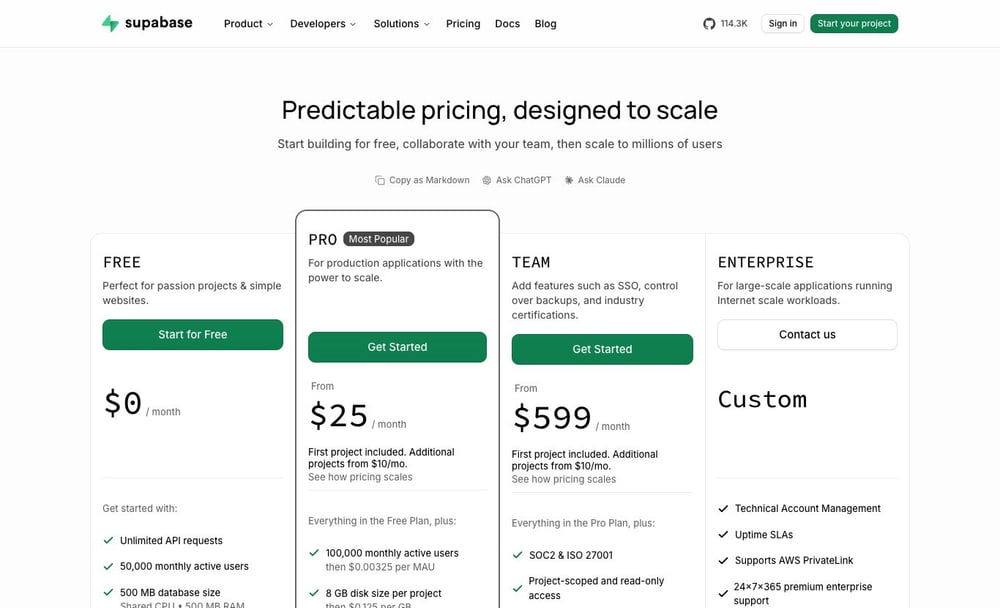
The Pro entry price is only the start of a production workload estimate. Database compute, storage, bandwidth and monthly active users may scale at different rates; a sudden increase in egress changes the forecast quickly.
Free project limits
Supabase Free allows two active projects with 500 MB database allowance; inactive free projects can pause. That behavior matters for demos shown infrequently.
The free tier accommodates up to two active projects with a strict 500 megabyte database allowance, but its automatic pausing behavior for inactive projects requires careful consideration when hosting client demos or infrequently accessed prototypes. If a demo environment remains idle for an extended period, the project enters a paused state, causing initial cold-start delays or connection timeouts when a prospective client or evaluator attempts to view it. This limitation makes free allowances suitable for local development or rapid prototyping, but entirely inadequate for production applications or continuous demonstration environments. Development teams should track project activity metrics to prevent unexpected pauses during critical review cycles. When assessing platform suitability, buyers must verify the exact inactivity thresholds that trigger project suspension, review the manual unpause process, and determine when an upgrade to a paid tier is necessary to maintain persistent availability.
Pro from twenty-five dollars
Supabase Pro starts at $25 per month with a first project included. Extra compute, storage, MAUs and bandwidth may add charges.
The professional tier starts at twenty-five dollars per month and includes foundational production allowances for a single project, though actual monthly costs will scale upward depending on additional compute resources, storage volumes, monthly active users, and network bandwidth. As application user bases expand, auxiliary resource consumption frequently pushes monthly invoices beyond the base subscription price, making cost forecasting a vital exercise for growing startups. This pricing model works well for early-stage production workloads that require managed database infrastructure and reliable authentication without upfront capital expenditure on dedicated database administration. Financial stakeholders must implement strict usage alerts and resource monitoring dashboards to detect unexpected spikes in data transfer or active user counts early. When reviewing this tier, buyers should verify the exact overage rates for storage and compute, examine what features are bundled into the base fee, and confirm that the billing structure aligns with anticipated project growth curves.
Team from five hundred ninety-nine
Team starts at $599 monthly, with governance and support differences. Match compliance requirements to the relevant features before buying.
Evaluating the Team tier at five hundred ninety-nine dollars per month requires assessing organizational governance needs, particularly dashboard single sign-on requirements and advanced administrative controls that distinguish it from standard developer setups. Engineering leaders must carefully map compliance obligations and internal access control policies against the platform capabilities before committing capital, ensuring that administrative boundaries align with internal auditing mandates. A common implementation tradeoff involves balancing centralized permission management against the fixed cost overhead for smaller groups that require robust security tooling. Check whether audit logging granularity, team member permission tiers, and dedicated support channels directly satisfy their operational security framework. Failing to align organizational requirements with plan-specific governance features can introduce friction during security reviews, while selecting the tier prematurely without utilizing advanced administrative controls incurs unnecessary operational expenses that strain engineering budgets.
⚖️ Alternatives & Stack
Firebase uses a different set of data and query assumptions. When comparing the platforms, start from one complicated relational query and one authentication rule, then check the consequences for exporting the data.
Supabase versus Firebase
PostgreSQL and Firebase document-oriented services imply different query patterns and migration strategies. The right model depends on actual data relationships. Supabase Auth pricing is part of a broader comparison with Firebase authentication and database consumption.
Choosing between Supabase and Firebase centers on architectural query patterns, where PostgreSQL relational structures contrast sharply with document-oriented paradigms, heavily influencing data modeling approaches and future migration strategies. Relational databases excel when applications demand complex joins, strict schema enforcement, and sophisticated indexing, whereas document stores favor flexible nesting for rapid prototyping. Teams migrating from unstructured stores often face challenges translating nested collections into normalized tables, leading to complex query refactoring. The ideal model depends entirely on actual data relationships and expected query complexity over the application lifecycle. Stakeholders should verify their long-term reporting requirements and access paths before finalizing the database backend. An improper selection frequently results in performance bottlenecks under heavy join loads or excessive application-level data aggregation, requiring costly refactoring phases that could have been avoided during initial architectural planning and system design phases.
Supabase with Railway
A Railway-hosted application can use Supabase as its database; coordinate credentials, network security and distinct backup responsibilities.
Integrating a Railway-hosted application with Supabase as an external database backend introduces specific operational considerations regarding credential management, network security policies, and distinct backup responsibilities across separate infrastructure providers. Developers must coordinate environment variables securely, manage database connection pooling effectively to prevent exhaustion under load, and ensure that network traffic between services is encrypted and appropriately restricted. A typical configuration failure mode involves mismanaged connection limits or unencrypted cross-service communication during traffic spikes, which can compromise application stability and data integrity. This hybrid setup is particularly useful when teams prefer specialized hosting platforms for application runtimes while leveraging a managed relational data layer. Buyers should verify connection pooling configurations, latency between hosting zones, and independent snapshot routines to ensure comprehensive disaster recovery readiness across both cloud environments before deploying to production.
Source workflow and tests
Store schema changes and deployment scripts under GitHub or GitLab review. A database console change should not be the only history of a release.
Managing database schema modifications and deployment scripts through version control systems like GitHub or GitLab establishes a reproducible audit trail, preventing reliance on manual modifications within the web console that leave no deployment history. Relying on unversioned production tweaks creates synchronization drift across environments and complicates rollback procedures during failed deployments. Implementing a robust source workflow requires automated migration tools that execute schema changes sequentially during CI/CD pipelines, ensuring consistency between staging and production instances. This practice is vital for maintaining collaboration hygiene among distributed engineering teams working on shared data structures. Buyers and technical leads should verify that their migration tooling handles rollbacks gracefully and that direct console access is strictly restricted or audited. Neglecting version-controlled migrations frequently leads to untraceable schema drift, broken application queries, and prolonged downtime during critical incident remediation cycles.
Alternatives and complements
| Software | Relationship to Supabase | Key question |
|---|---|---|
| Firebase | Alternative or complementary tool | Which exact workflow changes? |
| Railway | Alternative or complementary tool | Would this duplicate a paid function? |
| GitHub | Complementary part of stack | How are permissions and failures handed off? |
🧪 Pilot & Verdict
Build a minimal tenant-aware app and deliberately try cross-account access. Test an incompatible schema migration and a database restore before deciding that the managed service eliminates operational work.
Test tenant isolation
Create two fictional organizations, users with different roles and direct API requests. Try accessing one tenant’s records from the other.
Validating tenant isolation requires establishing rigorous test scenarios with multiple fictional organizations, distinct user roles, and direct API requests to confirm that row-level security policies effectively prevent unauthorized data access across tenant boundaries. One risk involves overly permissive security policies or missing security rules on newly created tables, which can inadvertently expose sensitive tenant records to external users. This validation step is critical for multi-tenant SaaS applications where data leakage between client organizations represents a catastrophic security failure. Engineering teams should systematically verify that API calls attempting to cross tenant lines are rejected with appropriate error codes rather than empty result sets that might mask underlying permission flaws. Relying solely on application-level filtering without enforcing database-level row security leaves systems vulnerable to direct API queries bypassing frontend checks, making rigorous multi-tenant validation an indispensable milestone before launch.
Test export and rollback
Export a meaningful sample, restore it elsewhere and rehearse a schema rollback. The ability to move data is not identical to preserving every auth integration.
Testing data export procedures and schema rollbacks ensures business continuity by confirming that backups can be successfully restored in an independent environment without data corruption or missing dependencies. A critical technical nuance is that while raw data export preserves relational records, restoring full system functionality also depends on accurately migrating authentication configurations, storage buckets, and webhook definitions that reside outside standard database dumps. One risk involves successful database restoration accompanied by broken authentication tokens or unlinked storage files, rendering the application dysfunctional. This exercise is useful for validating disaster recovery plans and compliance readiness. Buyers must verify that export scripts capture all associated platform assets and that automated rollback mechanisms have been rehearsed under simulated failure conditions. Failing to test the complete recovery pipeline often results in extended recovery time objectives during catastrophic infrastructure failures.
Decide with workload evidence
Choose Supabase if SQL-centered workflows and its integrated services reduce effort. Pay attention to query, egress and recovery requirements before production.
Selecting Supabase for production deployments is justified when SQL-centered workflows, managed authentication, and integrated developer services substantially reduce operational overhead compared to self-hosted alternatives. However, technical stakeholders must pay close attention to query performance, egress bandwidth costs, and recovery requirements before committing to production scale. A common implementation pitfall involves underestimating compute sizing or neglecting query indexing, which degrades performance as data volume scales. This platform is particularly useful for teams seeking relational database power combined with rapid API generation without maintaining custom backend infrastructure. Buyers should verify pricing tiers against anticipated traffic volumes, data transfer limits, and backup frequencies to avoid unexpected cost overruns. Thoroughly evaluating these operational metrics ensures that the chosen architecture supports long-term business growth without introducing insurmountable performance bottlenecks or prohibitive scaling expenses.
🏆 Final Verdict: Is Supabase Worth It?
Supabase is attractive when the team wants SQL and managed authentication in one service. The decisive production test is not how quickly tables can be created but whether policies block cross-tenant access, migrations remain reversible and backups can be restored. Those obligations persist on paid tiers.
For Supabase, start with a staging PostgreSQL project, two fictional tenants and a deliberately rejected query. Inspect RLS, backup restoration and deployment of a backward-compatible schema change, then model storage and egress. A smooth demo is not evidence of secure production configuration.

Frequently Asked Questions
What is Supabase used for?
Supabase provides PostgreSQL, managed authentication, storage and developer APIs. It is suitable for relational app backends, but developers must still design access policies, migrations and backups.
Is there a Supabase free plan?
Supabase publishes the following plan starting points: Free $0, Pro From $25/month, Team From $599/month, Enterprise Custom. Free access and included services vary by workload; confirm the current official pricing page before relying on an allowance.
How much does Supabase cost in 2026?
Supabase pricing depends on the plan and service unit. Free $0, Pro From $25/month, Team From $599/month, Enterprise Custom. Additional usage, add-ons, seat count or infrastructure charges can change the total invoice. The vendor pricing page is linked in this review.
What are the key Supabase features?
Supabase focuses on user authentication boundaries, object storage access, edge functions and secrets. Availability and limits depend on the active offering, and not every advertised add-on is included in a standard plan.
Who should consider Supabase?
Teams already comfortable with SQL and PostgreSQL migrations have a natural starting point. They should assess tenant-isolation requirements and compare that work with Firebase’s document model before committing.
How should a team evaluate Supabase security?
For Supabase, Row Level Security is crucial for tenant isolation. Create two fictional accounts, deny cross-tenant reads and check that service-role keys remain on trusted servers.
What are Supabase alternatives?
Firebase is a major managed-backend alternative, especially for teams favoring Firestore over SQL. Railway hosts applications but is not a complete substitute for Supabase Auth and PostgreSQL.
Does Supabase integrate with other developer tools?
Supabase brings together PostgreSQL, Auth, Storage and Edge Functions. Test permissions across service boundaries and confirm how clients refresh tokens and handle revoked sessions.
What are the limitations of Supabase?
Database compute, disk, storage egress and usage overages can grow independently. Model realistic file downloads and query traffic instead of treating Pro as an all-inclusive bill.
How can a team migrate to Supabase?
Plan the PostgreSQL schema and data transfer, then recreate authentication, storage rules and secrets. Rehearse a staging cutover with a restore procedure and client token checks.
How was this Supabase review researched?
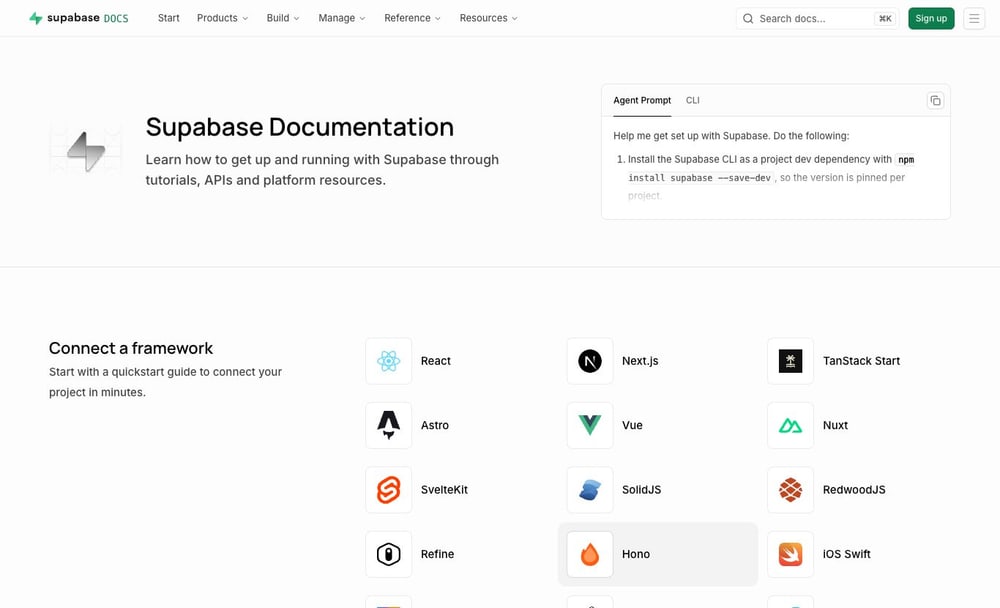
DigiOffly checked public Supabase pricing and product documentation on October 29, 2026. Screenshots show official publicly accessible pages. This article does not claim an authenticated company implementation or independently measured uptime.
EXPLORE NEXT ON DIGIOFFLY
🔍 Explore More on DigiOffly
Compare related developer platforms, estimate software costs and navigate DigiOffly guides before adding Supabase to a production stack.
Explore related software
- Development & DevOps — Explore all eight developer software categories and reviews.
- Hosting & Websites — Review hosting and infrastructure choices.
- Automation & No-Code — Find integration and workflow alternatives.
- Firebase review — Firestore and app services
- Railway review — Application deployment and hosting
Compare your shortlist
- Software Directory — Browse reviewed tools by software category.
- Compare Software — Compare capabilities, billing and compatibility.
- AI Software Finder — Narrow options by your exact engineering workflow.
Plan costs and updates
- Software Cost Calculator — Estimate known license and usage costs.
- Best Value Advisor — Compare products against a practical requirement.
- Deal Alerts — Receive relevant software offers and updates.
- Vercel — Next.js deployment previews and commercial hosting costs
- Netlify — Git deploys, credit-based pricing and web functions