

Vendor information reviewed 2 November 2026. Plan details and known add-on charges are explained in the pricing section, with a direct link to the source. Current vendor pricing.
Editorial disclosure: This is a software and pricing research draft based on the linked vendor documentation, not a claim of a completed personal product benchmark or trading outcome. We do not provide investment, financial or tax advice.
Koinly addresses the problem of reconstructing a crypto transaction history for portfolio accounting and tax reporting. A clear interface is helpful, but its central claim must be assessed through transfer matching, cost basis and supported report formats. A missing historical purchase can produce a wildly misleading gain even if the current asset balance looks correct.
The vendor describes wallet and exchange synchronization, transaction rules and country-specific reporting. We have not processed the user's own tax ledger or validated every chain integration in a live account. This review therefore distinguishes documented feature availability from the bookkeeping checks a reader should perform with original CSV exports and wallet records.
📊 Koinly Review Summary
Best-fit use: Portfolio & Crypto Tax Software. Pricing model: free entry tier and optional paid plans. Check the full pricing breakdown below.
The free plan may be a sensible way to inspect and reconcile a small sample before paying for a tax-year report. Newbie, Hodler and Trader are primarily differentiated by transaction allowances and reporting needs. Buying a larger package does not automatically solve missing basis records or ambiguous treatment of DeFi and staking activities.
⚡ Quick Verdict: Is Koinly Worth It?
The practical distinction for Koinly is between imports from connected wallets and exchange transaction files and what a user can validate from the selected plan. The decisive caveat is automated tax categorization is not legal or tax advice. Compare that with CoinTracker before making an annual commitment.
Koinly belongs in a comparison with other crypto accounting tools such as CoinTracker or CoinLedger, using the same transactions and country assumptions. It should not be compared as though it were an alternative to CoinGlass liquidation analytics or TradingView charts. The goal is a traceable tax and portfolio record, not a trading signal.
🧠 What Is Koinly?
Koinly is a platform in the Portfolio & Crypto Tax Software software category. Its relevant published capabilities include imports from connected wallets and exchange transaction files; portfolio cost-basis and capital-gains previews; tax-year reporting and export for supported jurisdictions; defi, nfts and transaction matching support. This makes it part of the broader trading-software stack, but it should not be confused with a guarantee of successful trades, a regulated investment recommendation or a substitute for evaluating market-data licensing.
A suitable Koinly buyer has a defined task: reconcile a sample exchange ledger and its entry count. A person needing tax-year reporting and export for supported jurisdictions may face a different licensing decision from someone who only reads weekly research. Name the instrument, expected export and budget before choosing a subscription tier. This avoids comparing products with different purposes as though their feature lists were directly interchangeable.
🖥️ Interface, Data and Day-to-Day Workflow
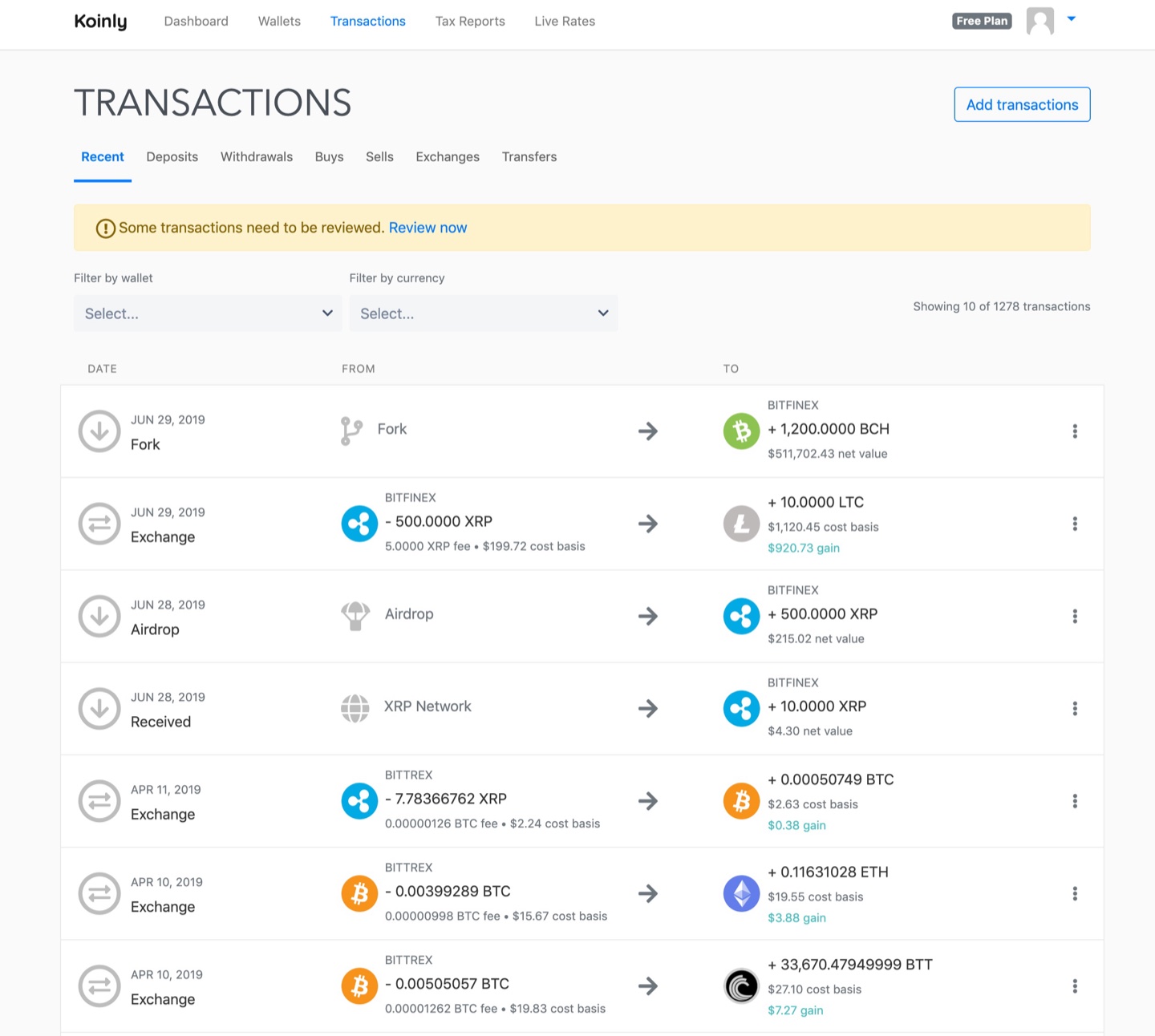
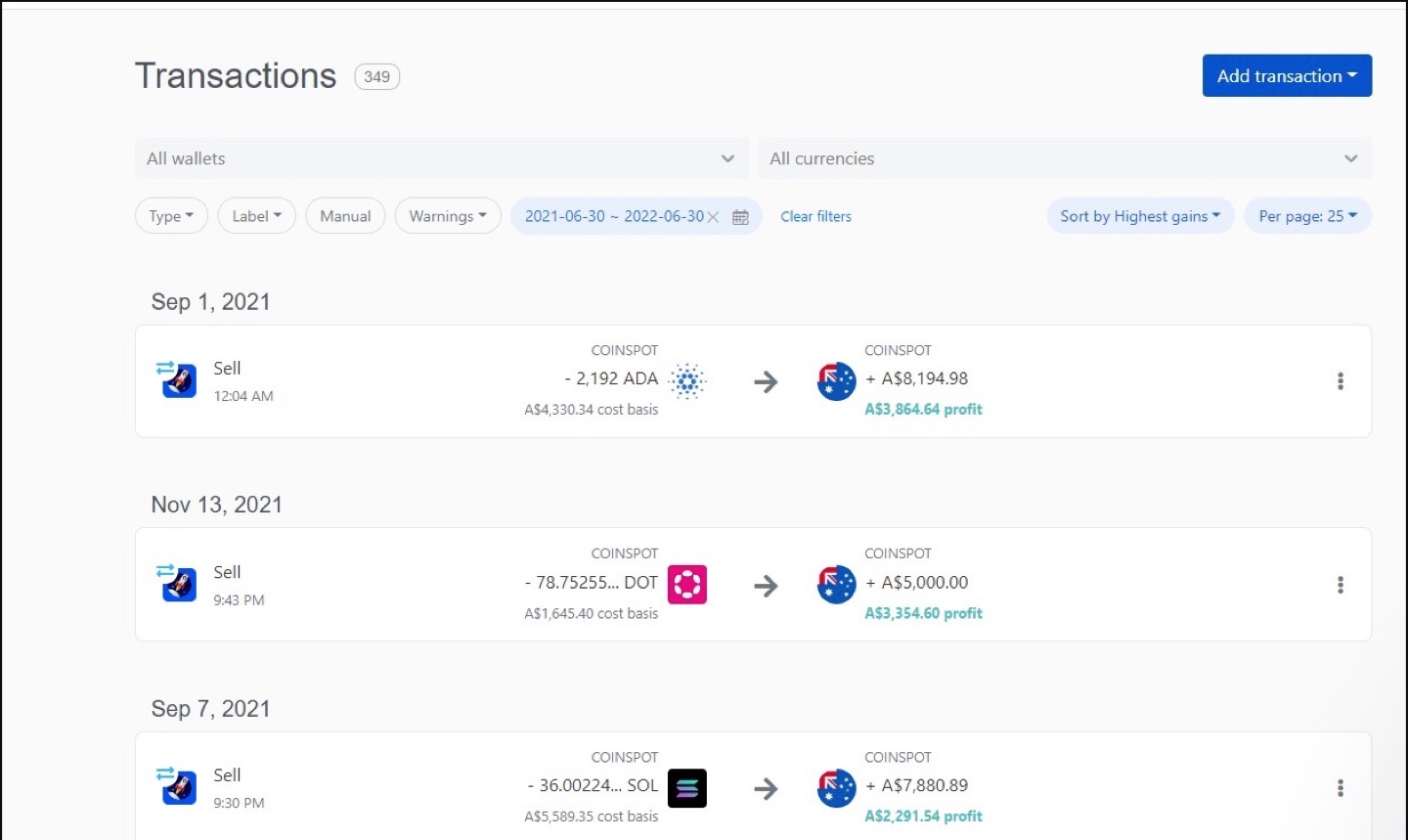
Follow the Koinly workflow from the input to the reported result. Start with reconcile transfers between wallets held by the same owner; then record whether the output makes use of imports from connected wallets and exchange transaction files. If the data comes from another exchange, wallet or account, note that dependency explicitly. A screenshot can help explain the screen but does not independently verify the accuracy of every value it contains.
For Koinly, start with a constrained project: reconcile a sample exchange ledger and its entry count. Then reconcile transfers between wallets held by the same owner. Treat that as a repeatable acceptance test, not as a trading system. If the result depends on a feed, exchange or report format that is absent from your plan, do not infer that the paid tier will fix it without verifying the entitlement.
🧭 How to Evaluate Koinly Before Subscribing
1. Import a sample exchange CSV and verify the transaction count
Evaluation note: Before starting this check, record the chosen instrument and session zone. Inspect whether saved settings remain consistent when the platform is reopened. Any mismatch should be described with an exact timestamp rather than dismissed as user error.
2. Match wallet-to-wallet transfers instead of counting them as sales
Evaluation note: Run this check against a defined sample and record the limits of the account tier. If the feature is unavailable, note the subscription level rather than treating it as a software malfunction.
3. Check acquisition costs and fees for missing records
Evaluation note: Keep a dated copy of the source input and the result. When external exchange or wallet data is involved, document that dependency so the same exercise can be attempted again.
4. Preview supported tax outputs for the relevant country and year
Evaluation note: Compare the output with a second method or a manually checked subset. Explain any disagreement before using the result in a recommendation; a successful screenshot alone does not establish data accuracy.
🛠️ Key Features and Real-World Fit
✓ Wallet and exchange transaction importing
imports from connected wallets and exchange transaction files: the practical question for Koinly is whether a user can reconcile a sample exchange ledger and its entry count. Compare the documented output with CoinTracker where appropriate, and check automated tax categorization is not legal or tax advice before treating the feature as a subscription benefit.
✓ Portfolio cost-basis and capital-gains previews
Portfolio cost-basis and capital-gains previews: the practical question for Koinly is whether a user can reconcile transfers between wallets held by the same owner. Compare the documented output with CoinLedger where appropriate, and check transfers, staking and defi imports may require reconciliation before treating the feature as a subscription benefit.
✓ Tax-year reporting and export for supported jurisdictions
Tax-year reporting and export for supported jurisdictions: the practical question for Koinly is whether a user can check acquisition costs and fees for missing records. Compare the documented output with Accointing where appropriate, and check country-specific forms and transaction limits vary by paid plan before treating the feature as a subscription benefit.
✓ DeFi, NFTs and transaction matching support
DeFi, NFTs and transaction matching support: the practical question for Koinly is whether a user can preview supported tax outputs for the relevant country and year. Compare the documented output with CoinTracker where appropriate, and check automated tax categorization is not legal or tax advice before treating the feature as a subscription benefit.
⚠️ Limitations and Accuracy Risks
- Automated tax categorization is not legal or tax advice
- Transfers, staking and DeFi imports may require reconciliation
- Country-specific forms and transaction limits vary by paid plan
For Koinly, the warning about transfers, staking and defi imports may require reconciliation deserves a concrete example before publication. Check check acquisition costs and fees for missing records. If this fails, identify whether the cause is a missing plan entitlement, incompatible input or out-of-date documentation. Do not substitute a generalized claim that all platforms are unreliable, because the specific limitation is what helps a buyer.
💰 Koinly Pricing and Total Ownership Cost
Koinly publishes a free tier and paid tax-year plans: Newbie $49, Hodler $99 and Trader $199 per tax year as reference prices. Transaction allowances, location and filing rules affect plan selection; check country-specific supported reports before paying.
Build the Koinly budget from the vendor’s current plan page, the required feature imports from connected wallets and exchange transaction files and any data or report limits connected to automated tax categorization is not legal or tax advice. Compare the actual monthly checkout against the yearly amount paid up front. Where an API or third-party licence is required, treat that as a separate cost rather than an included benefit. Set a calendar reminder for renewal, but do not assume a discounted first year will repeat.
| Cost question | What to verify | Why it matters |
| Billing cycle | Monthly and annual checkout totals | Effective monthly rates can require a year of commitment |
| Data access | Asset coverage, exchange entitlements and history | A missing feed may invalidate your workflow |
| Usage caps | Charts, alerts, exports, API calls or transaction counts | Limits can interrupt an otherwise useful test |
| Commercial rights | Personal, team or commercial data usage | A personal plan may not permit publishing or redistribution |
| Cancellation | Trial conversion and renewal date | Avoid paying for an unused tool |
🎯 Who Should Use Koinly?
The strongest potential fit is someone actively working on portfolio & crypto tax software, with enough regular use to justify the subscription. That person should be able to identify a specific recurring problem, choose a success metric and confirm access to the correct data and export format.
Koinly is less attractive when a buyer does not regularly use portfolio cost-basis and capital-gains previews or cannot explain the information needed from reconcile a sample exchange ledger and its entry count. The interface may be extensive without producing a useful record. In that situation, a free chart, a spreadsheet or a narrower competing product can be sufficient. The useful comparison is actual work completed against total annual cost, not the number of dashboards.
⚖️ Koinly Alternatives and Comparisons
| Platform | Primary decision dimension | What to check |
| Koinly | Portfolio & Crypto Tax Software | Vendor plan features, data coverage and total cost |
| CoinTracker | Different approach to the same task | Workflow and data comparability |
| CoinLedger | Specialised research or journal tools | Integration and output needs |
| Accointing | Complementary tool or workflow | Whether it replaces or supplements the stack |
Compare Koinly against CoinTracker with the same instrument, historical window and output requirement. A second candidate such as CoinLedger may solve only one part of the process. If the job is reconcile transfers between wallets held by the same owner, record which product completes it with fewer undocumented assumptions. Comparing a journal to a screener simply because both concern markets does not establish that one is superior.
🔎 Koinly in Practice: Detailed Research Notes
A realistic research session
Start a Koinly evaluation with a carefully chosen set of transactions, not the largest wallet you own. Include a purchase, a sale, a transfer between wallets, an exchange fee and one transaction with an incomplete cost basis. Import the sample and match each event to the original exchange or blockchain record. The first question is whether the software sees a transfer as movement of owned funds rather than a taxable disposal. Then check whether the displayed cost basis and realized gains change as expected when you correct missing data. That exercise matters more than a polished portfolio dashboard.
Which features change the work?
Koinly combines wallet and exchange syncing, portfolio views, transaction classification and tax-year report generation. The free experience can help users collect and inspect transactions, while paid plans unlock report entitlements within transaction limits. The presence of a supported wallet logo does not mean every chain-specific transaction type is automatically categorized correctly. DeFi liquidity positions, staking rewards, NFT trades and bridges can have different tax treatments. A sound workflow includes reviewing flagged transactions, reconciling account balances and keeping manual adjustments documented. The software should make the process traceable, not replace a jurisdiction-specific professional opinion.
Market data, definitions and timing
Cost basis is sensitive to missing acquisition records, fiat-conversion rates, fees and selected accounting methods. If an exchange API imports a withdrawal without the corresponding deposit at another wallet, an automatic categorization can create misleading gain figures. Koinly’s dashboard distinguishes total market value, cost basis and realized versus unrealized amounts, but those numbers depend on the supplied transaction history. Check that fiat deposits, staking income and transfer matching reconcile; do not treat a simple balance chart as a tax audit. Retain exports from exchanges before accounts are closed or data retention policies change.
The subscription decision
Koinly lists a free tier and paid tax-year plans at $49 Newbie, $99 Hodler and $199 Trader as reference prices. The key differences concern transaction allowances and the reports available in the chosen country. A one-time annual tax task is not comparable to a constantly billed charting subscription. You may have to pay for different tax years if you need historic reports, so estimate the full number of report periods. Check how imported transactions are counted, whether country-specific forms exist and whether a larger tier is needed because of routine high-frequency activity rather than an unusually complex portfolio.
How it compares with alternatives
CoinTracker and CoinLedger are alternatives in crypto tax tracking, but a comparison must cover the same wallet network, accounting method and jurisdiction. CoinGlass and Glassnode are not functional replacements: they analyze markets, not your personal ledger of acquisitions, sales and transfers. A standalone spreadsheet can be useful for a small, clean history but becomes fragile when hundreds of wallets, transactions and bridge movements are involved. Assess each tax tool by how often it requires manual intervention and whether it can produce an auditable explanation for calculated gains, not by the amount of colorful portfolio data.
Where an attractive dashboard can mislead
The riskiest assumption is that successful import equals correct tax classification. Automated tools are not licensed tax advisers for every jurisdiction. A duplicated transfer can inflate disposal figures, and a missing cost basis can make an otherwise small gain look extremely large. NFT valuations and derivatives treatment can be more complex than spot token swaps. Review warning messages, compare balances with original holdings and confirm tax reporting requirements independently. If you share a screenshot of a dashboard, redact wallet addresses and personally identifiable information. The real value is consistent records that you can explain if questioned, not a promise of effortless compliance.
🔍 Related Koinly Questions Worth Checking
Koinly Newbie vs Hodler depends on transaction-count allowances and the reports supported for your tax year. A Koinly Trader tax plan may be needed when an active account exceeds the smaller tier’s limit, but a bigger plan cannot correct missing acquisition data by itself. The Koinly free plan is useful for examining transactions before purchasing a tax report.
A Koinly wallet import should be checked against the original wallet and exchange statements. Koinly crypto cost basis depends on complete purchases, fees and transfers, so a clean-looking balance is not enough to certify the report. Check the same sample manually before submitting any filing.
For Koinly DeFi tax reports, identify which protocols and transaction types are supported in the relevant country. Koinly NFT transactions may need manual classification and valuation checks. The appropriate crypto tax software should make those corrections visible and explain how gains are calculated, not promise universal tax compliance.
Koinly country tax support is a jurisdiction-specific question, not a guarantee that one global form works everywhere. Koinly exchange API sync should also be tested for missing entries and duplicated transfers. A useful Koinly review distinguishes import completeness from the legal interpretation of the resulting report.
Koinly transfer reconciliation is essential when the same holdings move between wallets you control. A Koinly vs CoinTracker comparison is meaningful only with the same transaction ledger and tax assumptions. Consider Koinly alternatives if the required country report or chain integration is absent, and confirm the current paid-year terms before purchasing.
🔬 Koinly — Practical Product Analysis
Reconstructing a transaction ledger before generating a report
Koinly should be judged first by whether it reconstructs the holdings and acquisition history of the user, not by how quickly a tax PDF appears. Start with a sample containing a purchase, sale, wallet-to-wallet transfer, trading fee and a token received without complete purchase information. Import it using the same methods the real account will use and compare the resulting ledger with the original exchange and blockchain records. A transfer between wallets under the same ownership should be matched rather than automatically counted twice as a disposal, although the tax treatment of specific transactions varies by country.
Missing cost basis is among the most consequential bookkeeping errors. If an exchange CSV includes a sale but not the earlier purchase, software may estimate or flag an incomplete acquisition price, potentially overstating the computed taxable gain. Manual adjustments should remain traceable to source records. DeFi interactions and bridge transactions make this harder: moving assets into and out of a liquidity pool can create multiple transaction types whose local tax classification is not necessarily the same as a simple spot sale. Treat automated categorization as a starting point for reconciliation, not legal advice.
The difference between free tracking and paid tax years
Koinly lists a free portfolio-tracking tier and paid Newbie, Hodler and Trader tax-year packages at reference prices of $49, $99 and $199. The current pricing page shows transaction allowances of 100, 1,000 and higher limits for Trader, and details the reports available in supported countries. The cost is tied to a tax year, not necessarily an ordinary monthly SaaS subscription. A user who needs to amend previous years may need additional reports, while a casual holder with a small transaction history may not require the largest package. Count the imported entries before choosing a tier, including records that do not represent taxable sales.
A large import can look successful while the accounting remains incomplete. Compare wallet balances, check missing-price warnings and inspect transactions classified as transfers, staking income, swaps and fees. When using API sync, note whether the provider supports the relevant chains, derivatives and historical endpoints; exchange data retention can limit the completeness of older records. Keep the raw CSV files in a separate archive so future changes to integrations cannot silently rewrite the only available record of a trade.
Jurisdiction, exports and a useful alternative comparison
Koinly can prepare reports for supported countries and may offer forms and exports such as Form 8949 or software-compatible files, but the same report is not automatically valid for every jurisdiction. A reader in Romania, the United States or another country needs to inspect the actual tax-year guidance and reporting formats applicable there. The software can calculate gains under chosen methods; it cannot replace a qualified professional on ambiguous local treatment of staking, airdrops or derivatives. A strong review should name the country context rather than describe a universal 'crypto tax compliance' feature.
CoinTracker and CoinLedger are reasonable alternatives to compare, but use the exact same test ledger, accounting method and reporting country. Count the manual interventions needed to reconcile transfer chains and costs. A competing dashboard may look more elegant while producing the same unresolved missing-cost warnings. CoinGlass and Glassnode are not substitutes: they research market conditions, whereas Koinly reconstructs an individual's transaction and tax history. The right decision depends on ledger completeness, supported forms and auditable corrections, not an attractive portfolio graph.
Further decision considerations
A portfolio ledger can require several separate corrections even when all wallet balances eventually match. The cost basis for a token might be missing because the purchase occurred on an exchange that no longer exports the relevant historical period. A bridge movement may appear twice because two connectors report each side of a transfer differently. Staking distributions may need separate classification from ordinary trade proceeds. A sensible review therefore tracks the number and type of manual adjustments rather than assuming that an API sync eliminates bookkeeping work.
There is also a practical document-retention question. Tax reports are generated for a particular reporting year, but supporting records may need to remain available much longer under local rules. Users should preserve source CSVs, public transaction identifiers and a copy of any manually corrected classifications. Koinly can help organize calculations, yet the user must still determine which tax rules apply to their jurisdiction and whether a particular report format is accepted by the local authority. When reviewing paid tax-year plans, compare the number of individual entries and any automated splitting of transactions. A user should not assume that the number of trades shown in an exchange summary equals the transaction count used by tax software for billing.
One More Practical Research Consideration
For someone holding assets across several chains, portfolio coverage should be checked at the level of individual transaction types. The existence of an integration logo does not prove that every bridge, liquidity-pool withdrawal or derivative contract will be classified correctly. Import a limited sample first, inspect error flags and reconcile opening and closing balances. If a report is needed for a previous tax year, verify that the original acquisition records remain accessible. These are bookkeeping checks rather than predictions about how a tax authority will treat the transactions, which is a separate legal question.
🧪 How DigiOffly Evaluates This Software
- Import a sample exchange CSV and verify the transaction count
- Match wallet-to-wallet transfers instead of counting them as sales
- Check acquisition costs and fees for missing records
- Preview supported tax outputs for the relevant country and year
For Koinly, our proposed test log includes the plan used, the date, the evidence for check acquisition costs and fees for missing records, and any constraint from country-specific forms and transaction limits vary by paid plan. These are proposed checks; our current documentation does not establish the results of an independent benchmark. A legitimate revision should link the screenshot, the source record and a clear description of what was and was not verified.
🏆 Final Verdict: Koinly Software Review
Koinly deserves consideration when its specific features address a documented research or workflow requirement. The main decision remains practical: can you reproduce the result with the data and access included in the plan, and is the recurring cost lower than the time and errors the software can reasonably prevent? Koinly is accounting software, not a crypto performance-signal service. The biggest question is whether imported transactions reconcile with wallet histories and national tax requirements. A review should never imply that one global tax report works everywhere; users need to check their jurisdiction's current rules and, when appropriate, a qualified adviser.

Frequently Asked Questions
What does Koinly do?
Koinly is designed around portfolio & crypto tax software. Its primary use depends on the features and data you activate.
Is Koinly free?
Koinly has a free entry option or limited free access. Check which functions are included before relying on it for an ongoing workflow; paid features and data may require a subscription.
How much does Koinly cost in 2026?
Paid tax-year packages begin at $49 in the referenced plan list, with higher tiers depending on transaction count and report requirements. Check the pricing source linked above for the current region, billing cycle and conditions.
Is Koinly suitable for beginners?
A beginner can start with one narrow workflow, but should verify terminology, plan restrictions and whether a free alternative meets the need.
Does Koinly guarantee profitable trading?
No. Research, charting, journals and backtests cannot guarantee financial outcomes; hypothetical results have important limitations.
What market data does Koinly include?
Coverage and history are product- and tier-specific. Check the exact instrument, venue, time interval, licence and data-refresh terms.
Can I use Koinly for crypto, forex or stocks?
Check the official supported markets and feature matrix. Product support may differ from the availability of paid real-time exchange feeds.
Can I export my research from Koinly?
Review the export, API, CSV and reporting entitlements of the chosen plan. Data licences may limit redistribution.
What are the biggest limitations of Koinly?
Automated tax categorization is not legal or tax advice; Transfers, staking and DeFi imports may require reconciliation; Country-specific forms and transaction limits vary by paid plan.
What are alternatives to Koinly?
Start with CoinTracker, CoinLedger, Accointing and compare a consistent task, current pricing and market coverage.
What should I verify before paying for Koinly?
Confirm data entitlements, annual versus monthly billing, taxes, usage caps, cancellation and the outputs you actually need.
EXPLORE NEXT ON DIGIOFFLY
🔍 Explore More on DigiOffly
After the Koinly review: Crypto transaction reconciliation is a record-keeping task, not market forecasting. Explore accounting, credential protection and software costs before choosing a tax-year report.
Compare the right tools
- Software Finder — Find tools for portfolio records, financial workflows and accounting.
- Compare Software — Compare report limits, supported integrations and billing models.
- Software directory — Explore the published catalogue of finance and software services.
Plan your software budget
- Software Cost Calculator — Budget for tax-year packages, transaction limits and historic reports.
- Software Stacks — Plan wallet records, backup, accounting and tax tools as distinct tasks.
- Verified software deals — Check current paid-year pricing rather than assuming monthly billing.
Read related guides
- Finance Software — Browse broader bookkeeping and business finance software.
- Wave Accounting review — See how accounting software approaches reconciliation in business records.
- Bitwarden review — Protect exchange, wallet and report-access credentials.
- Trading & Market Analysis — Explore the software tools used around trading
- Glassnode review — Compare transaction records with blockchain-wide market metrics
- TraderSync review — Contrast crypto-tax accounting with trade-performance journals