

beehiiv research update, October 30, 2026: Vendor pricing and product references were consulted for this article about beehiiv. The illustrated public pages are not evidence of private-account testing. Check the current vendor documentation for beehiiv before making a purchase.
beehiiv now positions a newsletter as the center of a wider publishing business: the email list, website, sponsorships, paid memberships and content products can live in one account. A creator therefore buys a publishing workflow rather than a generic bulk-email sender. The October 2026 tariff change is particularly important for anyone copying older advice about Launch, Scale and Max. We evaluate the current Free, Lite, Pro and Enterprise structure, not historical price cards.
beehiiv is a publishing platform for people who want email, public articles and audience monetization to work together. Its October 2026 pricing changes make many older reviews difficult to use without checking the plan names and renewal rules. This beehiiv review explains the current Free, Lite and Pro structure, alongside the practical questions a publisher should ask about subscriber limits, archive URLs and revenue features. Sponsorship income and subscriber growth are not guaranteed results.
DigiOffly may earn a commission from qualifying links about beehiiv, at no additional cost to the reader. Confirm all current vendor terms before buying.
📊 beehiiv Review Summary
beehiiv is designed for publishers building a newsletter-led business with web archives, recommendations and monetization. New accounts use the October 2026 Free, Lite, Pro and Enterprise structure, so older Launch, Scale and Max comparisons need to be interpreted as historical information.
- Best fit: Newsletter publishers who want subscriber acquisition, public articles and monetization in one workflow.
- Budget: Verify the applicable usage and seat tier in the detailed pricing section
- Strength: Newsletter, website and monetization tools in one place
- Trade-off: Paid tiers scale by subscriber counts
- Evidence: Pricing and product claims checked against official sources, not a private account benchmark.
⚡ Quick Verdict: Is beehiiv Worth It?
The free tier supports an initial readership, but paid subscriptions, sponsorships and advanced growth features have their own eligibility and plan conditions. Price Lite or Pro using the actual subscriber band and billing period, then test archive URLs, domain migration and subscriber consent. An ad network does not guarantee revenue, and a large list of inactive subscribers is not a substitute for a retained audience.
🧭 Contents and Navigation
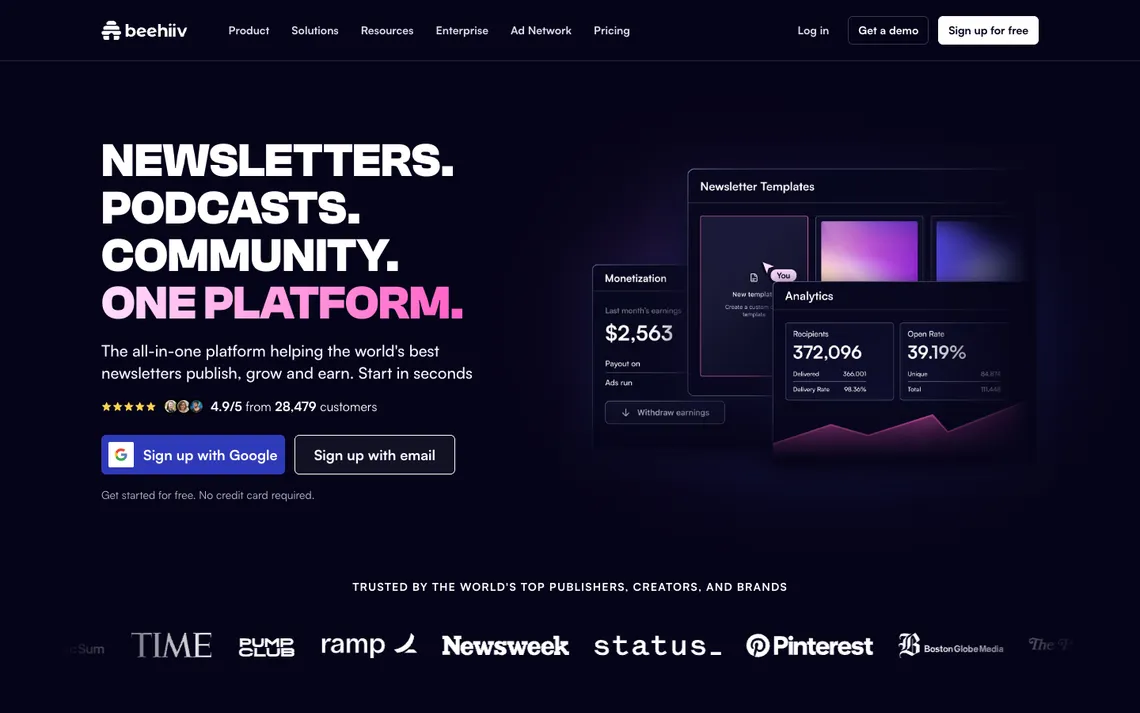
🧠 What Is beehiiv?
🛠️ Features, Workflows and Practical Limits
The October 2026 plan migration
A publisher searching for beehiiv pricing may still find guides that refer to Launch, Scale and Max. Those are historical labels for new-account comparisons after the October 2026 plan change. First identify whether the account is new or has an existing renewal date, then compare features in the current Free, Lite and Pro tiers. The date of a screenshot matters: an older plan grid may not describe the terms the publisher sees today.
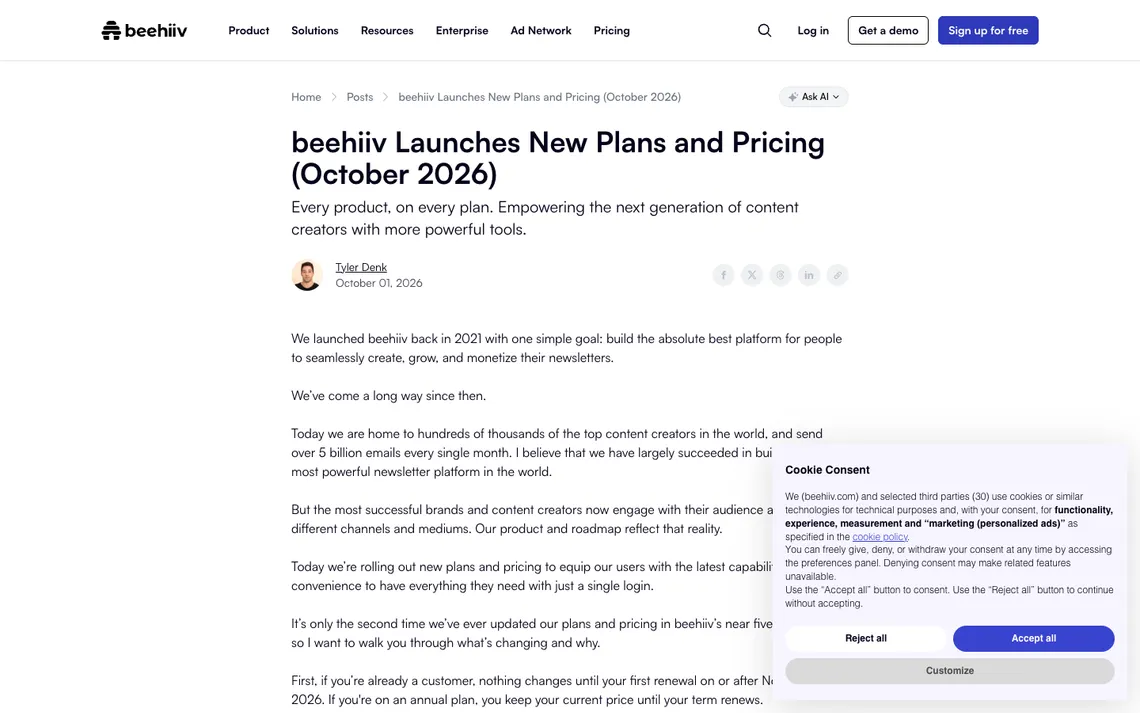
The beehiiv pricing change in October 2026 creates a trap for publishers comparing advice from different dates. A review mentioning Launch, Scale or Max may be accurate historically but confusing for a new account now shown Free, Lite and Pro. The vendor says new-customer pricing applies from October 1, 2026, while existing accounts move to new terms on their first renewal on or after November 1. Before budgeting, record whether the account is new and the exact renewal date; the same publication can otherwise see different plan names in older documents. A beehiiv vs Substack comparison also needs to separate publication hosting, subscriber ownership, paid memberships and the charges each provider actually collects.
When selecting a tier, your primary goal should be aligning your subscriber count with the correct publishing bracket without paying for idle capacity. Take time to thoroughly compare the published October pricing against your organization’s financial calendar and specific renewal milestones. Verifying these details directly on the platform helps you avoid basing operational decisions on outdated cost structures found across independent blogs and older video guides.
Free plan limits
Launching an independent publication without upfront financial commitments is entirely feasible using the Free tier, which supports up to 2,500 subscribers. This entry point allows creators to dispatch unlimited email sends while building an audience and testing the core editorial interface. However, new publishers should remember that zero cost does not automatically unlock every advanced monetization workflow or automated sequence built into the software architecture.
A newsletter with 900 subscribers does not need a complex revenue model to learn whether beehiiv fits its publishing rhythm. The Free plan can support an initial publication and public archive, while the real early work is writing a useful issue, placing a clear subscription form and checking the reader’s welcome experience. Publish three test articles and view them on a narrow phone screen. If readers cannot find past editions or distinguish free from paid content, buying a higher tier will not repair the editorial experience. A beehiiv Free plan can answer basic editorial-workflow questions without requiring an early monetization forecast.
Before committing funds to a higher tier, you should test subscribe forms, landing pages, and public post archives firsthand to evaluate the reader experience. Building out a handful of test articles lets you assess how easily new readers can navigate your public publication hub. This practical check ensures your foundational workflow is fully functional before you invite your core readership to subscribe.
Lite for an emerging publication
At a 1,000-subscriber allowance, beehiiv currently lists Lite at $49 a month on an annual commitment. The upgrade is worth investigating when the publisher is ready to use its paid subscription and growth features. This plan unlocks paid subscriptions, ad network access, and automation capabilities designed to turn a casual reading list into a revenue-generating business. For an emerging publication, these additions bridge the gap between simple broadcasting and operating a sustainable digital media brand.
For a small paid newsletter, do the subscription arithmetic before upgrading beehiiv. Suppose twenty readers pay $6 per month: that is $120 in gross monthly subscription revenue, before payment processing, refunds, taxes or software costs. That gross figure is not a dependable profit forecast. Estimate how many paying subscribers remain after three and six months, and ask which paid-tier feature makes the offer possible. A sophisticated checkout can collect payments, but it does not supply a reason for the audience to keep subscribing. That is why beehiiv monetization should be evaluated on retained paid readers and realised receipts, not gross signup totals.
Pro for a growing content business
For a publication with 1,000 subscribers, the Pro plan is currently listed at $95 per month on annual billing; compare that expense with the advanced tools the publication needs. This plan expands capacity limits while introducing sophisticated tools such as advanced analytics, webhooks, and dynamic content injection. High-volume publishers rely on these capabilities to segment audiences, automate complex communication flows, and integrate their newsletter data with external software stacks.
Advanced analytics and dynamic content can help a newsletter team only if the underlying subscriber information is useful. For beehiiv, a publication with a small list and a simple weekly issue may have little reason to upgrade solely for more elaborate reporting. Identify the exact Pro-only feature that would change publishing or monetization work. For example, does a required webhook replace a manual export, or would it merely add another system to maintain?
Compile a strict inventory of your publication’s operational requirements before committing to the Pro tier, ensuring every requested feature solves an active bottleneck. Matching software capabilities directly to your day-to-day publishing demands prevents feature creep from inflating your monthly overhead. Focus strictly on tools that directly support your audience growth and content distribution goals.

Website and custom domains
A beehiiv website gives a publication a public archive alongside its email issues. That can be helpful when a reader discovers an article through search, shares an older edition or wants to understand the publication before subscribing. The practical decision is whether the archive’s URLs, navigation and custom-domain options fit the publisher’s existing site. Check how individual posts are indexed and how old addresses will redirect before moving an established archive.
A beehiiv archive has two audiences: loyal email readers who want to find an old issue and search visitors who encounter a single article without knowing the publication. Give each post a descriptive title and a genuinely useful standalone opening; avoid assuming every visitor arrived from the newsletter. Check that archive URLs, canonical signals and internal links behave as intended on the chosen domain. Search visibility depends on the publication’s content and site structure, not merely on the platform advertising a built-in website. A beehiiv custom domain should be checked for working redirects and consistent archive URLs before announcing a migration.
Perform a thorough technical inspection of your publication site by reviewing canonical tags, archive layouts, and domain migration redirects if you are moving from another host. Verifying that search engines can properly index your public posts ensures your organic discovery efforts are not undermined by broken links or duplicate content issues. This audit is a vital step for any publisher shifting their primary web presence into a unified publishing platform.
Deliverability and sending cadence
Maintaining a healthy sending reputation and consistent communication cadence is crucial when managing a regular software digest to prevent subscriber fatigue. Email publishing success depends heavily on proper domain authentication and obtaining explicit subscriber consent before broadcasting messages. Neglecting these foundational deliverability practices can quickly cause your dispatches to land in spam folders rather than primary inboxes.
Open rates are a weak editorial compass for a beehiiv publication. Mailbox privacy features and automatic image loads can register activity that does not mean a person read the issue. Instead, define a reader action that matches the product: a useful link click, a reply, an article visit or a paid renewal. Review complaints and unsubscribes after changes in topic or cadence. A newsletter that sends less frequently but earns thoughtful responses may be healthier than one with a flattering open-rate graphic. For beehiiv email marketing, a meaningful reader response can be more useful than an inflated open-rate estimate.
Establish a routine of monitoring your complaint rates closely while actively segmenting inactive readers who no longer interact with your content. Setting up re-engagement campaigns or pruning unengaged addresses protects your sender reputation and keeps your delivery metrics stable over time. This proactive maintenance safeguards your publication’s long-term reach across major email providers.
Recommendation network
Scaling a newsletter often requires leaning on peer networks rather than relying entirely on organic search or paid acquisition channels. The recommendation network built into beehiiv allows publishers to expose their content directly to readers who are already subscribed to complementary newsletters within the ecosystem. This reciprocal discovery mechanism places your sign-up prompt in front of engaged readers at the exact moment they finish another publication. It bypasses traditional ad networks by turning fellow creators into distribution partners, effectively converting collaborative goodwill into steady subscriber acquisition momentum over time.
Recommendation-driven subscriber growth deserves an after-the-fact quality check. A publication might receive fifty new signups from another newsletter but discover that most never click through to a second issue. Track those readers separately by source and compare their activity after several editions with direct-search or referral subscribers. Avoid assuming that the largest recommendation partner is the best fit. In beehiiv, the useful question is whether the suggested publication shares a credible reader interest, not whether an integration can display a signup prompt. If the beehiiv referral program is part of the growth strategy, distinguish incentive-led referrals from editorial recommendations.
A good beehiiv recommendation exchange should be explained in editorial terms. Why would a reader of a weekly software-cost digest also value a publication about independent ecommerce operations? If the answer is specific, the cross-promotion may be helpful. If the only commonality is ‘business’, the partnership is probably too broad. Measure continuing readers rather than one-week acquisition totals, and inspect what the recommendation widget tells the visitor before they subscribe. A subscriber added quickly but confused about the topic is not a lasting audience win. Public beehiiv newsletter examples can inspire layout ideas, but they are not evidence that an unrelated audience will subscribe.
Ad Network and sponsorships
Monetizing an established niche audience requires moving beyond simple affiliate links and toward direct sponsorships that align with your readers’ specific interests. The beehiiv ad network provides publishers with structured opportunities to secure brand deals without spending hours cold-pitching corporate marketing departments or managing bespoke insertion orders. By connecting content creators with vetted advertisers looking for targeted newsletter placements, the platform streamlines the commercial side of publishing. This allows solo operators and small media teams to focus heavily on writing and audience development while revenue-generating ad units drop seamlessly into designated layout slots.
Access to a newsletter advertising network is not the same as a confirmed booking. beehiiv may give eligible publishers ways to pursue placements, but demand, audience fit and the terms of individual opportunities influence whether money is earned. Before forecasting sponsorship revenue, look at actual engagement, qualified inventory and any platform requirements. A publisher should budget on realized payments rather than treating a dashboard or an advertised network as a predictable monthly income stream.
| Operational checkpoint | Evidence to request | What could go wrong |
|---|---|---|
| Input | publisher ad opportunities can depend on eligibility, demand and targeting | Unreliable or incomplete inputs |
| Control | compare qualified sponsorship fill and realized earnings per issue | No tested exception process |
| Owner | Named account or project administrator | No one can repair an unexpected change |
| Outcome | Repeatable result and documented limits | an advertised network is not guaranteed income |
Paid subscriptions and fees
Building a sustainable publishing business often involves gating exclusive research, deep dives, or community access behind a paid membership paywall. The platform offers subscription tooling designed to let creators charge their audience directly for premium content without relying entirely on external plugins or third-party merchant platforms. A major draw for publishers is the platform’s advertised zero percent platform take rate on eligible paid plans, meaning you keep a much larger slice of every dollar your loyal readers pay. This structure encourages creators to launch paid tiers early by lowering the financial penalty of experimentation while they refine their premium offering and pricing strategy.
A paid beehiiv subscription involves more than the platform’s percentage fee. Payment processors can charge transaction fees, refunds reduce realised receipts, and some members may cancel after a single premium issue. Keep a spreadsheet with active paid accounts, gross charges, refunds, processing costs and software subscription fees. Forecast on the money that actually clears, not the list price multiplied by the lifetime number of signups. That distinction matters for niche publications where each paid member is valuable but churn can be volatile.
A simple beehiiv paid-tier break-even test is more informative than a large imaginary subscriber forecast. Estimate fixed software costs at the intended plan and subscriber tier; subtract processing costs and a cautious refund allowance from the average member’s monthly payment. The remaining contribution per active member shows roughly how many paying readers are needed to cover the tooling. Report the assumptions beside the number. The exercise is not a promise of advertising sales or subscriber growth and should be updated when the account renews.
Automations and segments
Keeping subscribers engaged after they join your list requires timely communication that guides new readers through your best archives and alerts existing members to upcoming renewals. Automated sequences and segmentation tools inside beehiiv allow publishers to trigger targeted emails based on specific audience events, subscriber tags, or milestone dates. Whether you want to deliver a multi-part welcome series to fresh sign-ups or remind annual members that their subscription is up for renewal, automation handles the delivery mechanics behind the scenes. This frees you from manual emailing tasks while ensuring every reader receives relevant messages tailored to their exact journey with your publication.
Managing complex automation workflows requires ongoing discipline because poorly constructed segments can easily result in duplicate messaging or entirely irrelevant emails landing in subscriber inboxes. If exclusion rules overlap or if triggers fire incorrectly, readers might receive a welcome email months after joining or get bombarded with multiple renewal notices on the same day. These clumsy technical errors erode reader trust quickly, making your publication look unprofessional and driving unnecessary unsubscribes. Automated systems run precisely as configured, meaning human oversight is essential to prevent logic errors from alienating your most loyal audience segments. When evaluating beehiiv vs Ghost, compare newsletter operations with the editorial and website controls each publisher needs.
A welcome automation can introduce new readers to a publication, but sending the wrong sequence to a paying member is an avoidable mistake. In beehiiv, test the entry conditions for a free subscriber, a paid subscriber and someone who already unsubscribed. Check the timing and the exit rules on a small internal list before enabling the journey for everyone. That exercise is more useful than copying a complex automation from a tutorial without checking the audience rules.
Audience reporting and data
Understanding how readers interact with your publication requires looking beyond top-line subscriber counts to analyze acquisition quality and long-term engagement patterns. The reporting and data dashboards within beehiiv provide visibility into subscriber growth, open rates, and campaign performance, though the depth of available metrics varies by plan and lookback window. When evaluating multiple acquisition channels, tracking where your most active readers originated helps you double down on what works and cut ties with low-performing traffic sources. Data transparency is what separates a guessing creator from a strategic publisher making informed decisions about content and growth.
Subscriber totals can conceal a change in reader quality. Imagine beehiiv shows a large list after a giveaway, while the most recent four issues receive fewer meaningful clicks and paid renewals are flat. Break out new readers by acquisition source and compare their subsequent actions with those of the existing audience. Prefer cohort retention, replies and paid conversion over a celebratory total-subscribers milestone. For a publication trying to sell sponsorship inventory, that distinction also makes its audience description more credible.
To cut through vanity metrics, you should actively track activated and retained readers broken down by their specific acquisition cohort. Monitor how many subscribers from a particular social media campaign or guest post actually open three or more consecutive issues within their first month on your list. Compare those cohort retention curves against readers who found you through organic search or direct word-of-mouth recommendations. If a particular acquisition source consistently brings in low-activation subscribers, reallocate your marketing energy toward channels that produce genuinely engaged readers who stick around for the long haul.
Migration from another newsletter
Transitioning an existing newsletter from an older email service provider or legacy blog setup to a new publishing home requires careful handling of valuable digital assets. Moving your historical archives, custom domains, active subscriber lists, and paid membership data each demand separate operational steps to ensure a seamless transition. A botched migration can break incoming links, disrupt billing tokens for paying members, or drop subscriber consent records that took years to build. Treating the move as a structured project rather than a simple file upload protects the foundation of your publishing business during the platform changeover.
Compliance and trust are paramount during any migration, and importing unconsented contacts from cold lists or old customer databases creates immediate legal and deliverability problems. Just because a list of email addresses exists in a spreadsheet does not mean those individuals opted in to receive your specific newsletter content at their current address. Email service providers monitor migration hygiene closely, and sudden spikes in spam complaints or hard bounces resulting from dirty imports can get your new sending domain flagged or suspended. Clean your data rigorously before importing anything to protect your sender reputation from day one.
💰 beehiiv Pricing, Plans and Real Cost
From October 1, 2026, beehiiv’s plans for new customers are Free ($0, up to 2,500 subscribers), Lite (shown at $49/month billed annually for a 1,000-subscriber tier), Pro (shown at $95/month billed annually for the same tier), and custom Enterprise. Existing customers move on their first renewal on or after November 1, 2026. Costs vary with subscriber tier, billing period and monetization services.
| Decision item | Current evidence | Procurement check |
|---|---|---|
| Official pricing basis | Current official plan documentation linked in this review | Verify selected tier, country, billing and seat count |
| Free plan or trial | Refer to the vendor source; eligibility and quotas differ | Confirm sender, recipient, profile, crawl or credit limits |
| Operational add-ons | Some functions, usage or seats may be charged separately | List every required function before checkout |
| Migration and support | Data export, support and permissions vary | Test a sample import and rollback |
⚖️ beehiiv vs Alternatives
| Product | Primary comparison angle | Important question |
|---|---|---|
| beehiiv | Newsletter publishers who want subscriber acquisition, public articles and monetization in one workflow. | compare published October pricing and your own renewal date |
| Substack | Alternative scope and integration fit | Does Substack’s publishing and payment model suit the intended paid readership? |
| Kit | Alternative scope and integration fit | Would Ghost give the editorial team the website control it needs? |
| Ghost | Alternative scope and integration fit | Does Kit provide enough email automation without beehiiv’s publisher network? |
✅ Pros, Cons and Who Should Choose It
- Advantage: Newsletter, website and monetization tools in one place
- Advantage: Free starting tier up to 2,500 subscribers
- Advantage: Monetization and audience growth workflows
- Limitation: Paid tiers scale by subscriber counts
- Limitation: Some advanced automation and monetization features are gated
- Limitation: Legacy pricing pages may show renamed tiers
To evaluate beehiiv without buying a large plan, publish a test article, connect a newsletter subscription form and verify a small group of consented subscriber records. Check how the public archive appears on the intended domain, how a recommendation signup is identified, and whether unsubscribe requests are respected. For a publisher planning paid memberships or advertising, assess which Lite or Pro features are actually required at the current subscriber tier. Eligible monetization tools do not guarantee sponsorship revenue; estimate fees, audience retention and renewal costs independently before committing to a plan.
🧪 Evaluation Method and Evidence Boundaries
This beehiiv evaluation reflects the vendor’s October 2026 plan change and publicly shown newsletter, website and monetization features. It is not a report of running paid sponsorship campaigns or personally measuring newsletter revenue in a private account. The Free, Lite and Pro comparisons require checking a specific subscriber tier and billing period, particularly when older Launch, Scale and Max articles still appear in search results.
A credible beehiiv migration trial should import a small opt-in list, publish an article and send a test newsletter under the intended domain. Verify unsubscribe handling, archive URLs and the path from a recommendation to a real retained subscriber. Before enabling monetization, model payment processing costs, sponsorship eligibility and actual audience engagement. Neither an ad-network dashboard nor a subscriber count by itself establishes earning potential.
🏆 Final Verdict
beehiiv merits consideration for publishers who want their newsletter, website, recommendations and monetization in a cohesive workflow. The new Lite and Pro pricing should be evaluated against subscribers who actually read and support the publication; acquiring more unengaged addresses is not a business result. Buyers migrating from another platform should also test custom-domain redirects and consent records before switching off their original publisher tools.

Frequently Asked Questions
What is beehiiv best suited for?
Newsletter publishers who want subscriber acquisition, public articles and monetization in one workflow.
Does beehiiv offer a free plan?
beehiiv Free supports up to 2,500 subscribers. The paid Lite and Pro tiers unlock additional newsletter, audience and monetization capabilities.
How does beehiiv pricing work in 2026?
Budget the specific activity described under paid subscriptions and fees, including relevant seats, usage and add-ons. See the pricing section for the plan structure checked for this review; verify current checkout currency, allowances and renewal terms with the provider.
Can small teams use beehiiv?
Yes, for a focused first project. Start by checking whether your team can choose a newsletter platform with current rather than recycled prices, then confirm that the chosen plan covers the actions, permissions and expected volume.
Which beehiiv features should I check first?
Prioritize free plan limits, pro for a growing content business and deliverability and sending cadence. Test whether the features operate as expected together rather than reading a feature grid as a promise of results.
What is the biggest limitation of beehiiv?
The practical risk is that advanced controls are wasted without reliable subscriber metrics. A second concern is that poorly managed segments can send duplicate or irrelevant messages. Those are reasons for explicit safeguards, not proof the product always fails.
How should I migrate data into beehiiv?
Begin with a small, reversible sample. Preserve identifiers, consent or access records, and a rollback path. As a practical check, test a small consented cohort and verify redirect and billing ownership. Keep the original workflow available until the new system handles both normal and exceptional cases.
What should I compare against beehiiv?
Compare Substack, Kit, Ghost for the same specific job. Price, product scope, deployment effort and data ownership matter more than a broad generic feature count.
Is beehiiv suitable for agencies?
It depends on whether separate client accounts, permission boundaries, exports and billing match the agency model. An agency should prototype a representative client instead of assuming that a single-workspace trial covers multi-client work.
How can I evaluate beehiiv without a misleading test?
Choose one workflow, document its starting state and verify the expected output. For example, model net proceeds after processing, refunds and cancellations. Record what you can independently confirm and what is a vendor-documented claim.
Where can I verify the latest beehiiv limits?
Use the official pricing page and vendor documentation. Screenshots in this review are dated and may not match a later checkout.
Primary sources: Official pricing · Product / plan documentation. Screenshots in this review are dated October 30, 2026.
EXPLORE NEXT ON DIGIOFFLY
🔍 Explore More on DigiOffly
Continue exploring published Growth software reviews and choose complementary tools for your workflow.
Explore categories
- Growth & Marketing — Browse email, SEO, outreach and retention tools
- Software Directory — Find related published software reviews
- Software Stacks — Choose a minimal set of complementary tools
- Brevo — Email sends, contacts and marketing automation
- Klaviyo — Ecommerce email, SMS and order-triggered flows
Compare your shortlist
- Compare Software — Compare documented features and plan differences
- AI Software Finder — Build a task-specific shortlist
- Cost Calculator — Separate per-seat and usage-based costs